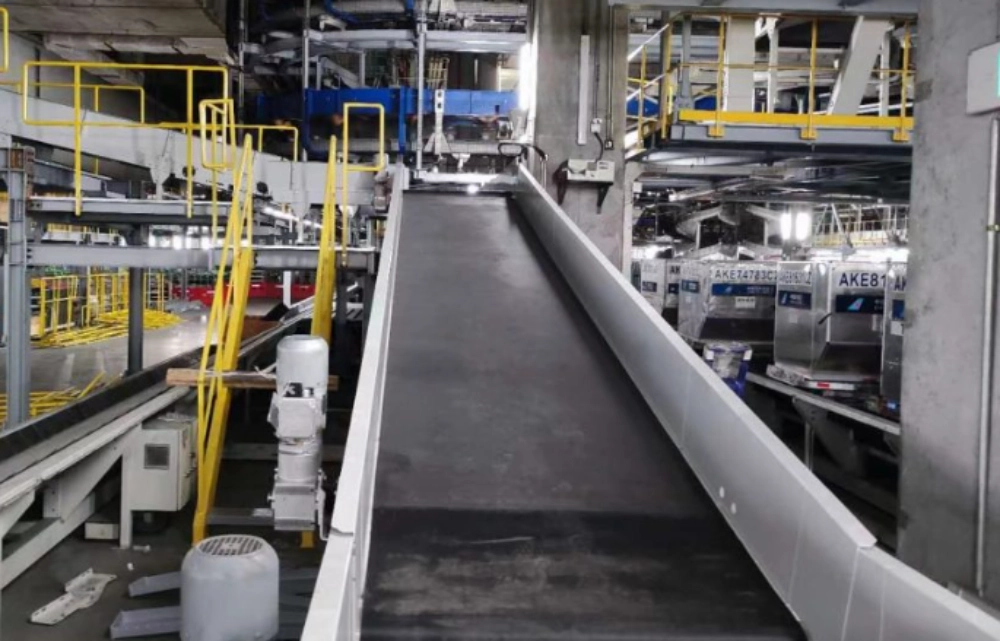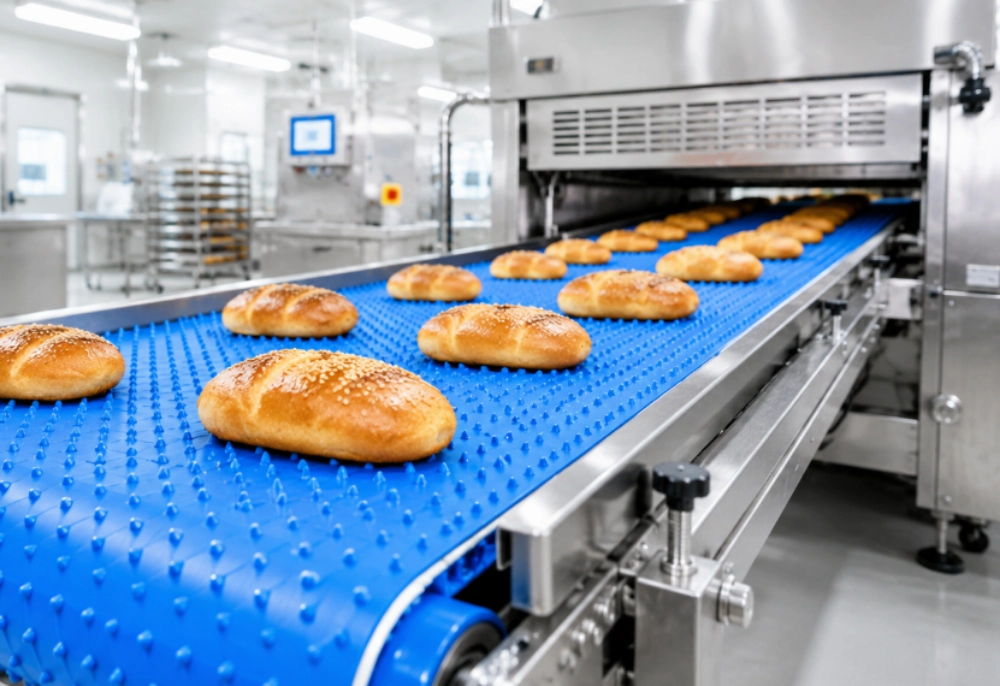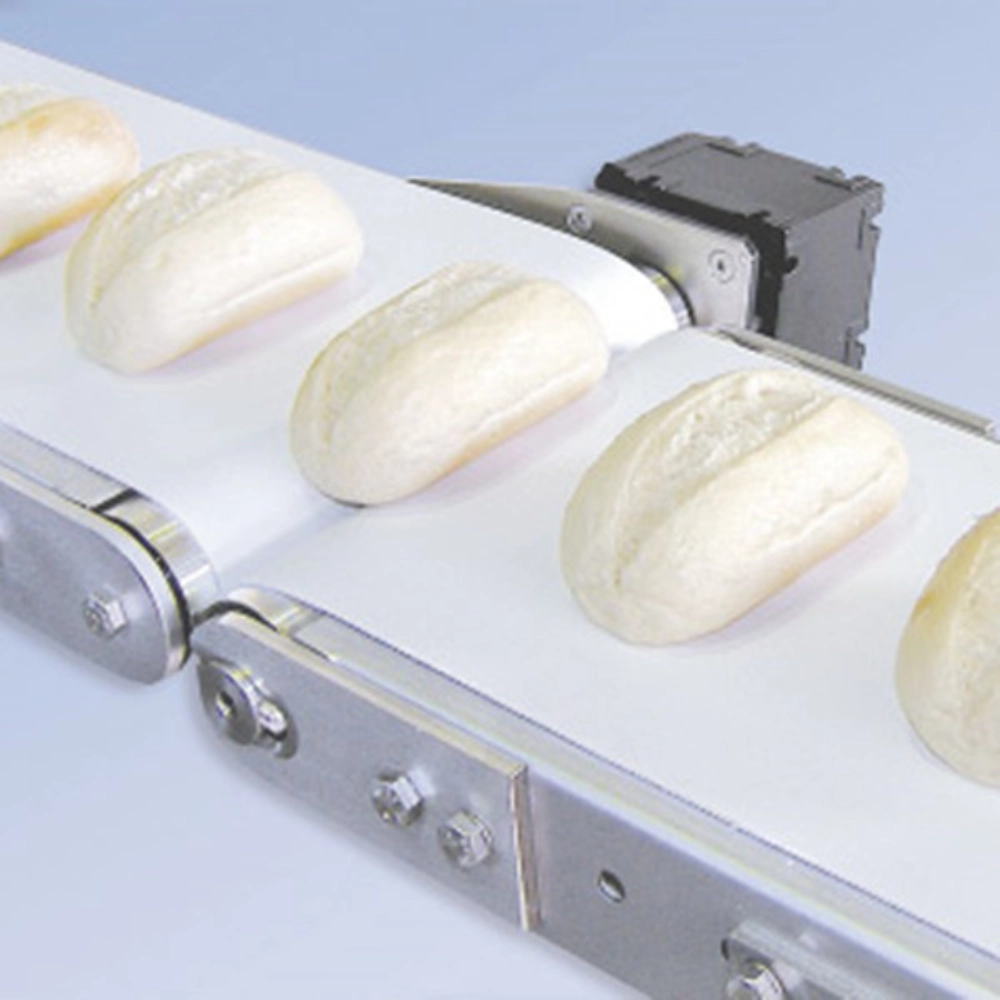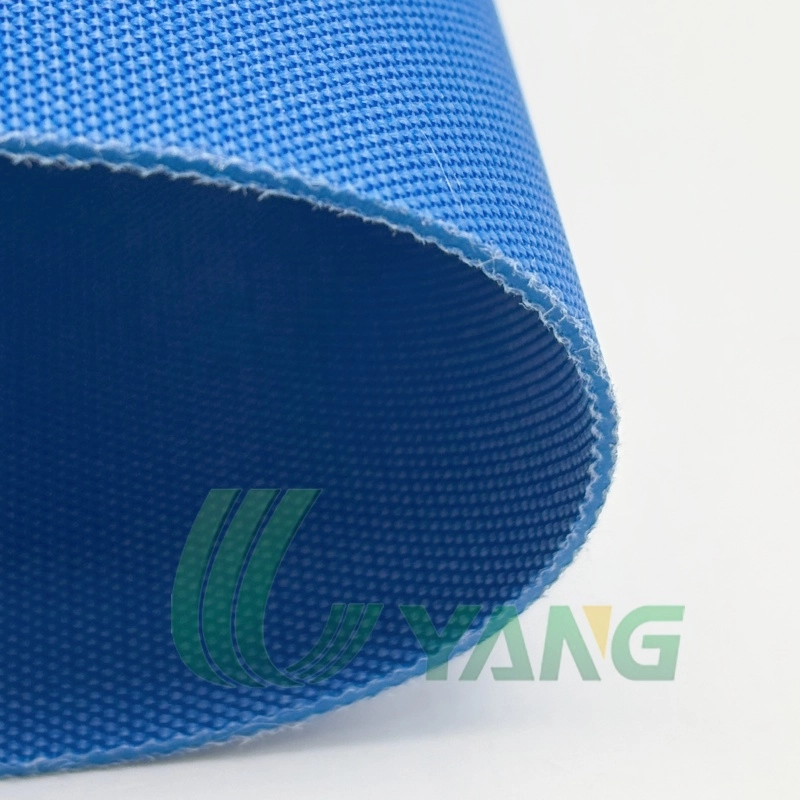
A silicone conveyor belt can improve release when dough, caramel, chocolate, or warm baked goods cling to a conventional surface, but silicone alone does not solve every handling problem. A sound specification connects product temperature, stickiness, belt speed, pulley size, tracking, and sanitation. The goal is clean release without stretching, wandering, marking, or a hard-to-clean edge.
Key Takeaways
- Define actual product and cleaning temperatures, including short peaks, rather than relying on a heat resistant label.
- Match the surface to a product release test; smooth silicone is not best for every dough or coating.
- Check thickness, plies, minimum pulley diameter, tracking, edges, and splice before approval.
- Test a sample with real soil and sanitation, then record release, residue, tracking, and dimensional change.
Start with the Product and Process Window
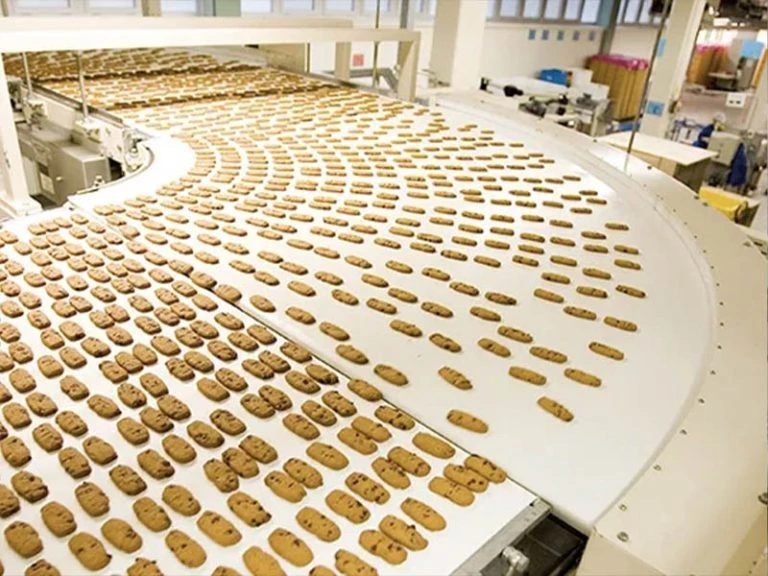
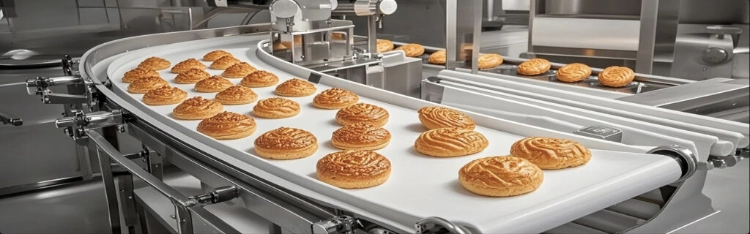
The buying decision begins with the product, not the material name. A cooling conveyor for dry biscuits has a different job from a belt carrying tacky dough or receiving hot pieces at an oven discharge. Map the process window before comparing quotations. The bakery conveyor application overview can help you place each belt position within the wider line.
Record Temperature at the Belt Surface
Measure the product temperature where it lands on the belt and again after steady production. Also record ambient heat, wash water temperature, chemical concentration, contact time, and how often the line starts and stops. Supplier pages may show a wide temperature capability, yet continuous operation, short heat peaks, and cleaning exposure are not the same test. Ask for the current data sheet and written limits for your exact construction.
Describe the Product That Must Release
Give the supplier a sample or describe moisture, fat, sugar, glaze, flour dust, and product weight. Test fresh product and the normal end-of-run residue. For fragile goods, record distortion, tearing, and changes in spacing before packaging.
Why Silicone Can Help and Where It Can Fail
Silicone’s relatively low surface energy can reduce adhesion, so sticky food may release more readily than on some coated fabrics. Its heat stability is also useful near baking and cooling. Both benefits depend on the construction and conveyor design.
Release Is a Surface Interaction
A belt does not release food in isolation. Contact pressure, dwell time, surface finish, product temperature, and the peel angle at discharge all matter. A smooth silicone top may work well when a warm, tacky item needs a clean transfer. A textured surface may be better when air release or controlled grip matters. Test the actual product at line speed because a hand peel test can hide residue and timing problems.
Reinforcement Adds Stability but Also Constraints
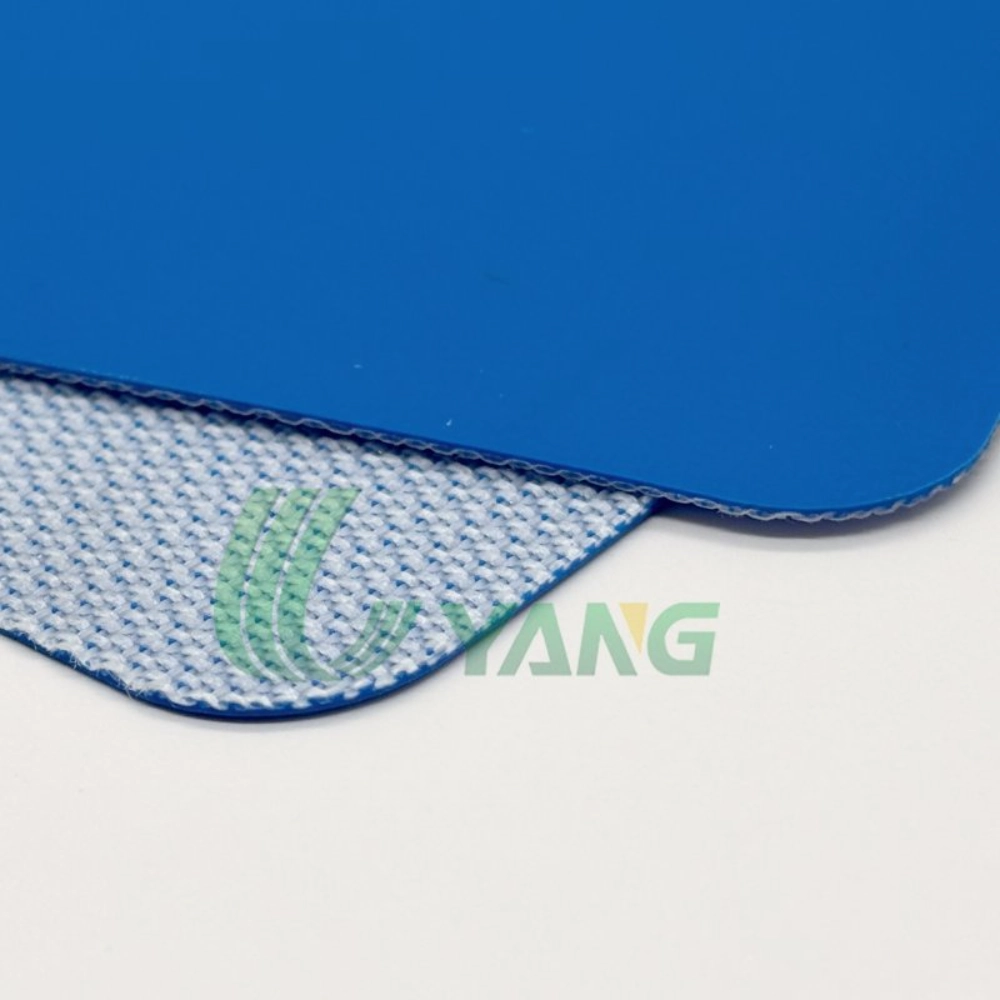
Fabric reinforcement helps a thin belt carry tension and resist elongation, but the belt is not a fabric-free construction. A damaged edge or splice can expose reinforcement. Silicone may also be a poor match near sharp scrapers, knives, severe abrasion, or heavy impact. Compare another belt or redesign those transfers.
Translate Line Conditions into a Purchase Specification
A useful request for quotation gives measurable inputs. It should not simply say white silicone belt. These fields let a fabricator check the duty and installation.
| Specification Field | What to Provide | What to Confirm |
| Thermal duty | Product, ambient, wash, and peak temperatures | Continuous and short-term limits for the offered belt |
| Mechanical fit | Belt width, length, speed, load, pulley diameters, and take-up | Thickness, plies, minimum pulley size, tension, and tracking method |
| Food contact | Product type, direct-contact area, market, and sanitation program | Current declaration, migration report, and chemical compatibility |
| Fabrication | Open or endless belt, splice area, guides, cleats, and sealed edges | Splice method, tolerances, edge treatment, and installation instructions |
Check Pulley Geometry and Tracking
A thin belt can fail early on a pulley smaller than its construction permits. Provide every drive, tail, nose-bar, and reverse-bend diameter. Good tracking needs aligned pulleys, a square splice, stable tension, and suitable guides. Do not cure wandering with excess tension; it raises bearing load and stresses the splice.
Treat the Splice and Edges as Food Zones
Ask how the joint is made and whether it changes release. A raised splice can collect soil or disturb delicate products. Discuss sealed edges in wet zones. Two cautions matter: never cut against the belt without an approved cutting surface, and never aim a high-pressure nozzle into a damaged edge or splice.
A Product Example for a Precision Bakery Transfer
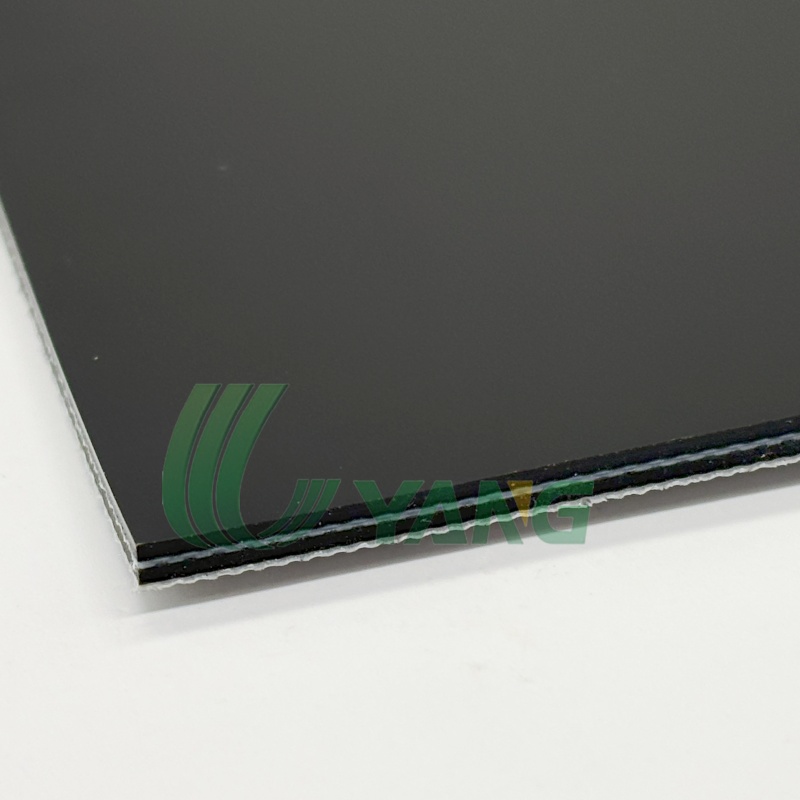
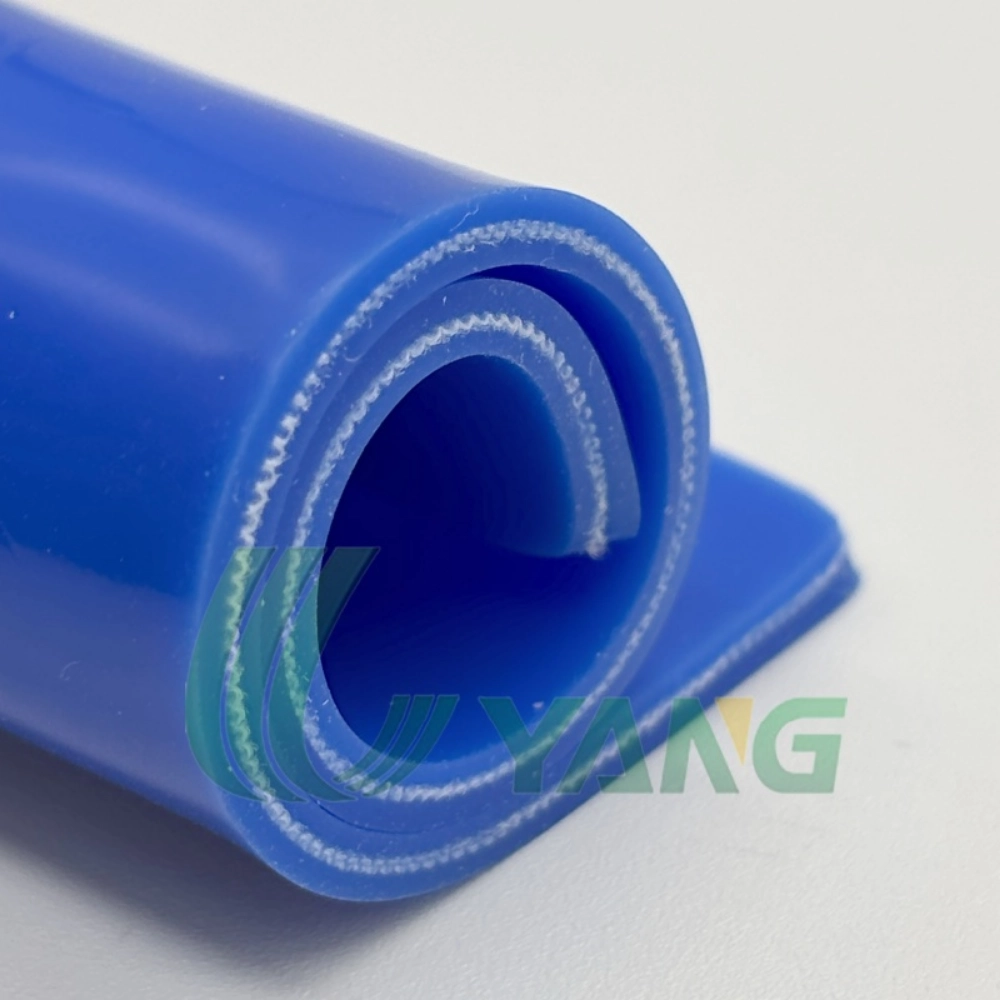
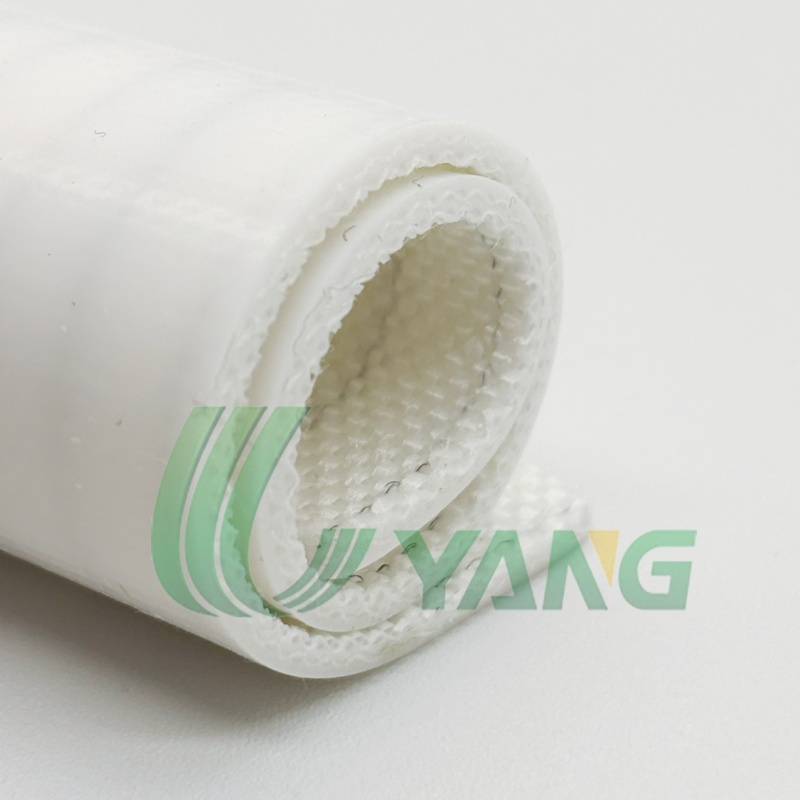
A relevant option from UYANG BELTING is the White Silicone Conveyor Belt with 1.6 mm thickness and two fabric plies. It combines a white silicone surface with fabric reinforcement. The thin profile may suit confectionery molding or bakery transfers where release, visibility, and flexibility matter.
Use the Published Values as a Starting Point
The product page gives construction details, but its temperature statements are inconsistent. Request the latest controlled data sheet. Confirm continuous temperature, peak duration, minimum pulley diameter for the wrap direction, tensile reference, food-contact documents, and cleaner resistance. Where traceability is required, certificates should match the supplied material and lot.
Know When to Choose Another Construction
This two-ply belt is not right for every food zone. A homogeneous positive-drive belt removes fabric layers and may suit heavy washdown or sprocket drives. A PU belt may fit lower-temperature duties where abrasion or cost matters more. Review the wider UYANG BELTING product range only after ranking the process risks.
Prove the Belt on the Line before Full Release
A sample trial bridges the data sheet and production order. Set acceptance criteria first. Use normal product, sanitation chemistry, and enough time to reach thermal equilibrium and realistic residue. A short clean-belt run may miss late-shift sticking.
Run a Four-Part Acceptance Test
- Release: count stuck, distorted, or misplaced products over a defined batch.
- Cleanability: record cleaning time, water use if measured, visible residue, and the result of the plant’s normal hygiene check.
- Mechanical behavior: mark a reference position and record tracking drift, tension adjustment, splice behavior, and edge wear.
- Product quality: check markings, gloss transfer, crumbs, breakage, and spacing at the next machine.
Turn Trial Results into Order Controls
Keep the approved sample or clear photographs and measurements. Put construction, dimensions, tolerance, surface, splice, edges, guides, and documents on the purchase order. Compare replacements with that record before installation. UYANG BELTING describes its background on the company profile; the order drawing and acceptance record should still control the purchase.
Plan Cleaning and Inspection around the Failure Modes
Cleaning must remove soil without attacking the belt, joint, or edge. Follow the chemical maker’s concentration, temperature, and contact-time limits, and confirm belt compatibility. Rinse as required. Inspect under good light; a white surface reveals stains, but small cuts still need close examination.
Watch the Discharge and the Return Run
Buildup often starts at the discharge, scraper, or transfer plate. Check while the belt is warm and loaded. On the return run, look and listen for contact with guards, pans, or rollers. A release problem may be a mechanical fault that changes the peel angle.
Set Simple Replacement Triggers
Replace or repair the belt when cuts expose reinforcement, edges fray, the splice lifts, tracking cannot hold after alignment checks, or residue remains after the validated cleaning cycle. Do not wait for a visible break if the belt touches exposed food. For more context on thermal checks near oven and cooling positions, see this bakery belt heat resistance guide.
FAQ
Is a silicone conveyor belt suitable for direct food contact?
It may be, but suitability depends on the exact formulation and the market where the food is sold. Request current food-contact declarations and migration reports for the supplied belt, not a general certificate for the material family.
Does a silicone surface stop all sticky bakery products from adhering?
No. Release also depends on product recipe, temperature, pressure, dwell time, surface finish, contamination, and discharge geometry. Test the real product after the belt and residue have reached normal operating conditions.
What temperature rating should be placed on the order?
Use the supplier’s confirmed continuous limit and any separate short-peak limit for the chosen construction. State product, ambient, and cleaning temperatures, then have the supplier confirm them in writing.
Why do pulley diameters matter for a thin silicone belt?
Repeated bending below the permitted diameter can stress the fabric, coating, and splice. List every pulley and reverse bend, including the smallest nose bar, so the proposed belt can be checked against the actual path.
What should be approved before a full production order?
Approve a sample after release, sanitation, tracking, and product-quality trials. Record the final thickness, width, length, surface, plies, splice, edges, guides, tolerances, and required compliance documents on the order drawing.