A sanitary belt can still create daily trouble when its pitch, sprocket layout, tension, or cleaning access does not match the conveyor. Positive drive belts solve tracking and slip through tooth engagement rather than high friction, but the benefit depends on careful mechanical matching. This guide shows what a food processor should verify before approving a belt, a sprocket set, or a line conversion.

Key Takeaways
- Positive drive depends on matching belt pitch, sprocket tooth form, shaft spacing, and engagement depth.
- Low running tension can reduce stretch and tracking corrections, but it does not excuse poor frame alignment.
- A fabric-free belt body removes a common liquid-wicking path; the full conveyor still needs accessible, drainable hygiene design.
- Approve a sample only after wet tracking, product-release, washdown, and restart checks on the intended line.
Why Positive Drive Changes the Mechanical Problem
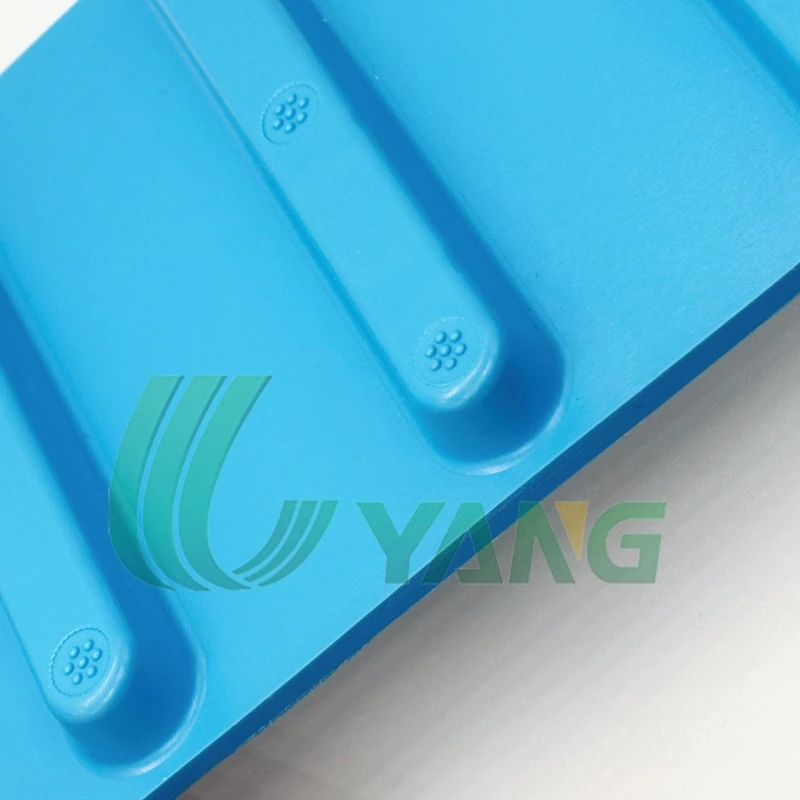
A friction-driven belt transfers force where the belt wraps around the pulley. If the belt is wet, oily, lightly tensioned, or contaminated with product, the available friction may fall and slip can begin. A positive drive belt uses molded teeth on its underside that engage matching sprockets. Drive force therefore comes from geometry. The conveyor can run with lower tension, provided the sprockets and belt stay correctly engaged.
Pitch Is a System Dimension
Pitch is the repeated distance between drive features. It is not a catalog detail to choose in isolation. The belt pitch must match the sprocket, while sprocket diameter affects polygonal action, belt speed variation, and the available wrap. UYANG BELTING lists 25.4 mm, 39.7 mm, and 50.4 mm pitch options for its positive drive range. Ask the supplier to confirm the belt and sprocket pairing for your shaft diameter, speed, load, and center distance.
Low Tension Still Requires Alignment
Lower tension may reduce bearing load and make belt lift-up easier during cleaning. Yet a skewed shaft, uneven wear strip, trapped product, or off-center loading can still push the belt sideways. During commissioning, mark the belt edge position at empty, normal, and peak load. A slow drift often points to geometry or loading, not a need to tighten the belt harder.
Where Hygiene Gains Come From
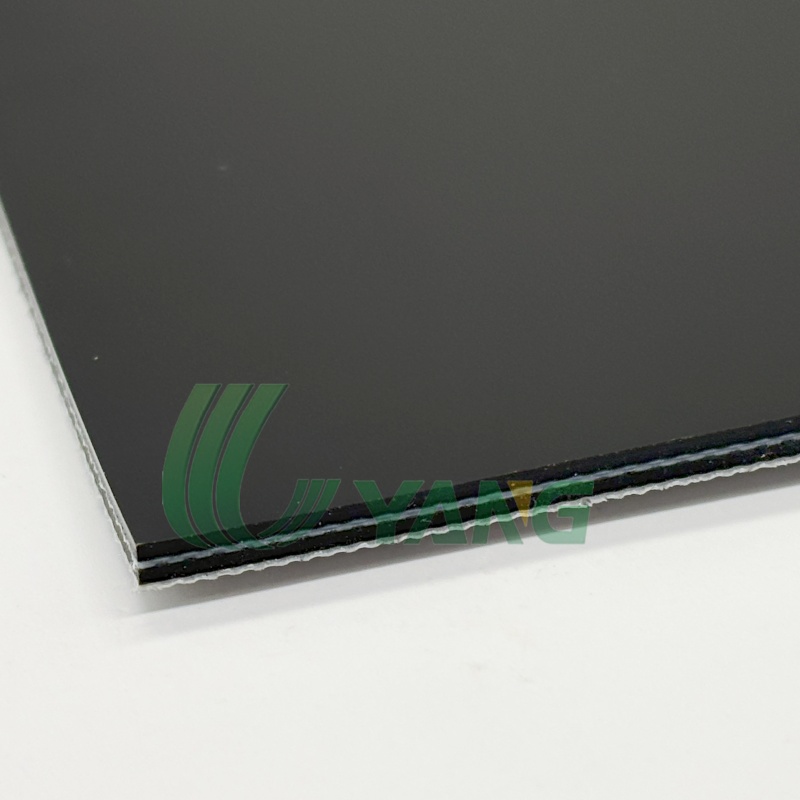
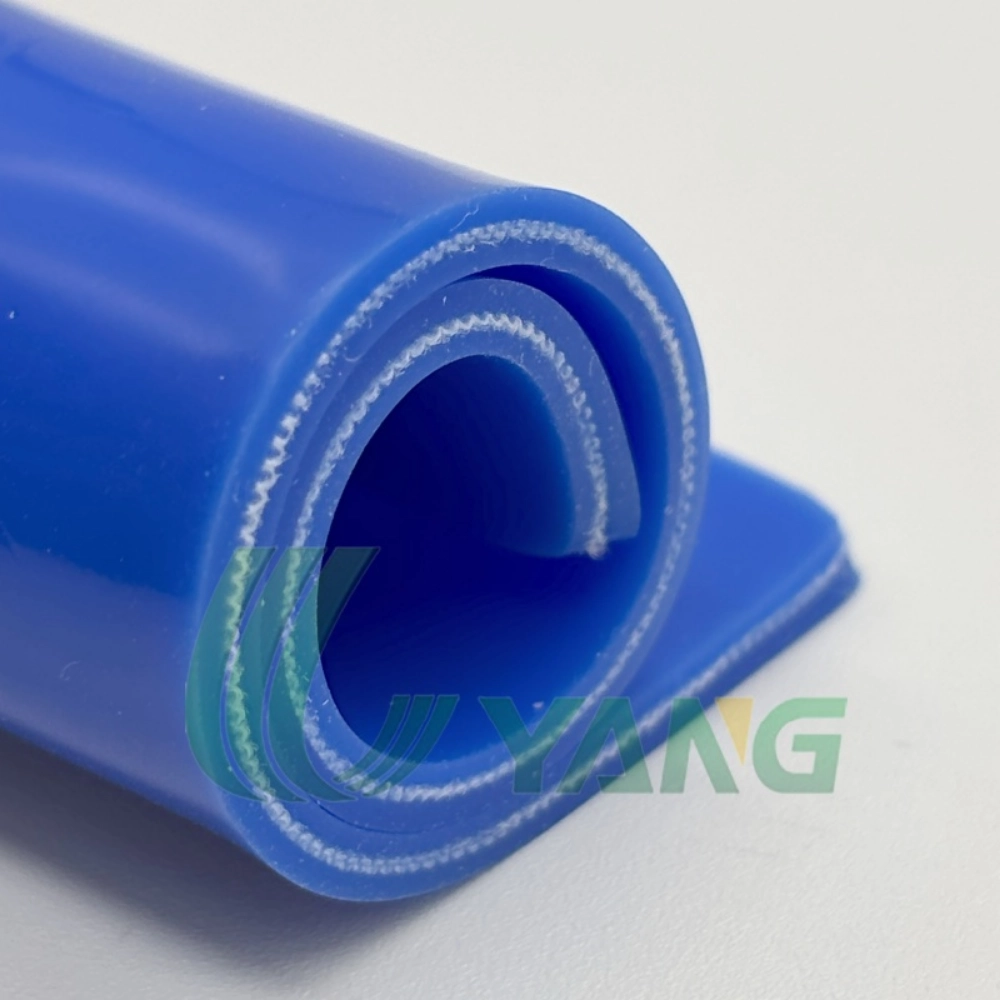
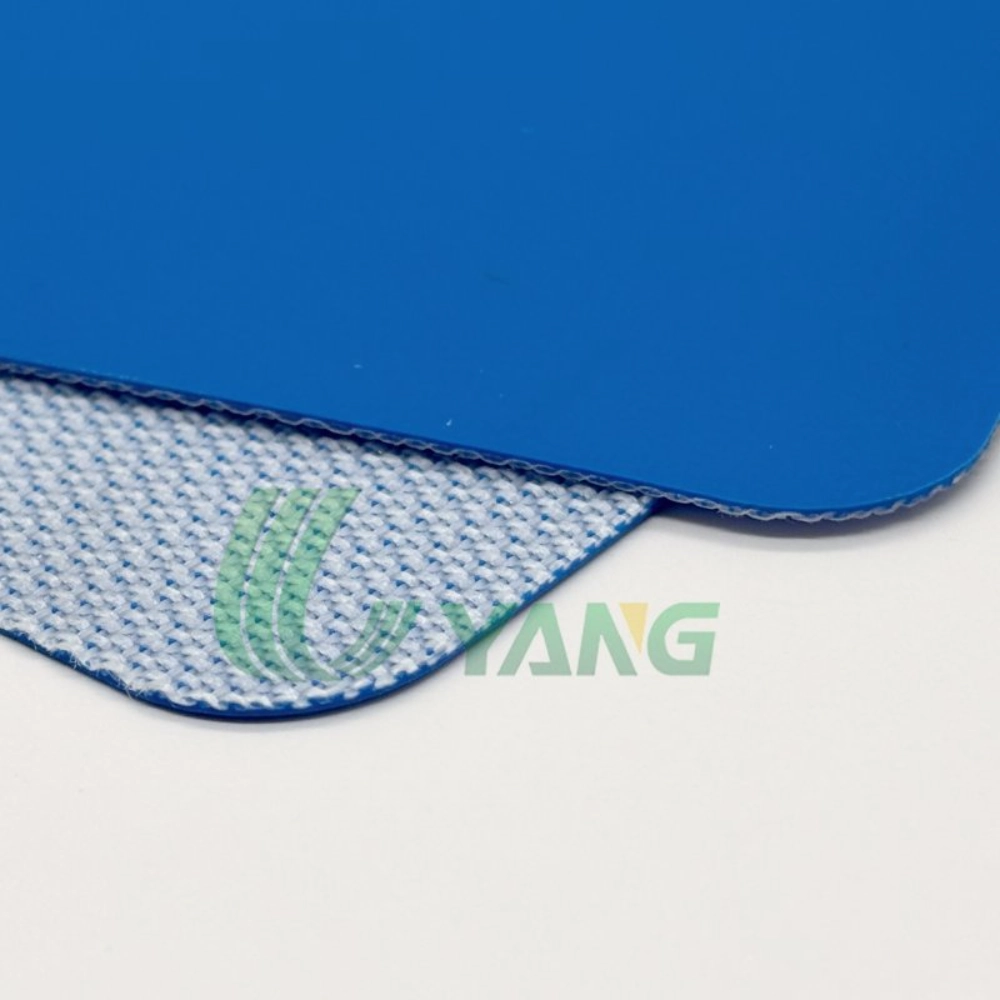
The useful hygiene gain is structural. A homogeneous belt has no fabric reinforcement layer that can wick liquid after an edge cut or damaged splice. Its continuous thermoplastic body can also simplify visual inspection. That does not make the conveyor self-cleaning. Residue can remain under return paths, around sprockets, against guides, and at poorly drained frame joints.
Cleanability Belongs to the Whole Conveyor
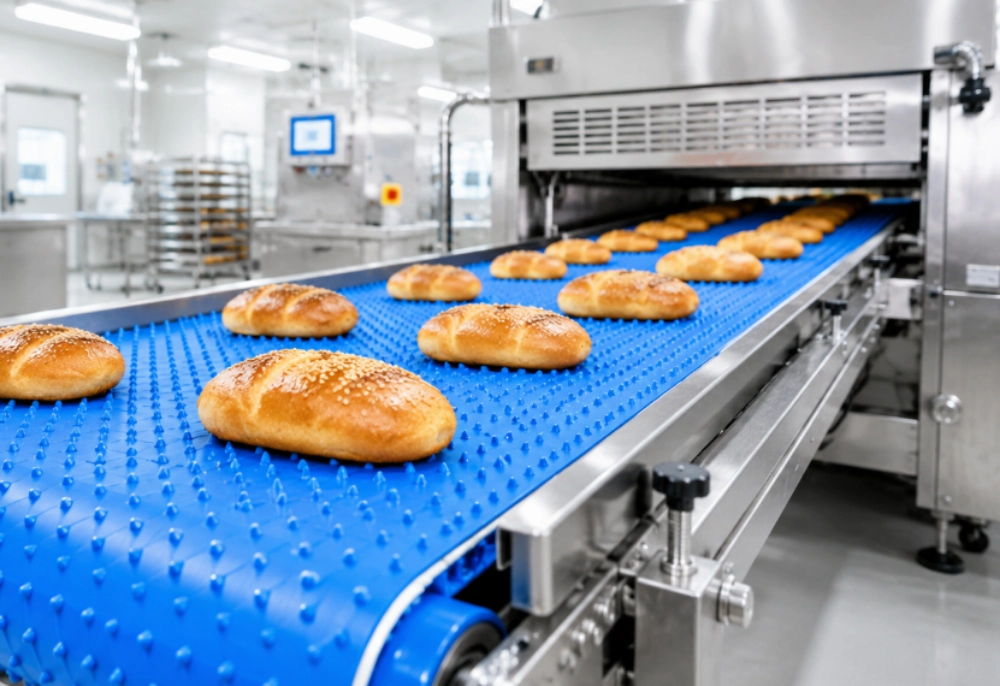
Review the belt together with the food-processing application layout. Check whether sanitation staff can lift the belt safely, reach the tooth pockets, remove guards without tools where permitted, and see the return side. Also confirm that the cleaning chemical, concentration, contact time, water temperature, and rinse step are compatible with the belt and accessories. Do not rely on a broad ‘food grade’ label as the cleaning procedure.
A Concrete Product to Evaluate
For raw meat, produce, frozen food, or fried-product lines, the Easy-to-Clean Positive Drive Homogeneous Belt K 40 Series is a specific option to put through line trials. Its product page lists customizable thickness, width, length, and surface finishes, plus compatible sidewalls, guides, and cleats. Treat those choices as engineering inputs: the surface must release the product, the underside must engage the sprocket, and every added profile must remain cleanable.
What to Put on the Sample Request
| Input | What to State | What to Verify |
| Conveyor geometry | Pulley and sprocket diameters, shaft centers, wrap, support layout | Full tooth engagement without binding or tooth skip |
| Product and load | Product type, unit weight, peak load, incline, impact points | Release, carry stability, and no permanent surface marking |
| Sanitation cycle | Chemical, concentration, temperature, pressure, contact time | No swelling, cracking, tackiness, or hard-to-reach residue |
| Operating pattern | Speed, starts per hour, cold starts, run time | Stable tracking through start, stop, and wet restart |
Commissioning Checks That Catch Expensive Mistakes
Start with dry rotation at low speed. Confirm sprocket alignment, guide clearance, and belt seating across the full width. Add product gradually, then repeat after washdown while the frame and belt are wet. Record edge position, motor current if available, unusual tooth noise, and residue at each inspection point. A short test that uses only a clean, empty conveyor misses the conditions that cause most complaints.
- Inspect the splice or endless joint from both sides after the first loaded run.
- Check that sidewalls and cleats flex without contacting guards or trapping product.
- Verify lift-up clearance and safe access before the sanitation team signs off.
- Keep the approved belt, sprocket drawing, and cleaning limits together in the maintenance file.
Supplier Questions Before a Production Order
A useful supplier discussion starts with drawings and samples, not a product name alone. Ask the UYANG BELTING product team to confirm pitch compatibility, minimum pulley or sprocket requirements, allowable fabrication details, splice method, accessory geometry, and chemical limits for your exact cleaning program. The UYANG BELTING company information can support vendor qualification, while your own trial should decide whether the belt works on the line.
FAQ
Does a positive drive belt need no tension?
It normally runs at lower tension than a friction-driven belt, but it still needs the installation allowance and take-up specified for the belt and conveyor.
Can one sprocket work with several belt pitches?
No. The tooth geometry and pitch must match the belt. Confirm the exact pairing before ordering.
Is a homogeneous belt automatically hygienic?
Its fabric-free body removes a wicking layer, but hygiene also depends on the splice, frame, guides, sprockets, access, drainage, and validated cleaning method.
What is the best first trial?
Run representative product through dry operation, washdown, wet restart, and full-load tracking checks.
When should cleats or sidewalls be added?
Add them only when incline, containment, or product spacing requires them, then verify that their joints and corners remain accessible for cleaning.