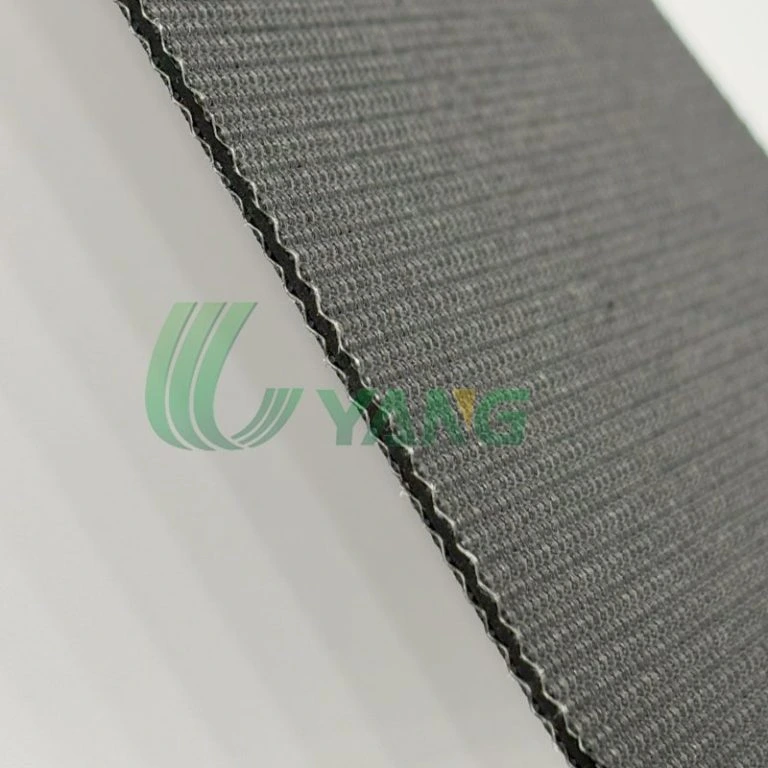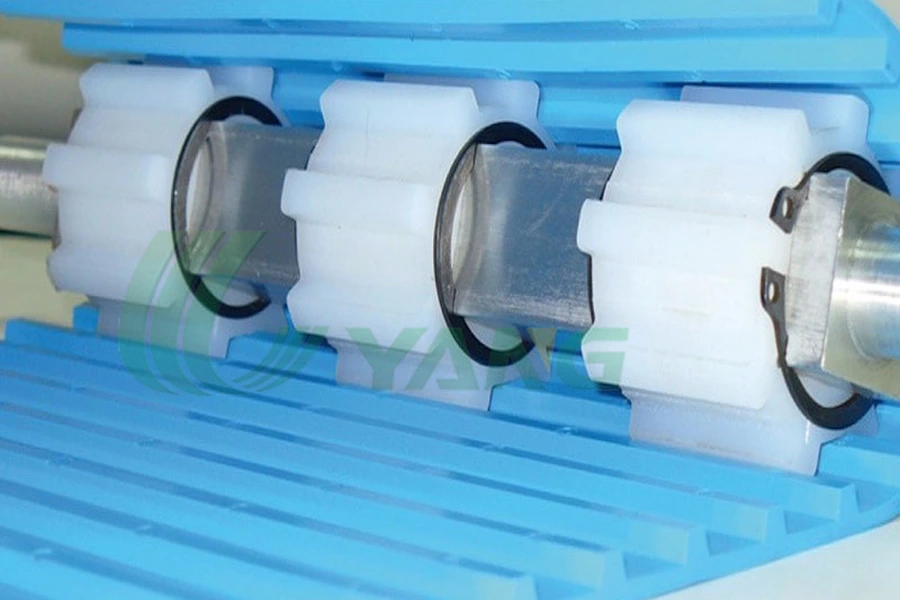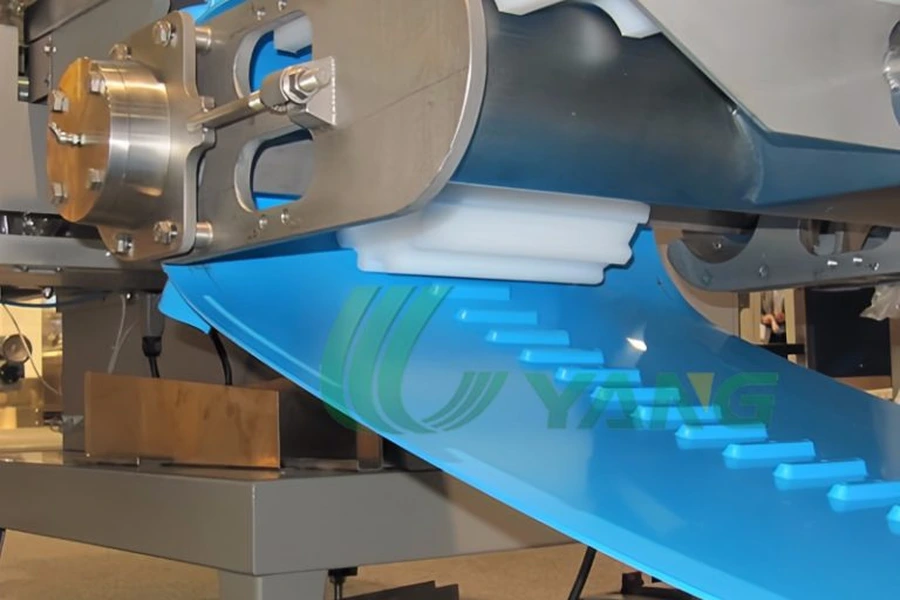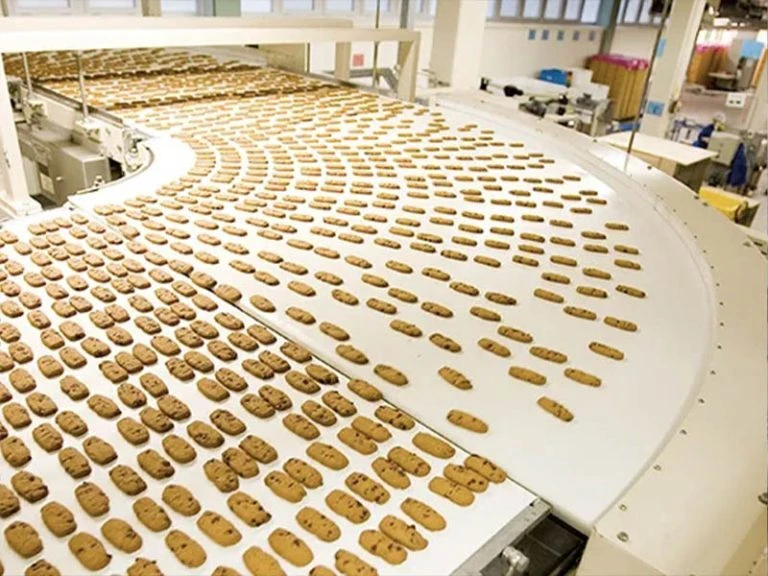
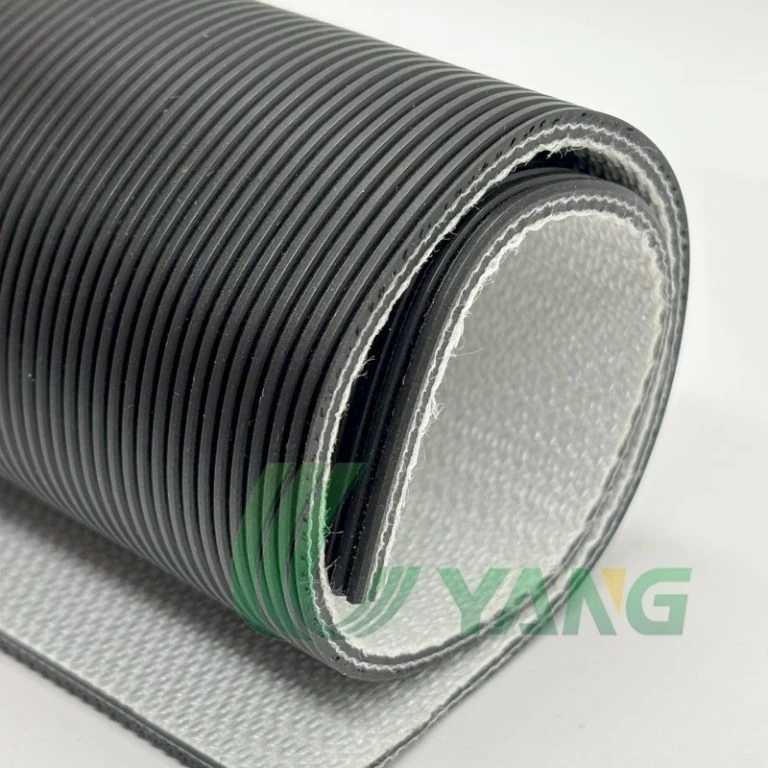
A longitudinal rib PVC conveyor belt can carry packages and parts more steadily than a smooth belt, yet the same rib pattern can make tracking faults more visible when the conveyor is not set correctly. Ribs create repeated contact lines along the belt surface. If the belt runs over a roller that is slightly out of square, has uneven crown, or receives unequal tension, those contact lines can add a sideways steering force instead of cancelling it out.
The first fix is rarely more tension. A belt tracks because the running geometry, roller condition, load placement, and contact pressure point in the same direction. Before changing the take-up setting, inspect how the belt enters each roller, whether the ribs are compressed evenly, and whether the product is loading the centerline. That sequence prevents a simple alignment defect from becoming edge wear or a damaged splice.
Key Takeaways
– Longitudinal ribs improve grip and product guidance, but they do not correct an out-of-square conveyor frame.
– A tracking fault often begins at the first roller that the belt approaches unevenly, not where the belt finally reaches the edge.
– Increasing tension can hide a light-load tracking issue and worsen bearing load, splice stress, or edge curl.
– The best inspection compares roller parallelism, belt tension, rib contact, and product loading at the same time.
Why Longitudinal Ribs React Differently to Small Misalignment
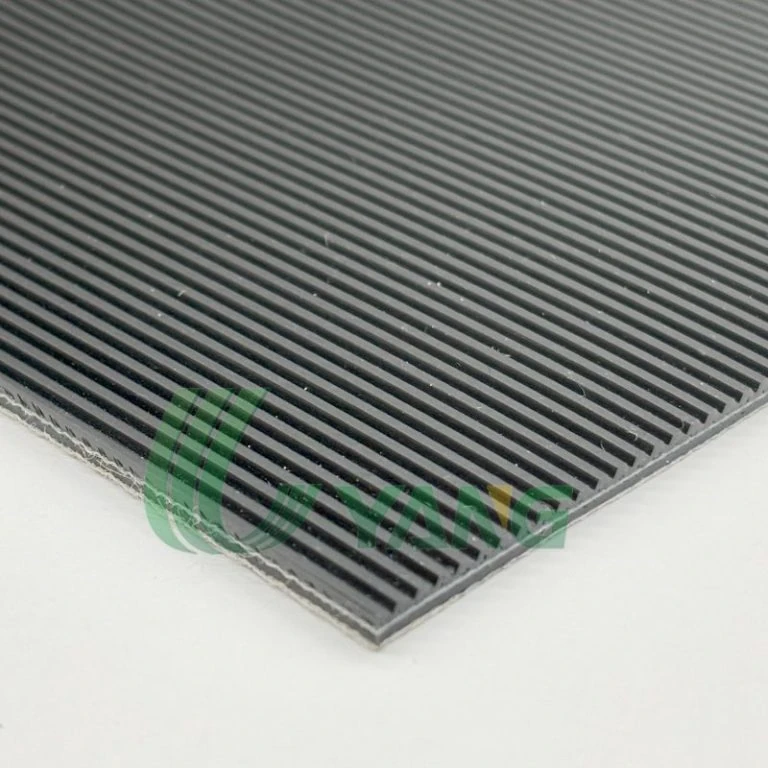
A smooth belt can slide slightly across a roller surface as it finds its running position. Longitudinal ribs change the contact pattern by creating raised lines that compress and release as the belt wraps the roller. When the roller axis is not perpendicular to the belt path, one side can experience a different contact pressure or travel distance. The belt then tends to move toward the side that offers the more favorable path.
This effect is not a defect in the ribbed surface. It is a reason to treat rib geometry and conveyor geometry as a pair. A narrow roller, a roller with buildup on one side, or a slightly skewed return roller may influence a longitudinal rib belt earlier than it influences a plain belt. Product loading can add another force when boxes, trays, or wood components consistently enter off center.
The Longitudinal Rib PVC Conveyor Belt should be evaluated with the roller layout, load direction, incline angle, and cleaning method. The surface pattern is useful when it supports the application, but it cannot compensate for a conveyor that is already trying to steer the belt sideways.
Find the First Point Where the Belt Starts to Move
Watch the belt from the drive through the first carrying rollers and then along the return run. Mark the point where the edge first begins to move rather than concentrating on the place where it rubs the frame. A belt can run straight across several rollers and then drift after one roller with contamination, damaged lagging, loose bearings, or a mounting bracket that has shifted.
Check both empty and loaded conditions. A belt that tracks correctly empty but moves under load may have an off-center product stream, a drag point at a transfer, or unequal support across the width. A belt that moves only when cold, wet, or heavily cleaned may be reacting to temporary surface friction, pulley contamination, or a tension setting that has little margin.
| Observation | Likely force acting on the belt | Useful first check |
| Belt moves toward one side immediately after a roller | Roller is skewed or has uneven contact | Check roller axis and buildup across the full width |
| Belt tracks empty but not under product load | Load enters off center or transfer creates side drag | Observe product landing point and side guides |
| One edge shows faster polishing or fray | Persistent side contact with frame or guide | Find the first drift point before adjusting the take-up |
| Tracking changes after cleaning | Water, residue, or scraper pressure is uneven | Inspect roller and scraper contact on both sides |
| Belt improves only at excessive tension | Geometry fault is being masked | Restore recommended tension and correct alignment source |
Adjust Geometry Before Increasing Tension
Set the conveyor frame and rollers first, then use the take-up only to create the tension needed for drive and stable running. When a belt is over-tensioned to stop drift, the belt may run for a short time but the added load can increase bearing stress and magnify any defect at a splice or edge. It also makes later diagnosis harder because the original symptom is being suppressed rather than corrected.
Clean rollers and verify that the belt wraps them evenly. On a ribbed surface, debris trapped in one zone can create a raised contact area that behaves like a temporary crown. Scrapers need enough pressure to remove carryback without pressing one side of the belt more than the other. The same principle applies to side guides: they should protect against occasional product movement, not become a constant steering device.
The causes listed in conveyor belt slippage and corrective action overlap with tracking because both faults depend on traction, wrap, contamination, and tension. The difference is that tracking diagnosis must also locate the lateral force that is moving the belt across the conveyor.
Two Field Mistakes That Damage Ribbed PVC Belts
One common mistake is steering the belt by pushing a guide against the drifting edge. Continuous guide contact wears the edge and leaves the upstream cause untouched. Another is replacing a belt before measuring the roller arrangement. A new belt installed on the same skewed frame can develop the same tracking pattern on its first shift.
When a Longitudinal Rib Pattern Is Not the Right Surface
Longitudinal ribs are not the automatic answer for every incline or product type. Very small, unstable, or round products may need a different pattern, sidewall, cleat, or transfer design. Applications that must wipe or scrape the belt continuously may also require a surface that matches the cleaning and product-release method. Choose the pattern from the product behavior and conveyor geometry, not from grip alone.
Specify the Belt With the Conveyor Details That Control Tracking
A useful belt request includes belt width, length, roller diameter, pulley arrangement, incline, product size and weight range, speed, loading direction, surface pattern, working environment, and any guides or scraper arrangement. Include photos of the conveyor if a tracking issue already exists. Those details reveal whether the problem is a surface-selection question or a mechanical alignment question.
UYANG BELTING can match patterned PVC belt options to that operating information, while the product center shows the broader range of belt surfaces and constructions available for different conveyance conditions. A correct surface works best when the conveyor gives it a stable path to run.
Conclusion
A longitudinal rib surface can improve grip and guidance, but it cannot compensate for a skewed roller, uneven buildup, off-center loading, or unsuitable take-up geometry. Diagnose the first point of drift under empty and loaded conditions, restore the mechanical path, and then confirm that rib pattern, belt construction, splice, guides, scraper, and cleaning method suit the product and conveyor.
Review the UYANG longitudinal rib PVC conveyor belt for the current product reference, then contact UYANG BELTING. Send the belt width and length, roller diameters, conveyor layout, speed, incline, product range, loading direction, cleaning method, and photos of the drift point to obtain a belt and tracking review.
Frequently Asked Questions
Do longitudinal ribs cause a PVC conveyor belt to track sideways?
The ribs do not cause tracking by themselves. They make the belt’s response to roller skew, uneven contact, off-center loading, and scraper pressure easier to see. Check the conveyor geometry before blaming the surface pattern.
Should more tension be used to correct a drifting ribbed belt?
Extra tension may temporarily reduce a symptom, but it can add bearing load and splice stress. First find the roller, guide, transfer, or load condition that creates the sideways force.
Why does a ribbed PVC belt track differently after cleaning?
Water, cleaner residue, trapped debris, and uneven scraper contact can change friction across the width of the belt. Inspect the roller surface and cleaning hardware, then compare tracking after the belt is dry.