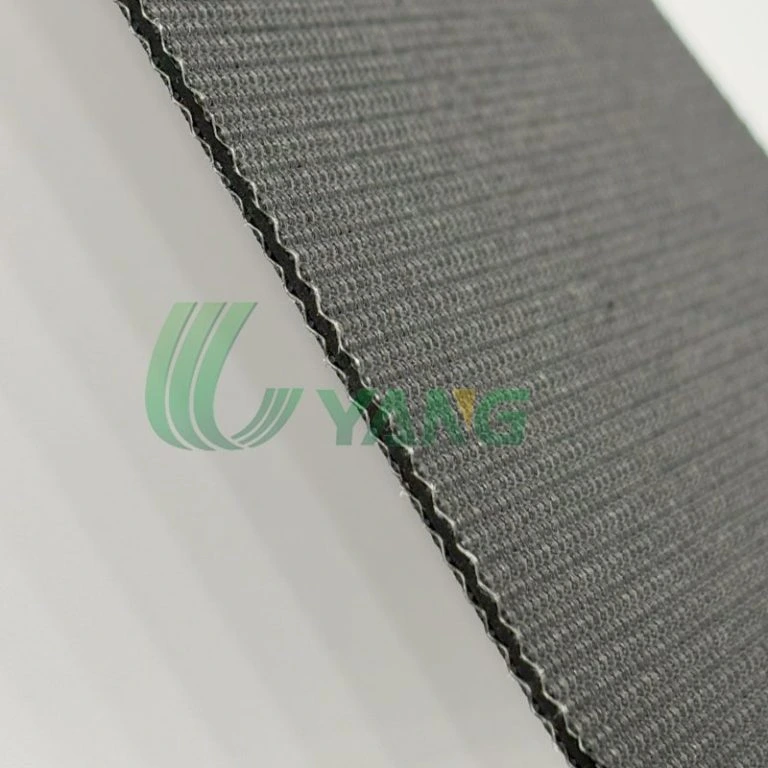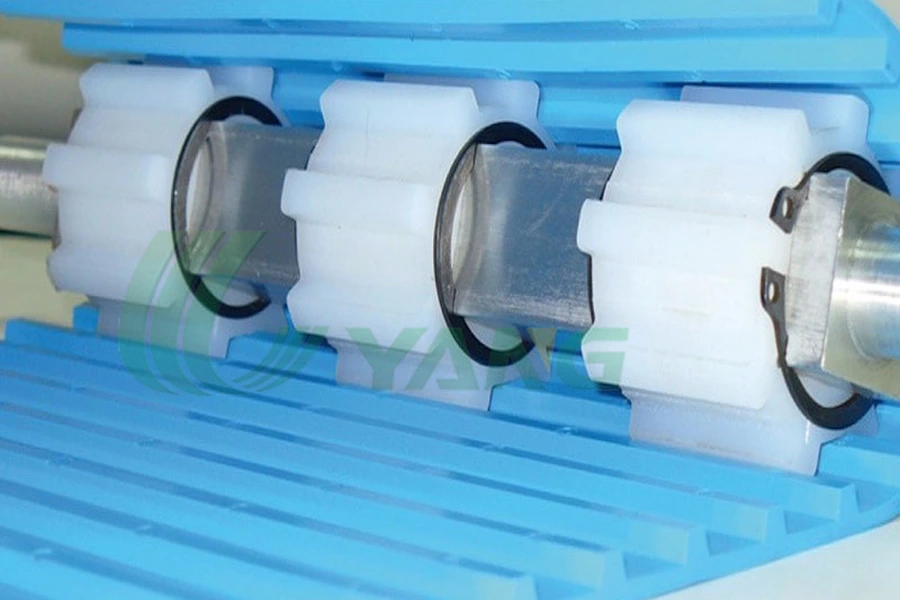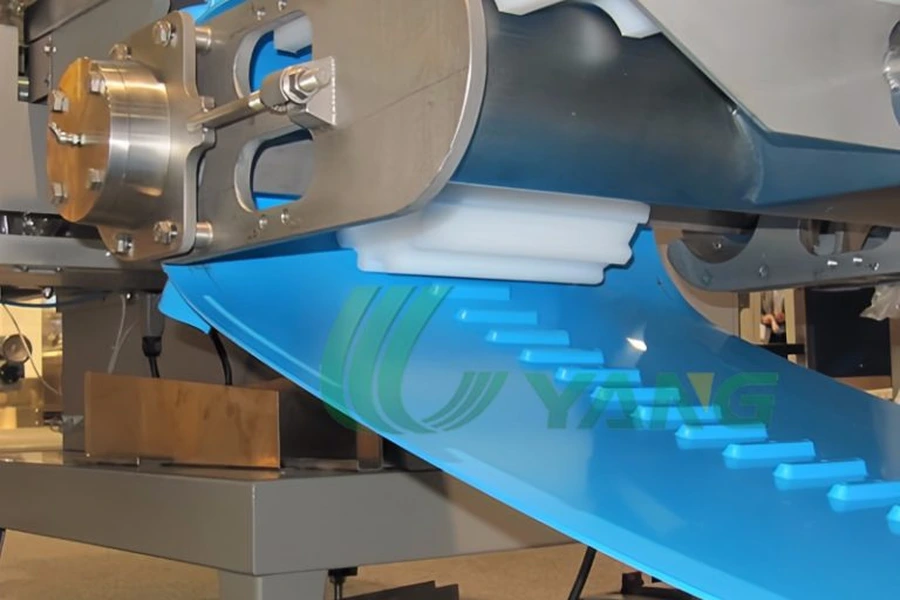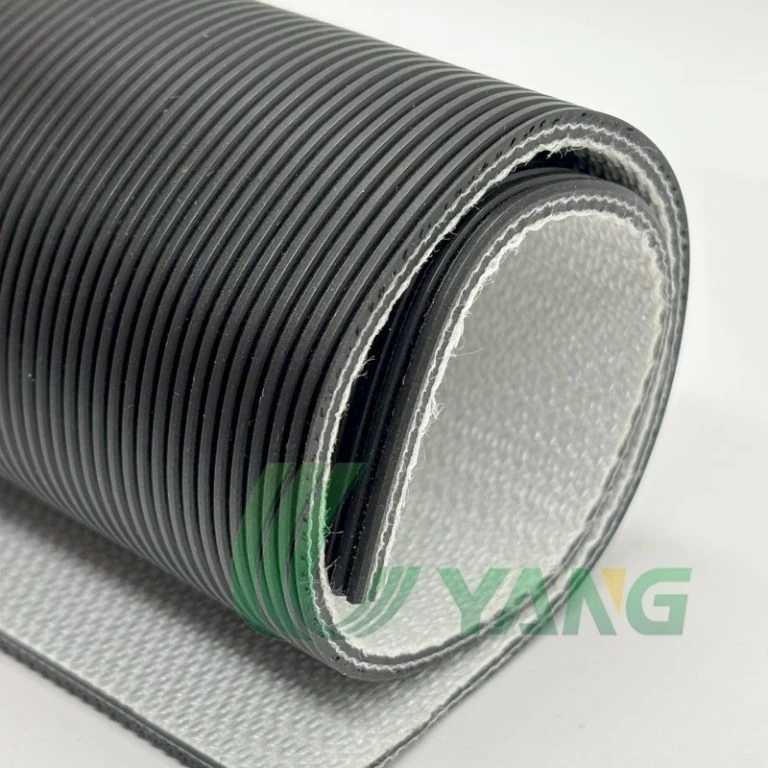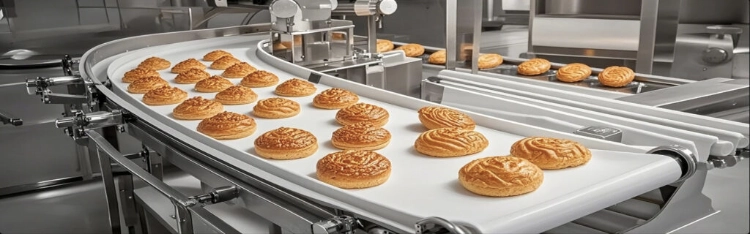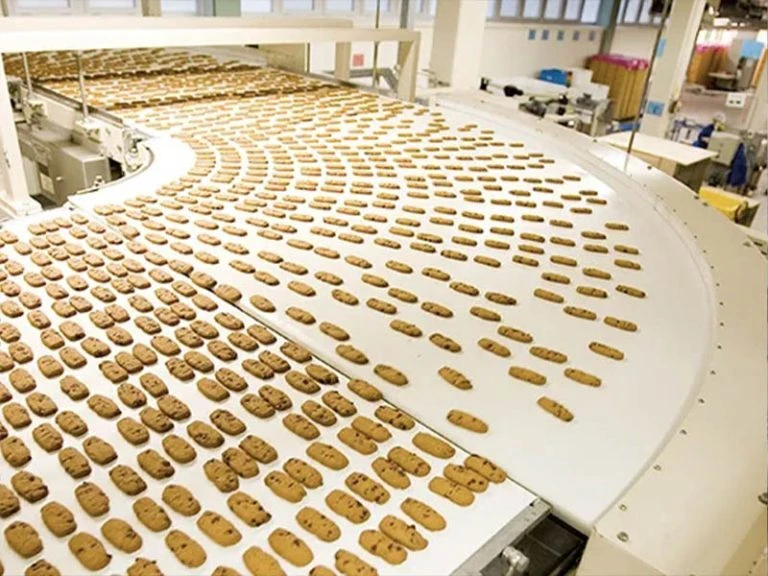
A positive drive homogeneous belt moves because its underside profile engages with matching drive elements, not because a high-tension belt is squeezed hard against a pulley. That distinction matters in wet food lines. Adding tension to cure a tracking or engagement problem can increase bearing load, distort the belt path, and make washdown performance less predictable without correcting the actual cause.
Reliable engagement comes from compatible belt pitch, sprocket geometry, correct shaft alignment, adequate wrap, and a clean contact area. The belt must enter and leave the drive without forcing its profile sideways or crushing it against a contaminated wheel. When those conditions are right, the conveyor can transmit motion with lower tension than a friction-driven arrangement. When they are wrong, the symptoms often appear as jump, noise, uneven wear, or erratic tracking.
Key Takeaways
- Positive drive is based on mechanical engagement, so drive compatibility matters more than simply tightening the take-up.
- A belt can skip or chatter when sprockets are misaligned, worn, contaminated, or placed at the wrong spacing.
- Low tension does not mean no tension; the belt still needs enough control to avoid excessive sag and product instability.
- Wet cleaning must remove residue from sprocket valleys and return elements, not only from the visible carrying surface.
How Positive Drive Changes the Load Path
A friction-driven belt relies on contact pressure and surface friction at the drive pulley. A positive drive homogeneous belt transfers torque through the matching geometry between the belt and the drive wheel. The driving force is therefore concentrated at repeated engagement points. If the shafts are parallel and the sprockets sit on the same plane, the force is shared around the belt width. If one sprocket is advanced, blocked by debris, or set at a different lateral position, the belt can be pulled unevenly.
This is why a smooth-running positive drive conveyor is not judged by tension alone. Look at the tooth or profile engagement, the line of travel, the roller and shaft alignment, and the condition of the underside after a cleaning cycle. A clean, even drive path normally produces less heat and less unnecessary stretch than a system that relies on excess tension to force motion.
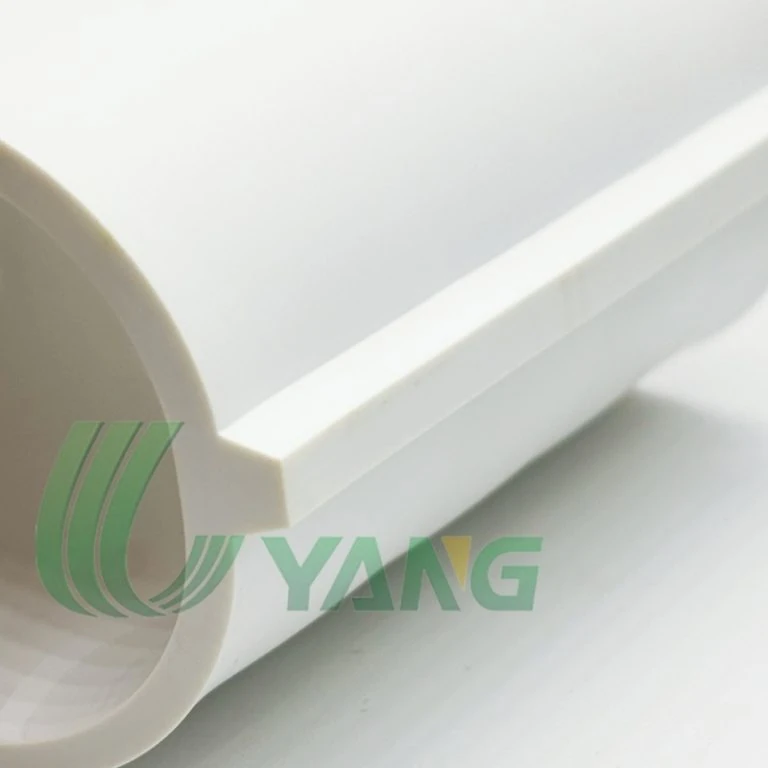
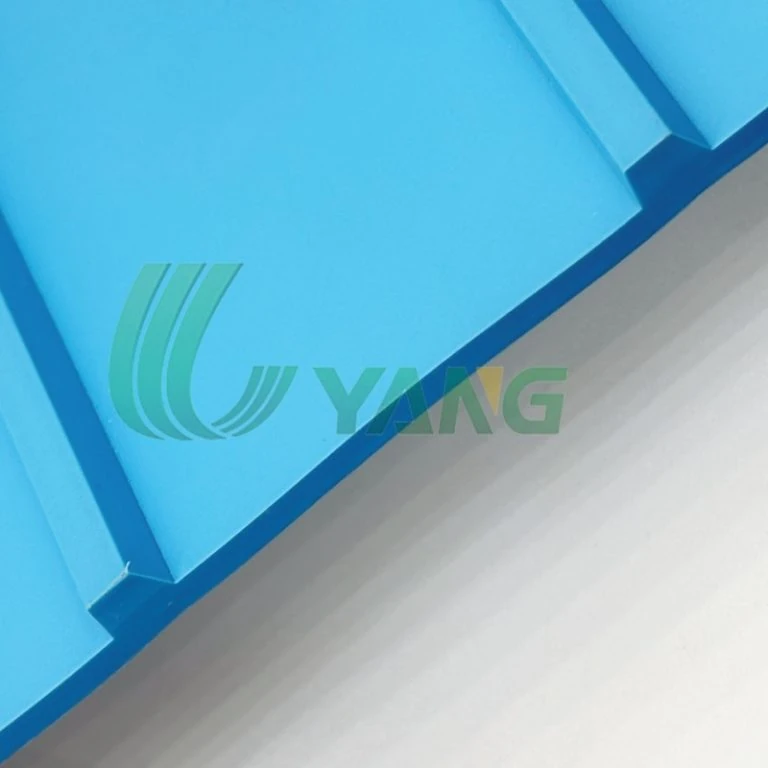
The Easy-to-Clean Positive Drive Homogeneous Belt K-50 Series should be paired with the intended drive components and belt layout. The visible top surface is only part of the operating system; the engagement pattern below it determines whether the line runs steadily.
Check Engagement Before You Change the Take-Up Setting
Stop the conveyor under an approved isolation procedure and inspect the belt at the drive. Check that every sprocket is seated, aligned on the shaft, and free of trapped product or cleaning residue. Turn the system slowly where safe and observe whether the belt profile enters each sprocket consistently across the width. A repeating mark on one side often points to a local drive or roller condition rather than a global belt problem.
Next, compare the belt path at the drive and return. Excessive sag can let the belt climb or strike components, while excessive tension can pull the belt so tightly that the engagement geometry cannot settle naturally. The target setting depends on the conveyor arrangement and belt construction, so use the belt and conveyor documentation rather than copying a tension value from another line.
| Symptom | Likely engagement issue | Inspection action |
| Regular click or jump at one shaft position | Damaged or contaminated drive element | Clean and inspect the matching sprocket and belt profile |
| Belt walks sideways near the drive | Shaft or sprocket lateral alignment is off | Check shaft parallelism and sprocket position across the width |
| Belt runs quietly empty but chatters with product | Sag or load response changes engagement | Observe the loaded belt path and support spacing |
| Rapid wear on one underside zone | Local rubbing or incomplete engagement | Inspect return rollers, guides, and drive-plane alignment |
| Take-up requires repeated adjustment | Underlying geometry or cleaning issue remains | Review belt path, wheel condition, and tension method |
Cleaning Has to Reach the Drive Side
A homogeneous belt can reduce fabric-related retention points, but the hygienic result still depends on the entire conveyor. Product residue can collect around drive wheels, guides, return rollers, and supports. If the sprocket valleys are not cleaned, the belt may ride on residue rather than seat fully. That changes the drive relationship and can leave a persistent source of noise or uneven motion.
Build cleaning access into the conveyor. Removable or accessible drive covers, enough clearance around the return run, and a method for inspecting the underside are more valuable than a promise of easy cleaning that cannot be carried out on the installed machine. Follow the approved cleaning chemistry and temperature for the belt material, then inspect the profile after rinsing and drying rather than assuming the visible face tells the whole story.
The technical trade-offs in positive drive belt selection become clearer when the drive-side cleaning method is included. A belt choice and a sanitation layout should be evaluated together.
Two Habits That Shorten Drive-System Life
One damaging habit is using the take-up as a cure for every noise or jump. If a single sprocket is misaligned, added tension transfers more load into the same faulty point. Another is cleaning the top surface thoroughly while leaving the underside and drive elements unchecked. Residue at the drive can create engagement errors long before it becomes obvious from above.
When a Positive Drive Belt Is Not the Easiest Retrofit
A positive drive belt may not be a simple replacement for a friction belt on an existing conveyor. The drive wheels, shaft arrangement, wrap, return path, and cleanability of surrounding components may need to change. Lines with very small transfer gaps, unusual product support needs, or unsuitable roller geometry should be reviewed as a conveyor system rather than converted by changing the belt alone.
Use a Drive-Side Checklist During Acceptance
Before releasing a new conveyor or belt replacement, document belt model, drive-wheel type, shaft spacing, sprocket positions, return support, belt path, tension method, cleaning access, and loaded test results. Add photos of the drive side when it is clean and correctly assembled. That record gives maintenance teams a useful baseline when sound, tracking, or engagement changes later.
UYANG BELTING can review positive-drive belt requirements alongside product type, cleaning method, conveyor dimensions, transfer points, and line speed. The industry application pages also help place belt construction in the context of the material and hygiene conditions it must handle.
Conclusion
Positive drive depends on correct engagement, not friction-level tension. Check wheel compatibility, shaft alignment, tooth seating, belt path, return support, load response, cleaning access, and the approved take-up method before increasing tension. A retrofit should be reviewed as a conveyor-system change because the drive wheels, wrap, transfer geometry, guides, and hygienic access may all need adjustment.
Review the UYANG K 50 positive drive homogeneous belt for the current product reference, then contact UYANG BELTING. Send the conveyor dimensions, drive and return layout, product load, line speed, transfer points, cleaning chemicals, temperature, and current symptoms to confirm the belt and drive arrangement.
Frequently Asked Questions
Does a positive drive homogeneous belt need tension?
Yes, but its motion is based on engagement rather than high friction at a drive pulley. The required setting should control the belt path without masking alignment, wheel, or cleaning faults through excessive tension.
Why does a positive drive belt jump after washdown?
Residue, water, or cleaner left around the drive elements can prevent full engagement. Check the underside, sprocket valleys, shaft alignment, and belt path after the normal cleaning and drying routine.
Can existing friction conveyor pulleys run a positive drive belt?
Not automatically. Positive drive belts need compatible drive elements and a suitable conveyor path. Review the drive, return, wrap, transfer points, and cleaning access before treating the change as a belt-only replacement.