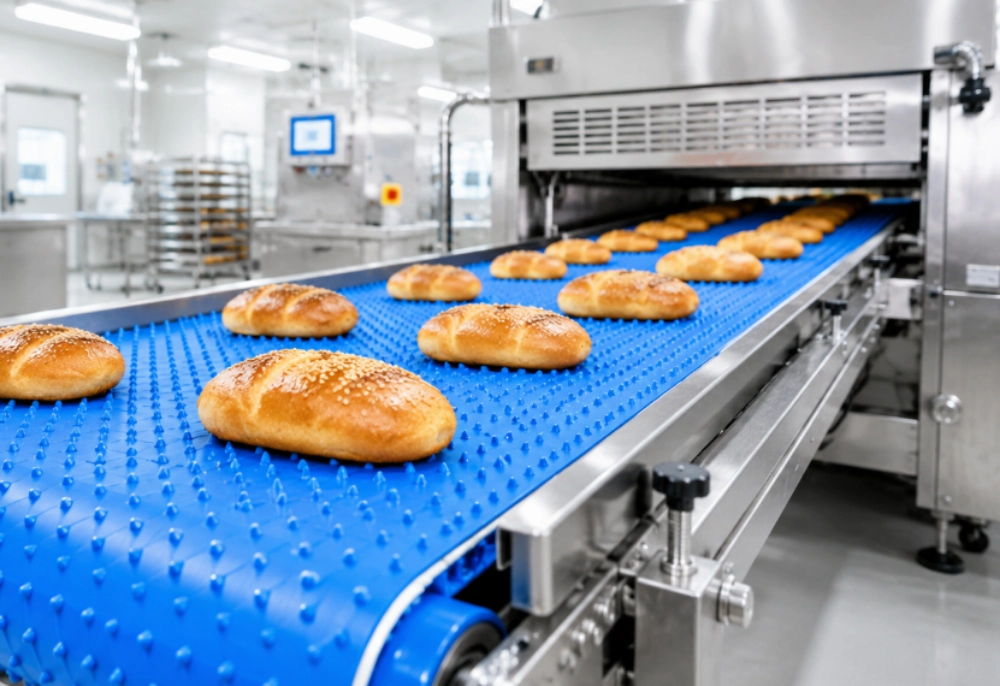
Silicone belts are often shortlisted when a hot or sticky product releases poorly from a conventional surface. Heat resistance and non-stick behavior matter, but neither can be approved from a material name alone. Product formulation, surface finish, belt construction, pulley size, dwell time, cleaning chemistry, and the actual temperature at the belt all affect the result. A controlled line trial gives purchasing and engineering a defensible answer.

Key Takeaways
- Measure belt-surface temperature and exposure time instead of relying only on oven or product setpoints.
- Test release after repeated heating, cooling, cleaning, and restart cycles. A first-pass result is not enough.
- Confirm pulley diameter, tracking, edge condition, and splice behavior for the chosen belt construction.
- Use retained product samples and a written score sheet so competing belts are judged the same way.
Why Silicone Needs an Application Trial
Silicone provides a flexible, high-friction surface with useful release behavior for many sticky foods. Those properties can pull in opposite directions. More grip may stabilize a product on an incline, while too much tack can disturb transfer or collect residue. Heat exposure can also change the product before it changes the belt. The trial must separate belt behavior from recipe, moisture, oil, sugar, and cooling effects.
Measure the Belt, Not Just the Process Setpoint
Place a suitable contact probe or validated infrared method at the belt position before product loading, during steady production, and after a stop. Note the peak value and how long the belt remains hot. A short pass through a hot zone is different from a belt parked beneath a heater during a fault. Send both normal and upset conditions to the supplier for review.
Release Is a Cycle Test
A new surface may release dough, confectionery, or cooked product cleanly during the first hour. The more useful question is what happens after oil films, caramelized sugar, crumbs, and cleaning residues accumulate. Run several heat, soil, clean, cool, and restart cycles. Weigh or photograph retained residue using the same sampling area each time. Small transfer changes become obvious when the method stays consistent.
Choose the Construction Before You Compare Price
Silicone is the cover material, not the whole belt specification. Fabric count, total thickness, top and bottom cover, surface texture, edge treatment, splice design, and allowable pulley diameter affect flex life and tracking. The right construction balances release with mechanical stability. A thicker or more heavily reinforced belt is not automatically better if it bends poorly around the existing conveyor.
| Trial Variable | Record | Reject or Investigate If |
| Thermal exposure | Surface peak, steady value, dwell, stopped-line peak | Hardening, blistering, gloss change, odor, or distortion appears |
| Product release | Residue area, transfer quality, product deformation | Residue grows by cycle or transfer becomes inconsistent |
| Mechanical fit | Pulley size, tracking position, edge and splice condition | Edge curl, splice lift, cracking, or repeated correction occurs |
| Cleaning response | Chemical, dose, temperature, time, rinse and dry method | Surface stays tacky, absorbs odor, or holds visible soil |
A Specific Belt for the Trial Set
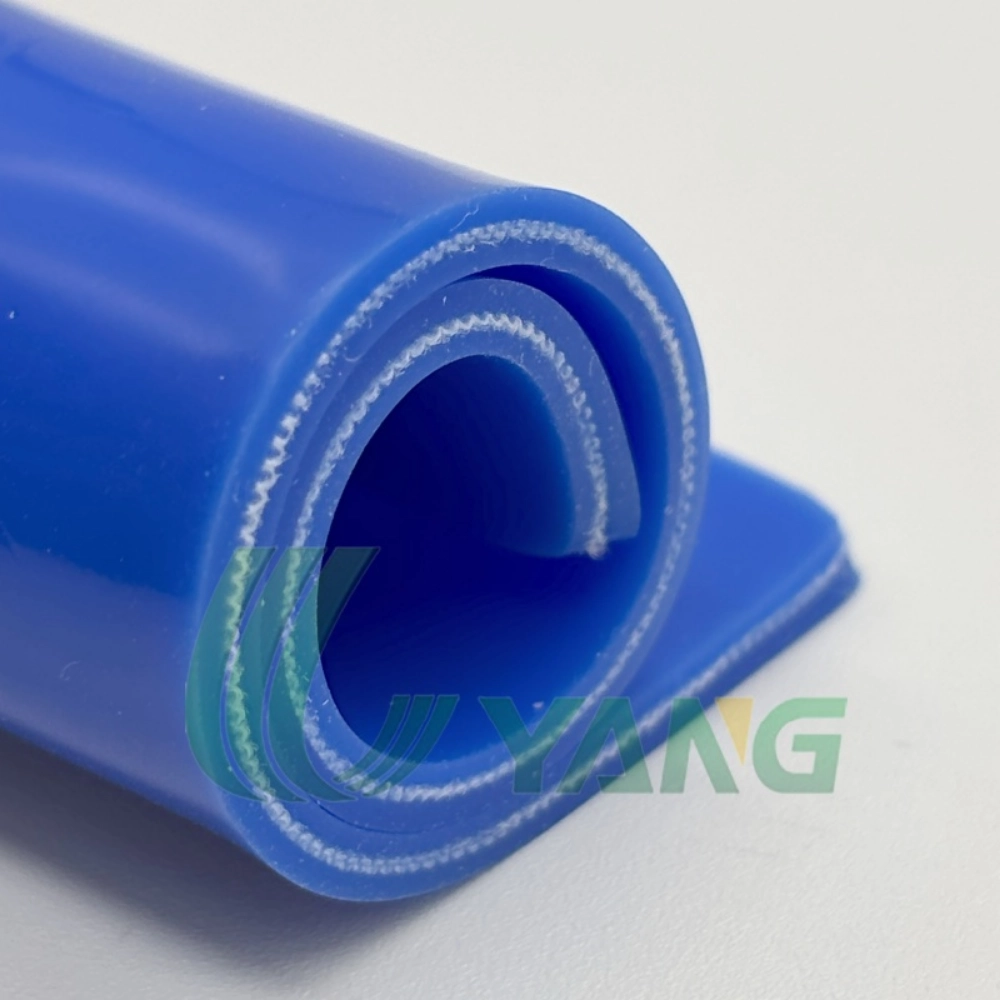
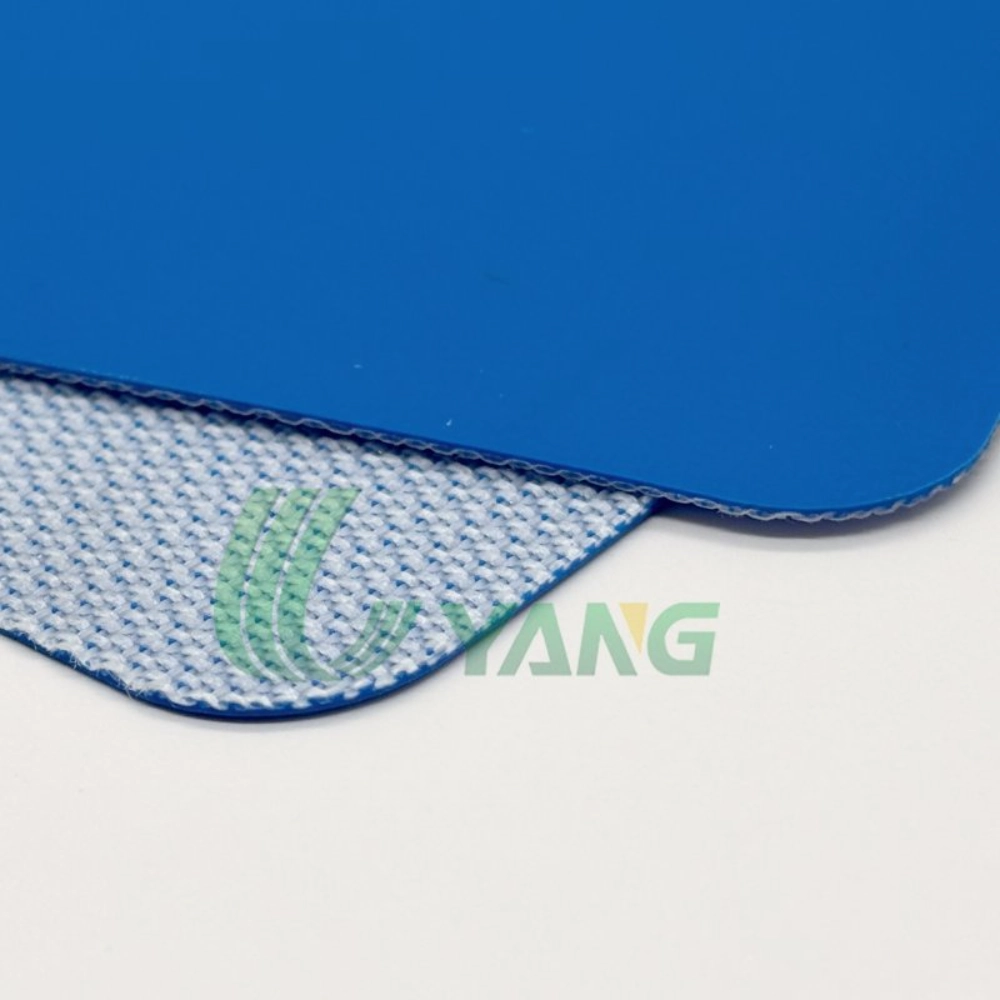
One concrete candidate is the Blue Thermostable Silicone Belt with 2.0 mm thickness. The official page identifies a 1 fabric, 2 silicone construction and positions it for food processing and high-temperature work. Those details make it a defined sample rather than a generic ‘silicone belt.’ Before approval, request the complete data sheet and confirm the temperature limit, pulley requirement, splice, food-contact documentation, and chemical compatibility for your market and process.

Build a Representative Sample Run
Use the smallest test section that still reproduces real contact time, transfer angle, support bed, and pulley wrap. Prepare product at the low and high ends of the normal recipe window. If sugar, oil, moisture, or flour dust changes through a shift, include those limits. The industry application library can help frame the operating context, but your own product and sanitation cycle remain the deciding evidence.
Run the Trial in Four Controlled Stages
Keep speed and loading stable within each stage. Change one important variable at a time, and record the reason for every pause. This sounds basic, but it prevents a recipe adjustment from being credited to the belt.
Stage 1: Dry Mechanical Check
Run the empty belt slowly. Check tracking, support contact, splice passage, edge clearance, and transfer points. Increase to production speed only after the belt remains stable.
Stage 2: Product Release Baseline
Process a fixed quantity and score release, product shape, carryback, and transfer. Keep several labeled samples or photographs as the baseline.
Stage 3: Repeated Heat and Cleaning
Repeat representative production and sanitation cycles. Inspect the top surface, underside, edges, and splice after each cycle. Do not shorten the chemical contact time just to protect a weak sample.
Stage 4: Restart and Upset Conditions
Test a normal cold start, a hot restart, and the approved stopped-line condition. Confirm that the belt releases product and tracks without a manual correction.
Turn Trial Results into a Purchase Specification
Send the final line data and sample results to the UYANG BELTING product center. The purchase specification should name construction, thickness, width, length, surface, edge treatment, splice, pulley constraints, operating temperature profile, cleaning method, and required documents. Qualify UYANG BELTING through your normal vendor process, then retain the approved sample and specification for incoming inspection.
FAQ
Is every silicone conveyor belt suitable for direct food contact?
No. Request applicable food-contact documentation for the exact belt construction and intended market.
Can the oven temperature be used as the belt temperature?
No. Measure or validate temperature at the belt because airflow, product load, dwell time, and stops change exposure.
What causes a silicone belt to track poorly?
Frame alignment, pulley geometry, support friction, uneven loading, splice quality, and belt construction can all contribute.
How many trial cycles are enough?
Use enough production and cleaning cycles to reveal residue buildup and repeatability. Set the count from your process risk rather than a universal number.
What should incoming inspection compare?
Compare the delivered belt with the approved sample, drawing, dimensions, surface, splice, edge treatment, and required documents.