The belt material decides which splices are even possible; the shop floor decides which one you actually get. Heat can re-fuse PVC and PU because both soften on a hot platen — that is what thermoplastic means. Silicone, felt and a lot of vulcanised rubber can’t be melted back, so half of the four standard methods are dead ends before the toolbox opens. From there the decision comes down to two numbers: minutes of allowed stoppage, and what the maintenance room keeps on its shelf — a press with dies, or hand tools only. Wash a food plant down twice a shift and those numbers read one way. Change belting inside a quarry’s planned shutdown and they read the other.
Material Picks the Shortlist Before Any Preference Enters
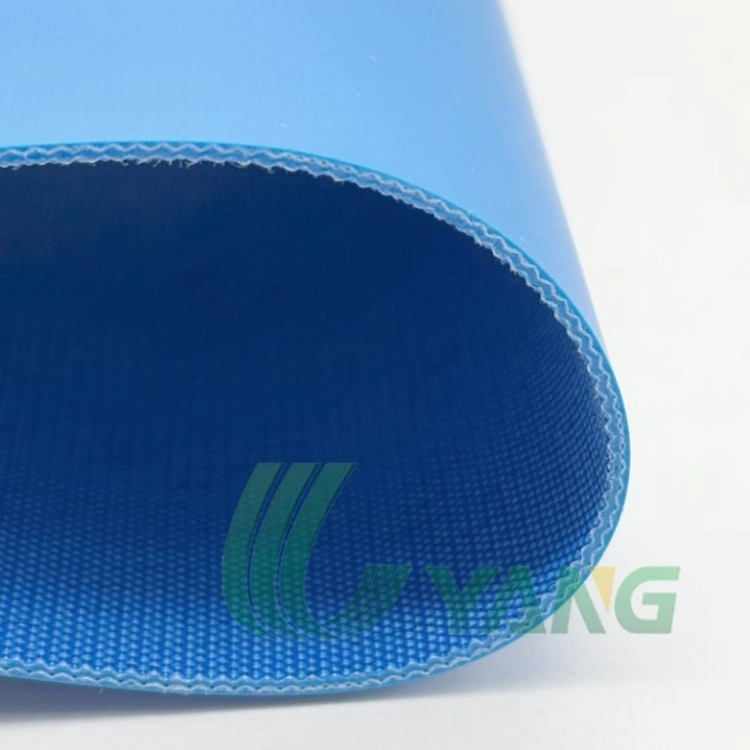
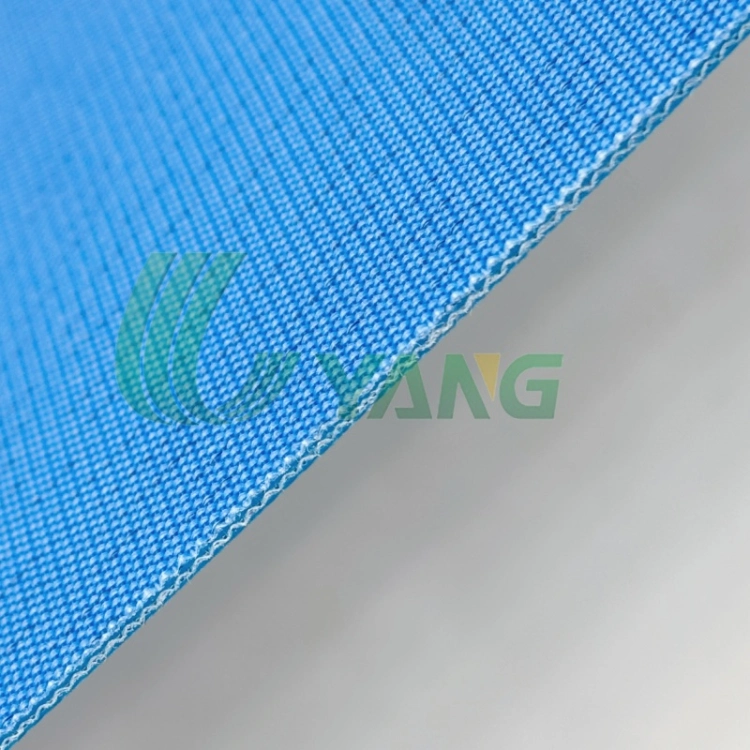
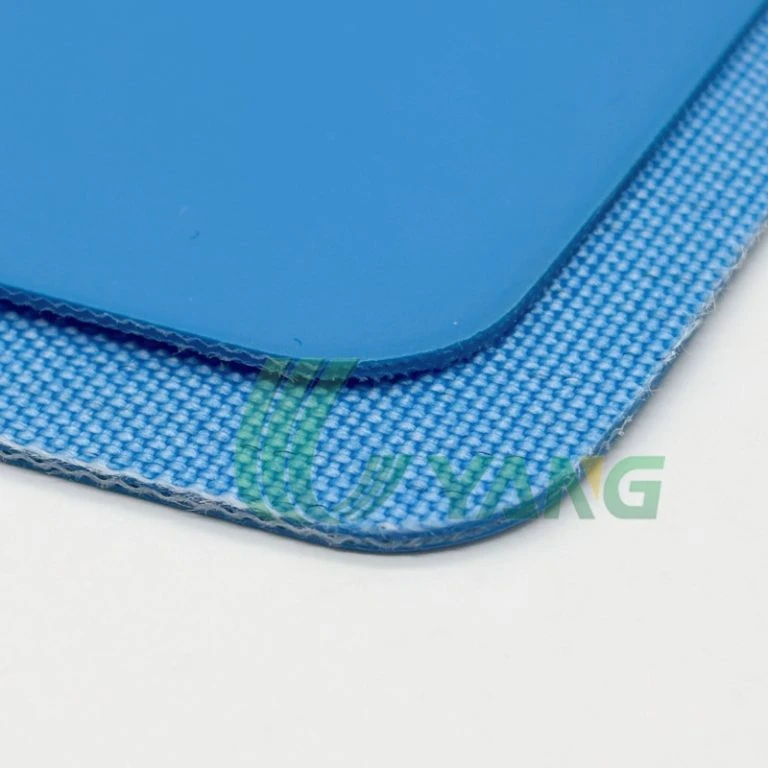
Every splice has to bond two belt ends, and bonding is chemistry before it is craftsmanship. The light conveyor belts in UYANG BELTING’s product center — PVC and PU lines, most commonly 1.5 to 5 mm thick — soften under heat, so a press can weld the ends together as one. Put a textile carcass inside the body, which is the fabric-reinforced kind, and a straight cut leaves the joint almost nothing to hold on to. Monolithic belts skip the fabric entirely, so an angled cut on its own exposes enough solid material to weld clean.
The non-thermoplastic crowd behaves differently again. Silicone conveyor belting won’t melt; felt was never a plastic either. Adhesive does the bonding there — the ends come off the grinder thin, get coated, then sit under a heated press until the glue cures. Every belt lands in one of these two camps on material alone, and a purchase order cannot argue with chemistry.
Quickmelt Buys the Cleanest Joint in the Narrowest Lane
This is the fastest of the four. Both ends receive an angled cut, the ends meet under a hot press, and the seam is welded — no grinding, no dies, no adhesive. The joint stays flexible and nearly invisible to a fingertip, and on a food line any ridge is where soil survives the washdown. The same bias-cut logic closes a loop on PU round belts up to 15 mm in diameter with a small 80 W welder.
The envelope is firm. A smooth-top PU belt carrying raw poultry sits exactly inside it. Standard Quickmelt tooling such as the PQ-59 press handles flat belting to roughly 50 mm wide and 3.6 mm thick, and the process assumes monolithic construction — cut a fabric-reinforced belt this way and most of its tensile strength disappears at the seam. Inside that envelope the method is hard to beat: side tapes on printing presses, transfer belts on packaging machines. Outside it, no amount of operator skill makes the joint hold.
Flexproof Trades Setup Minutes for a Joint That Bends
Fabric-reinforced thermoplastic belts — the workhorses of food, packaging and airport handling — usually end life with a finger splice. A die cuts each belt end into a zigzag of interlocking fingers, the fingers mesh, and a press melts the entire overlap in one pass. What the zigzag buys is twofold. Bonded area climbs well past anything a straight cut offers, and the splice line crosses the belt’s stiff direction rather than running with it, so the joint folds over small rollers instead of fighting them.
Finger geometry tracks belt thickness. Thin machine tapes take fingers around 5.5 × 46 mm; material approaching 10 mm takes 20 × 80 mm. Steel-cord positive-drive and homogeneous belts join by the same principle once the right die head is fitted.
When the Belt Takes Product Impact
Impact-loaded belts get the Step variant, a finger-over-finger layout where two offset layers of fingers double the barrier against forces pushing through the belt — the choice at dough and chocolate lines where product builds up under the splice, and at punching stations. Handheld die cutters make the preparation a field job, and a larger indexing tool preps Step geometry up to 600 mm wide in a single punch.
Thermofix Works Where Melting Isn’t an Option
When heat cannot re-fuse the material, Thermofix bolts adhesive onto the press idea. The belt ends are skived — ground down into a thin wedge so the pressed overlap ends up as thick as the belt itself — adhesive goes on the skived faces, and a hot press cures the bond. Worked correctly, the joint takes operating temperatures up to 100°C, which covers drying sections and hot product hand-off.
Skiving is where the hours go and where quality is decided; a careless grind leaves a stiff ridge or a weak shoulder that peels later.
Joining at the Machine Instead of the Bench
Portable presses change the logistics more than people expect: spindle tapes on textile frames are often joined at the machine without being pulled out, turning a half-day shutdown into one technician and a couple of hours. Felt, silicone and non-thermoplastic machine tapes from the Tianjin manufacturer’s production floor — 80,000 square meters, fifteen lines, two decades of belting — are all Thermofix territory.
Fasteners Skip the Press, the Power Cable and the Wait
Fit a fastener into each belt end — clip or bolt — and the splice is done right there. Nothing has to heat, cure or cool. Drop a pin through two hinged plates and the belt is closed; yank the pin and it’s open again in seconds. Solid plates, by contrast, make the connection permanent. Nearly every belt on the floor finds a hardware size somewhere in that range — wire-hook clips begin around 1.5 mm, rivet systems carry rubber past 20 mm, bolted solid plates reach 50 mm. In washdown rooms the hardware wants stainless; dry bulk is happy with galvanized; light loads that must not mark product go to plastic rivets.
PVK woven belting on a warehouse elevator is hardware’s home turf. Two workers, hand tools only: open the old belt, pull the new one along the same path, pin the joint, done inside one short maintenance window, no press, no generator, no certified operator. Every method bills for its speed, though. Nobody hides a mechanical joint — it catches small items, taps over return rollers, and its anchor points chew into the belt as months pass. No bonded splice dies that young. Food-contact surfaces and precision handling belong to a different method.
The Same Belt, Three Rooms, Three Right Answers
Maintenance reality bends the material logic on every floor. Take one fabric-reinforced PU belt class and put it in three rooms — a meat line, a distribution elevator, a cement transfer point. Three splices come back different, and each is right where it stands.
| Shop-floor condition | Joint that fits | Why the alternative loses there |
| Food contact, washdown twice per shift | Quickmelt on monolithic, Flexproof on fabric | Fastener points trap soil and fail the swab test |
| Stoppage budget measured in minutes | Hinged fastener | Heat, press and cool cycles cannot fit the window |
| Joint sees heat toward 100°C | Thermofix | A thermoplastic weld softens as it nears its rating |
| Tight rollers or small pulleys in the path | Flexproof, or Quickmelt on light tape | Bolted plates stay stiff and lift off small diameters |
| Bulk line, changes only during planned shutdown | Bolt or rivet fastener | Field presses still want power, a level surface and patience |
No single splice clears every row above, so plants with mixed equipment usually standardize on two methods and stop worrying. By the time the enquiry leaves the building it had better list belt material and type, thickness, width, the smallest pulley or roller diameter in the loop, working temperature, and real allowed stoppage minutes. The sales engineers at UYANG BELTING quote against that list and nothing vaguer; typical lead time runs 7 to 20 days, and the twelve-month warranty starts on the bill-of-lading date.
FAQ
Q1: Will a press join a silicone belt the way it joins PVC?
A1: It will not. Silicone has no thermoplastic phase, so a bare press on silicone bonds nothing. Go the Thermofix road instead: skive, coat with adhesive, hold under heat till the bond cures.
Q2: Which splice gives way first under an overloaded belt?
A2: Hardware talks first. Look for visible set at the anchor points, then wear holes opening around it. A Flexproof splice, done well, tends to hold while the belt beside it lets go instead of the joint itself — part of why maintenance crews swallow the extra setup time.
Q3: How short can a belt change on an airport-style PVK loop realistically get?
A3: Hinged hardware plus two workers: pull the pin, thread the fresh belt, re-pin. That’s minutes, and nobody needs a certificate. Attempt the same loop as a bonded splice and a press must be staged, powered, heated and cooled inside that same window — airport halls rarely hand one over.
Q4: Is a Quickmelt joint strong enough for product weight?
A4: On monolithic tape within its envelope — about 50 mm wide, 3.6 mm thick — yes, the welded seam is the standard answer. Someone has to push a fabric-reinforced or heavy-tension belt into the process before strength becomes the problem.
Q5: What does a supplier need before quoting a splice?
A5: Material and product name. Thickness, width, smallest pulley or roller the joint has to pass. Working temperature, washdown exposure, and the downtime the change is really allowed. Hand that package over and the recommendation arrives without guesswork.