The email arrived on a Tuesday and closed with a line about the belts being FDA approved. Nobody in the plant thought much of it until the customer’s auditor arrived three weeks later and asked, first thing, for the declaration behind that sentence. There was none. Auditors cover the same territory on every visit, just not in the order a marketing department assumes. First the compound the belt is actually made from, since that is what any compliance claim has to attach to. Then the paperwork, because a claim nobody can lend to an auditor becomes a finding instead. Then the cleaning program the plant runs at ten at night, which is HACCP ground, where no belt certificate has ever set foot. Different parties hold the paper for each of those three, and a file holding one logo collapses during the audit’s second hour. What follows is how the whole file gets assembled before any of that happens.
What the Material Declarations Prove
The FDA sentence that means something
In the US, the rules over materials that touch food are substance rules, and a polymer compound gets matched against whatever notification or listing fits its chemistry. When a belt supplier talks about FDA compliance, the sentence worth borrowing says the compound in the food-contact layer has a recognized food-contact use, in writing, dated, with somebody’s name signed under it. Brochure photographs of certificates do not survive a customer audit. The signed declaration does. Laminates bend this a little, and better early than late. A belt built as cover over fabric has a declaration that speaks for the cover. Nobody declares the fabric core, since it never faces food, sitting underneath right where its trouble starts once a knife opens the edge.
EU 10/2011 arrives before the first audit
EU 10/2011 is the Union regulation on plastic materials and articles meant to contact food, and a European customer’s auditor reaches for that number the way a plumber reaches for a wrench. The document that should sit in your file, searchable, is a Declaration of Compliance naming the specific compound, written by the compound’s producer and handed up the chain to your supplier and then to you. Without it available on request, a belt in an EU food plant is a finding with a date already on it. Asking after installation costs a week of war with an export office three time zones away. Asking at quote stage costs one paragraph of email, which is why buyers who’ve been audited once never ask twice.
HACCP Belongs to the Plant, Not the Catalogue
HACCP, hazard analysis and critical control points, is the plant’s own food safety program. Nobody sells a HACCP-certified belt. The belt gets certified or decertified every day by how the cleaning crew copes with it, and no supplier paperwork changes that verdict.
What the cleaning crew decides every night
A construction that takes hot-water washdowns, high-pressure rinse, chemical sanitizing and steam without absorbing anything makes the cleaning plan realistic. A layered belt whose fabric core went damp around month two makes every sanitation record beside it fiction, signed, dated, filed, fiction. The moisture that never dries between plies is the finding an auditor writes up at 6 a.m., long after the paperwork looked clean.
One question that sorts suppliers fast
Ask a sanitation lead when the current belt last came up for inspection. The pause before the answer tells you which category those records live in. A supplier who has stood in a wet room answers that question with a number and a story; a supplier selling from a spec sheet answers it with a brochure.
The Two Places Hygiene Claims Meet Reality
Auditors touch the same two spots on every belt, and buyers who know it specify differently.
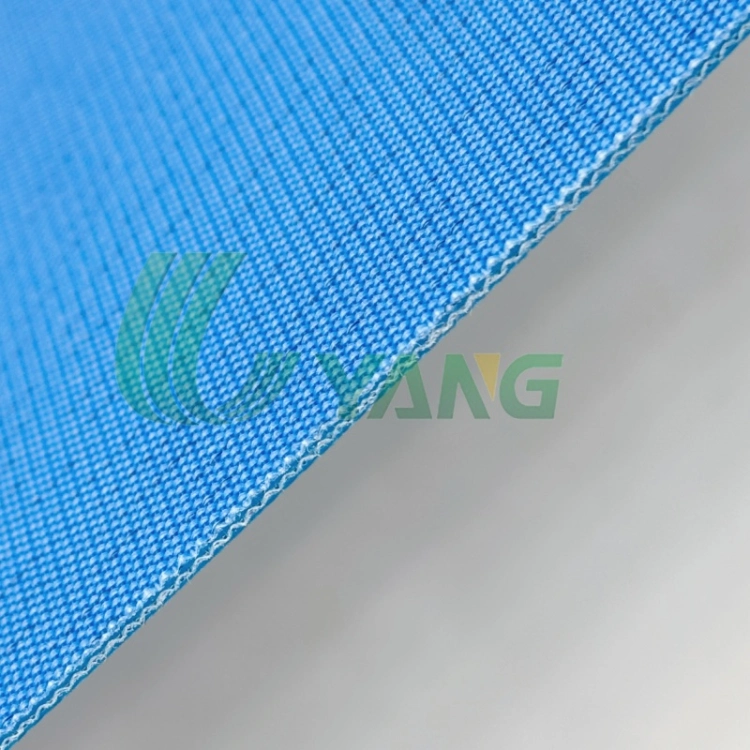
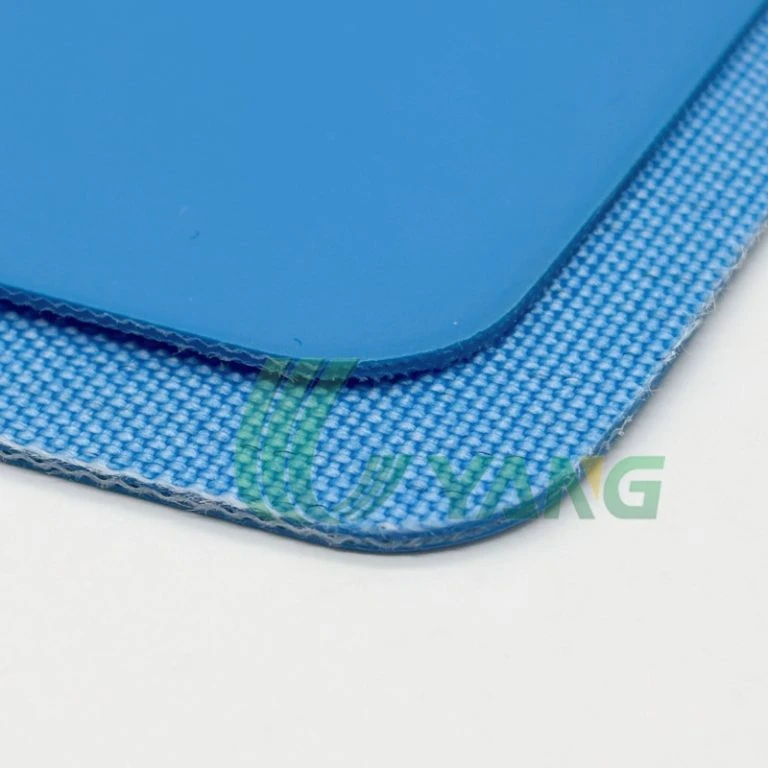
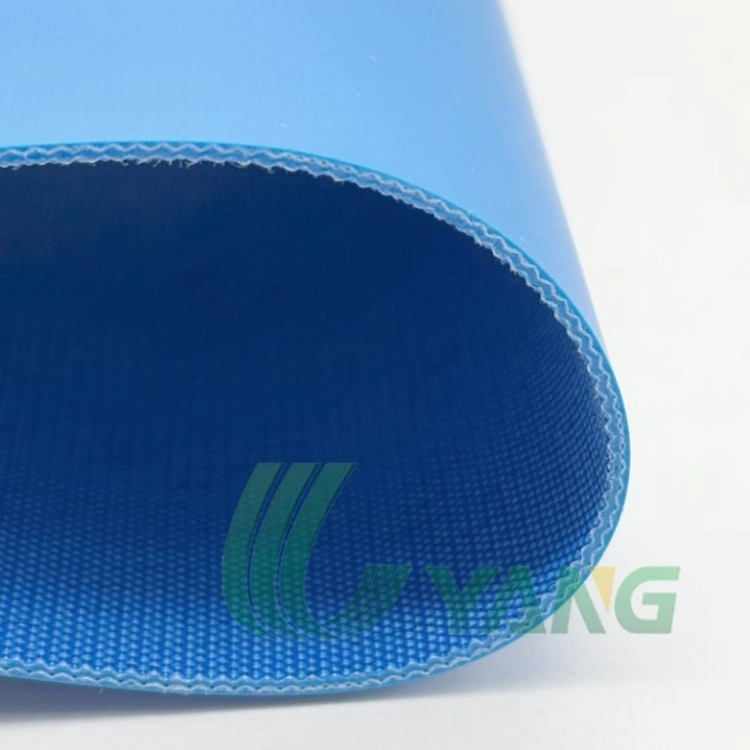
A homogeneous belt is a single thermoplastic body, TPU or TPE end to end, fabric-free, no woven layer for wash water to soak into and no interface for bacteria to shelter between. The edges heat-seal and the splice heat-fuses, which closes the two entry points a laminate always leaks at. That’s why wet rooms specify the homogeneous belt category and pay for it. The audit consequence shows up at the edge and the seam, where the inspector’s flashlight goes first.
The splice deserves the paranoid attention. A mechanical clip splice is metal inside a food belt, installed on purpose, and its holes are bacterial shelter by construction while a loosening clip is a foreign object with your own plant’s fingerprints on it. Heat fusion closes the joint into continuous material. Dry packing halls can afford the easier answer, and a smooth-top PU belt on a tensioned frame in a room that never sees a hose runs for years, as the food processing PU belt page describes without pretending laminate survives a hose room.
What the Purchase File Should Contain
Six lines. Two are the plant’s own work, which surprises buyers who budget for supplier paperwork alone, and most belt-related audit findings live inside those two.
| Document or record | Who produces it | When a buyer should already have it |
| Food-contact declaration for the compound | The belt supplier sends it | Before the order is placed, not after delivery |
| EU 10/2011 Declaration of Compliance | The belt supplier sends it | Before the first EU customer walks the site |
| Material and thickness spec, construction stated | Arrives with the quote, attached to the PO | Attached to the purchase order itself |
| Splice method plus weld record | Supplier, or the plant’s own crew | Before the belt enters service |
| Cleaning agent compatibility note | Supplier together with plant QA | Before the chemical routine gets changed |
| Monthly edge and surface inspection log | The plant keeps this one | From the first week the belt runs |
Six Questions to Put in the Supplier Email
Start with the document, then the compound, then the limits, because a supplier’s very first answer tells you whether the rest of the email gets honest treatment or marketing treatment.
The declaration questions come first, and there are two flavors of them. What declarations exist for this compound, PDFs before the order rather than after. And on EU-bound lines, does the declaration name this belt or only the compound family in general, a different answer than the sales email implies.
Construction comes second. Which splice method does the belt assume, is endless welding available, and what changes when thickness moves up on this particular line. Service history earns its own question, because spec sheets describe new belts while audits live in used ones. What cleaning chemicals and temperatures has this belt run against, in rooms like this one. The warranty question closes the email, asked bluntly. What does the twelve-month cover from bill of lading include, edge to splice, when a joint fails at month four.
Then the second thing, which takes five minutes. Hand the table above to the sanitation lead and ask which rows already exist. A plant finding two empty rows in its own column at RFQ stage just skipped a February audit finding, and the supplier answering all of it in one email has a file rather than a habit.
About UYANG BELTING
Twenty years on light conveyor belts, fifteen production lines, an 80,000 square metre plant in Tianjin, PVC, PU and PVK constructions shipped to food, tobacco, logistics, printing and electronics plants. That is Tianjin UYANG BELTING, and food is the industry where the paperwork arguments above happen weekly. Slitting to width, guides and sidewalls welded, endless joints closed in house, production inside 7 to 20 days, twelve months warranty from the bill of lading date. Company background sits on the about UYANG BELTING page, sample and specification requests go through uyangbelt.com, belt families stand in the product center. Declarations get answered at quote stage, the cheapest hour to find a hole in the file. Silicone constructions for bakery rooms carry the same paperwork demands, visible in the silicone conveyor belt range.
FAQ
Q1: Is there such a thing as a HACCP-certified conveyor belt?
A1: No, and the question itself reveals the confusion this article is about. HACCP certifies a plant’s system, not a purchased belt. What an honest supplier offers instead is a construction that survives the sanitation routine the plan depends on, with declared materials behind it. That sentence, written down and filed, survives an audit far better than any sticker anyone ever tried to hang on a belt.
Q2: Does a U.S. FDA reference cover selling the same belt into Europe?
A2: It doesn’t, and plants serving both markets learn this the expensive way once. A U.S. food-contact recognition and an EU 10/2011 Declaration of Compliance are separate documents on separate rulebooks. Both files need to exist before the belt ships, and a supplier who has done export work hands each one over the first time it’s asked for, without a second chasing email.
Q3: Do silicone belts need the same declarations?
A3: Same expectations, same request, no dilution. A bakery room gets audited on food-contact paperwork exactly the way a meat room does, even though the product sitting on it is flour and butter rather than raw poultry. The declaration demand applies fully to silicone compounds, and a supplier’s answer to that one question says a lot about who has exported before.
Q4: What does an auditor touch first on a new belt?
A4: The splice and the edges, nearly every time. That’s where a construction claim finally meets reality under a flashlight, and no data sheet defends itself there. A fused joint, a sealed edge, a weld record sitting behind both. That trio answers the inspector’s real question faster than a binder full of logos ever could, audit season after audit season.
Q5: When should the compliance file be complete?
A5: Before the belt enters service, and the sooner the cheaper. A file that only starts assembling after an audit finding has already cost the plant its cleaning schedule, and it costs the supplier a week of document archaeology nobody prices honestly. Plants refusing to start without the complete file are not being difficult. They’ve been audited once before.