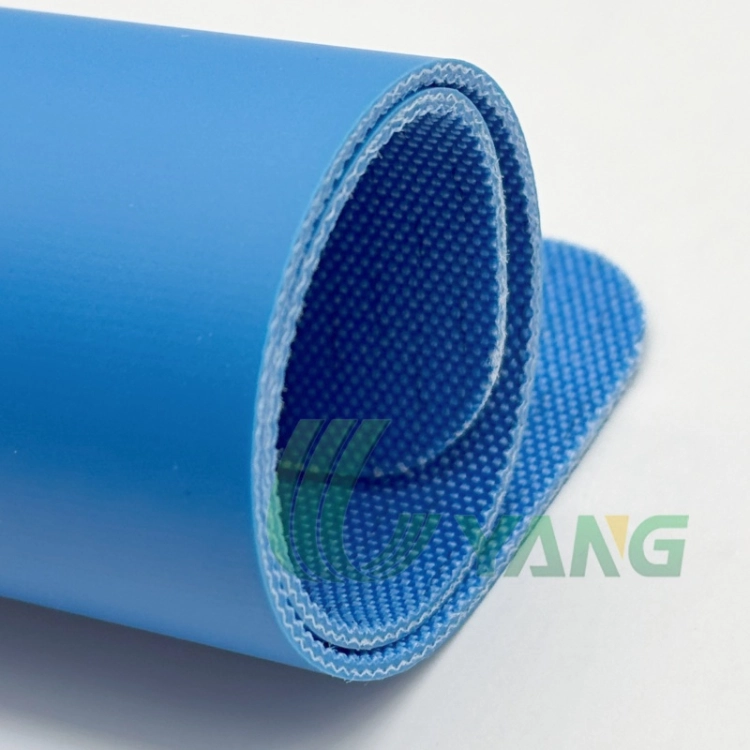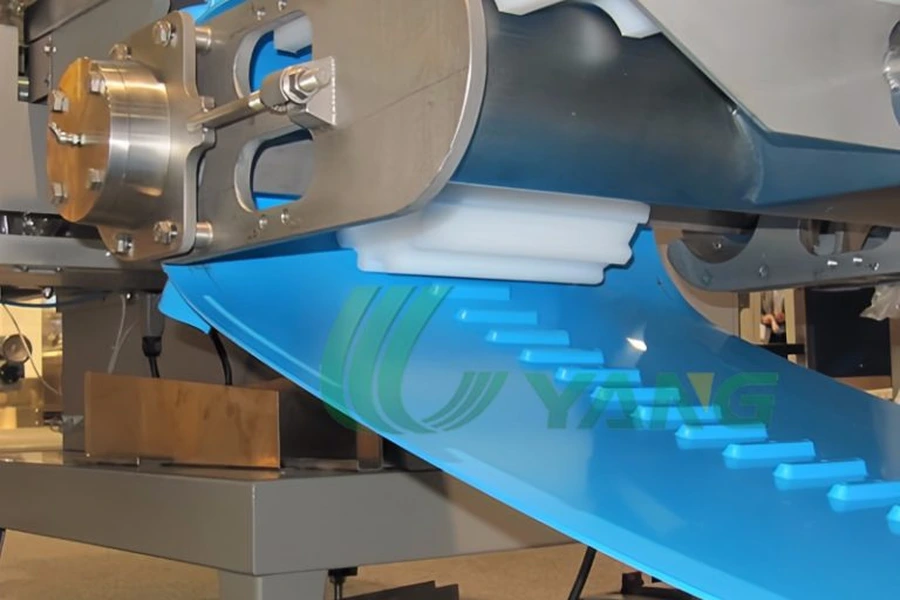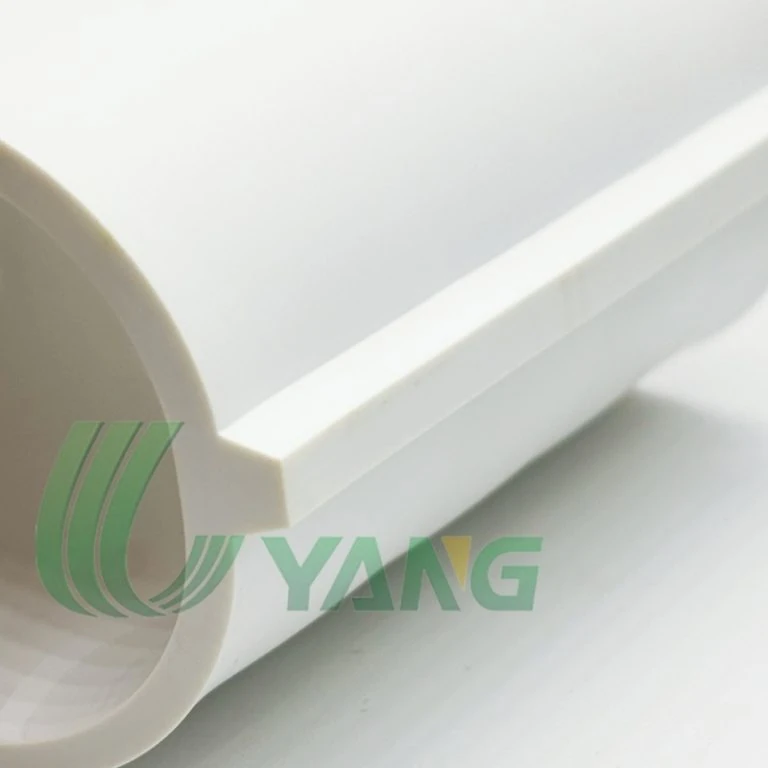
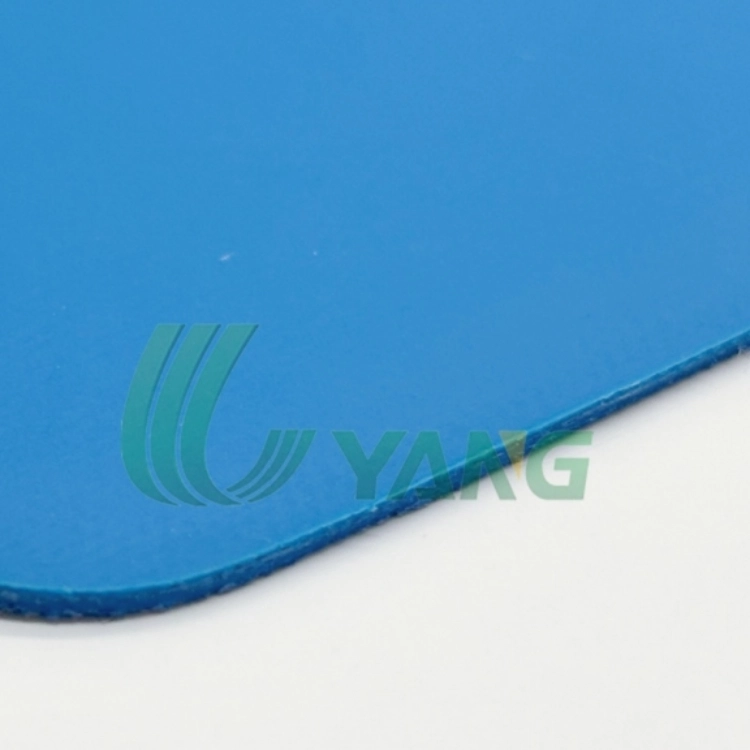
One thermoplastic, pushed through an extruder once, nothing glued or laminated inside. That is a homogeneous conveyor belt, and nine times out of ten it is TPU. Plants call it an easy-clean belt, which tells you what they buy it for.
When laminated belts become frayed around the edges and allow water to penetrate into the fabric carcass, which in seafood processing lines can contribute to repeated audit issues. Reducing the risk of moisture retention and simplifying hygiene management can be done by changing to a solid TPU homogeneous belt. Simply switching to a solid TPU homogeneous belt will minimise the risk of moisture entrapment and simplify hygiene management.
How the Belt Is Made
Into the extruder goes compound. Out comes belt. Top and bottom are the same material, and so is the middle, so there is no interface to delaminate at. Everything else in this article follows from that.
Thickness is the usual first question. The homogeneous conveyor belt range covers thicknesses from 1.5 to 5 mm. Meat and poultry take 3 or 4. Bakery takes 2. Blue is the standard colour, because a blue chip in a tray of trim is easy to see from the doorway.
TPU or TPE
TPU where abrasion and oil are the problem, which is most meat and poultry plants. TPE where elasticity matters more, dough and soft cheese being the usual cases. Both come seamless and fabric-free. Numbers sit in our light conveyor belt range, if you would rather read a spec sheet than talk.
Against PVC and PU Laminates
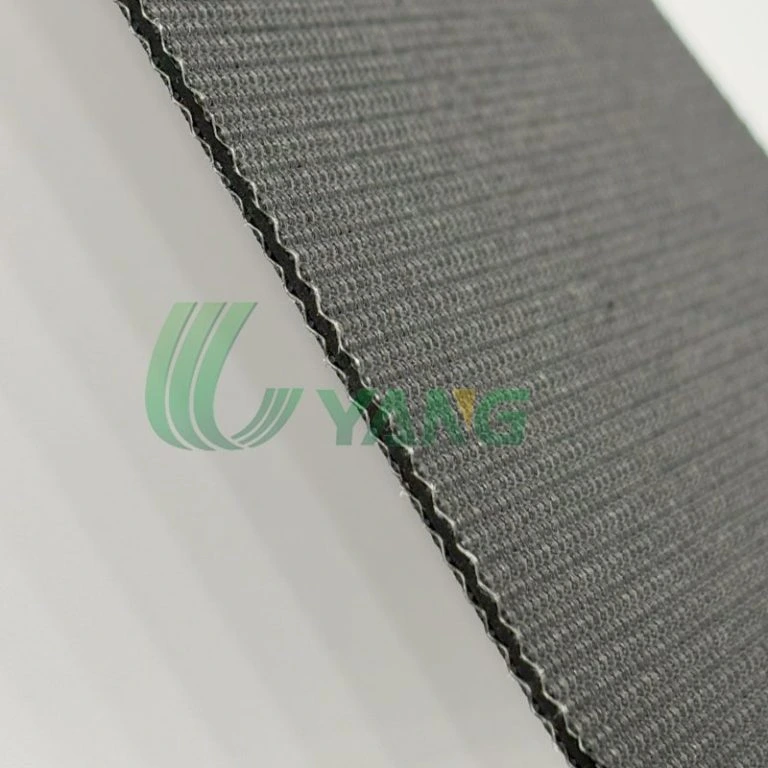
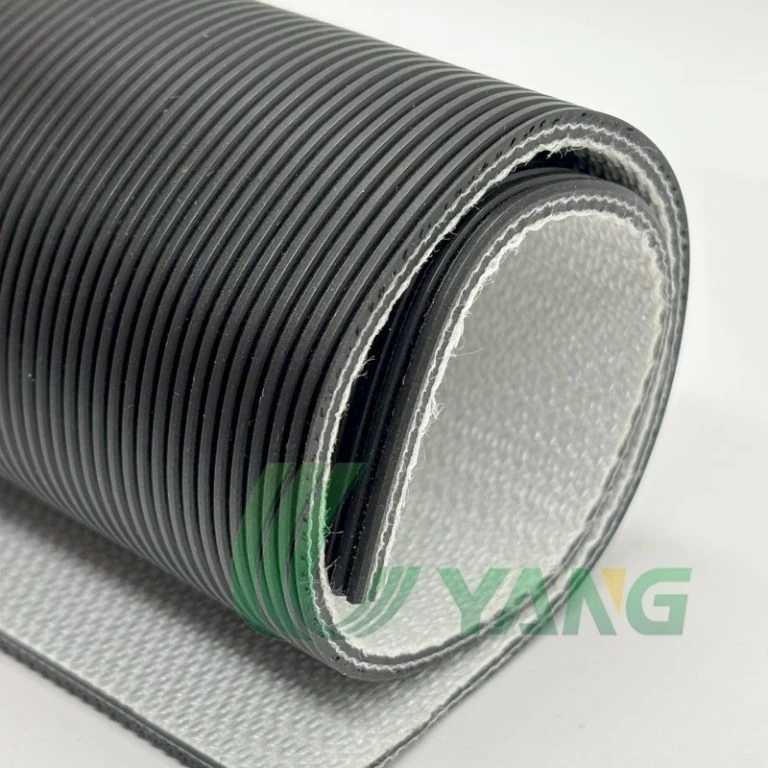
Most light belts are sandwiches. A cover, a fabric carcass, sometimes a second fabric, all glued under heat and pressure. That construction built this industry and it still works fine on dry cartons. Wet, fatty environments can expose these limitations, particularly in seafood-processing areas where frequent washdown and strict hygiene requirements place additional demands on belt construction.
Why Cleaning Decides It
Wash water goes hunting. It reaches the edge or cut or splice, and once it is in it stays. Older laminated belts can accumulate moisture and organic residues inside of the fabric carcass — often leading to dark contamination when cover separates. A solid belt has no carcass. Foam on, rinse off, done.
Cost Across the Full Life
Although the initial purchase price is higher, the total cost over the lifespan of a belt may be lower once premature replacement as well as maintenance and production downtime are factored in. The initial purchase price is relatively high, but when you consider that the belt has to be replaced prematurely as well as maintenance and production downtimes over its service life, this may result in a lower total cost. A wet meat room puts a laminate on borrowed time from the first nick, because the fabric behind the cover never comes fully clean again. A solid belt takes the nick, gets welded flat, keeps running.
Signs come early if anyone looks. Cover lifting at the splice. There will be a black trace at the edge that won’t wash over. Weight as well: pick up an offcut that has seen some action, and you think a wet laminate gets heavier than when on the pallet. So it is for weight: pick up a worn offcut, and the wet laminate feels much heavier than in its place on the pallet
Where They Earn Their Keep
Meat cutting and deboning came first and still lead. Seafood runs harder, brine and fish oil working faster than slaughterhouse fat. Bakeries buy it for release. Cheese and butter lines live or die on fat resistance. Pharma wants washdown without a carcass behind it.
Freezers deserve their own mention. IQF tunnels stiffen a laminate cover until the edges lift, and water goes in where the edge lifted. Nothing to lift on a solid belt.
Cleanroom work wants paperwork, which the food plants never chase. FDA and EU 10/2011 declarations, HACCP records, material certificates. Get the file with the quote. Chasing it after the belt lands costs a week.
Before anyone rips out a working line, though, a decent food-grade PU belt buys most of the hygiene benefit for less money. The food processing conveyor belt for meat and poultry pairs an oil-resistant cover with a polyester tension layer and handles most fresh-meat duty without fuss. Silicone beltsSilicone belts cover the other corner, baked goods and sticky product at temperatures PU would rather avoid.
Trade-Offs Before You Switch
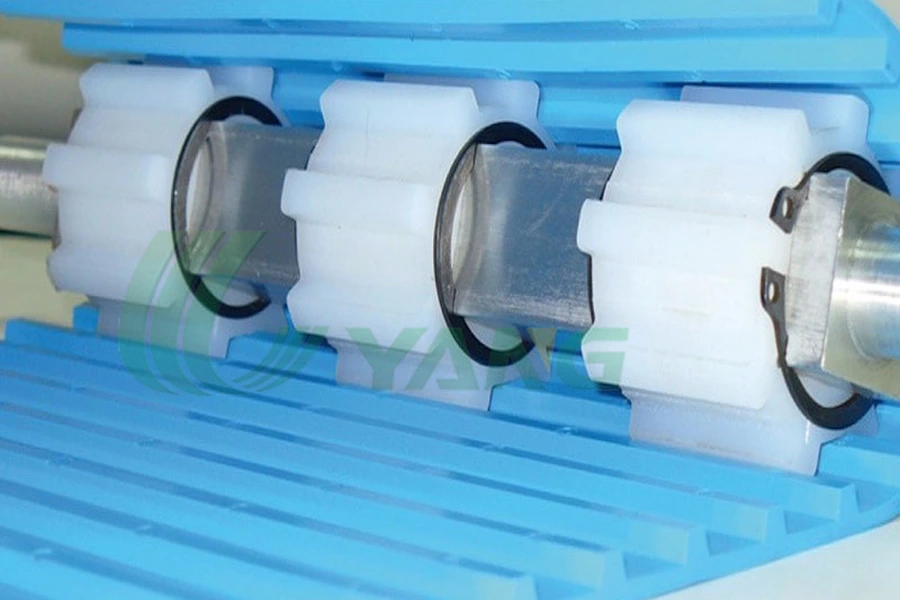
Elastic material stretches further than a fabric core does, so tension control has to be right or the belt walks. Pulley diameters need checking against the spec sheet. Splicing is welding rather than clips, and crews notice that on day one.
Welding, Not Clips
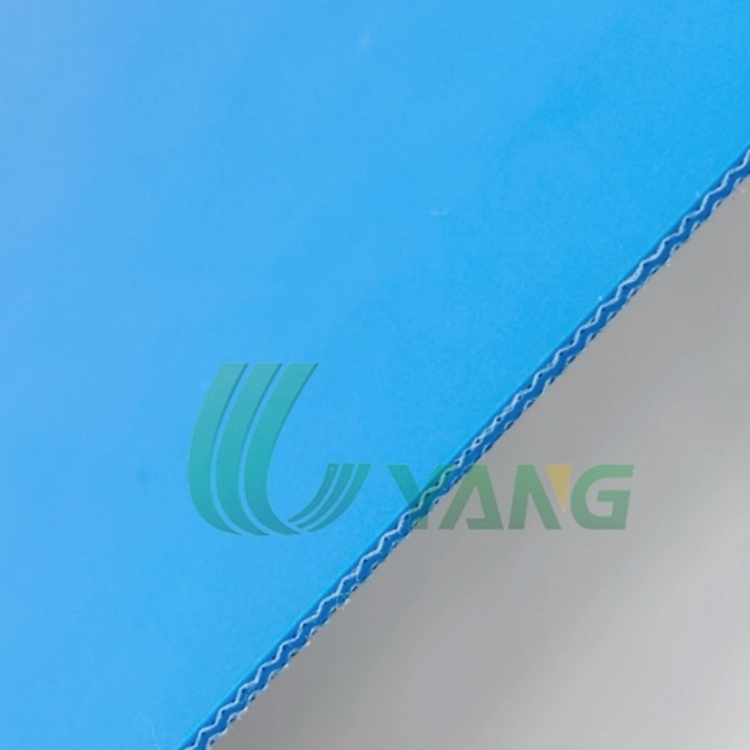
Treat welded splices as a feature, not a chore. A hot weld in solid material gives a joint with no seam, no bacteria shelf, nothing to pick at during an audit. Someone needs a tool and a little practice, or the supplier handles it before shipping. UYANG BELTING can supply belts with pre-finished endless-welded splices, ready for installation, subject to the selected model and order specifications.
Crews feel splice time more than they feel belt price. Water-cooled press, workshop job: twenty minutes heat, three dwell, two cooling. Twenty-five to thirty for one joint. The air-cooled unit goes in a flight case and lands on site, 4.5 minutes heat, three dwell, 2.5 cooling, nine to twelve minutes a joint. Worth having when cuts happen mid-shift.
Who We Are
UYANG BELTING is a light conveyor belt manufacturer with approximately 20 years of industry experience. Its facility covers 80,000 square metres and operates 15 production lines, manufacturing PVC, PU and PVK belts in a variety of surface patterns. Food processing is one of its key application sectors, alongside tobacco, logistics, printing and electronics. The company also provides width slitting, guide welding and in-house endless splice finishing.
Quotations can be prepared from customer drawings. Pulley diameters, conveyed material and washdown temperatures help the technical team assess application requirements. Belt thickness, surface pattern and splice method can then be confirmed before sampling. Samples are available free of charge, with freight paid by the customer. The standard production lead time is approximately 7–20 days after specifications are confirmed, and the warranty period is 12 months from the bill of lading date. Guides and sidewalls can be welded on before packing, subject to order requirements.
Product photos, certificates and company history are available on the About UYANG BELTING page for buyers evaluating the supplier before requesting samples.
The Short Version
One material, no layers, nowhere for fat or water to hide. Wet line, fatty product, hose on the wall, and the switch pays for itself in replacements nobody ever orders. Dry line with sealed cartons, and a laminate stays the smarter buy. That is the whole argument.
FAQ
Q1: Is a homogeneous belt just a PU belt?
A1: No. Ours are TPU, a few customers take TPE. Homogeneous means one material through the thickness, not the letters on the data sheet. A PU belt over fabric is a laminate, and it behaves like one once water gets in.
Q2: Can I repair a knife cut?
A2: Yes, most of them. Repair rod, hot plate, ten minutes, crew does it on the machine. Nothing under the damage drinks water, so the weld holds and the hygiene comes back.
Q3: Which industries buy them?
A3: Meat plants first, by a wide margin. Then seafood, bakery, cheese, a few pharma lines. Where there is a hose on the wall, we get the enquiry.
Q4: Do they outlast PVC?
A4: On wet, fatty lines, yes. On dry cartons PVC lasts long enough and costs less, so we say that and sell PVC there.
Q5: What do I check before switching?
A5: Pulley size, tensioner, who does the welding. Settle those three before the quote stage and most bad swaps never happen.