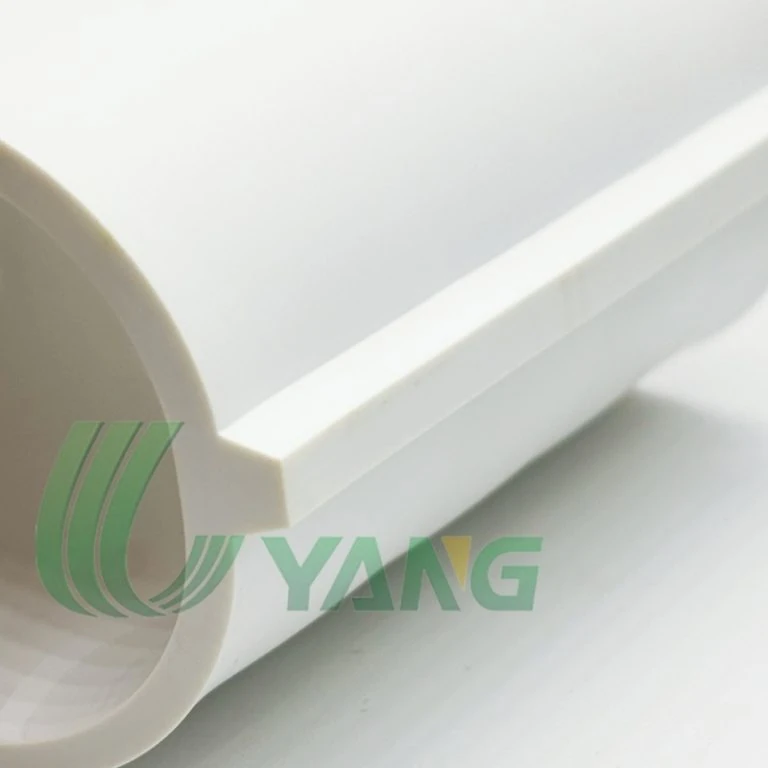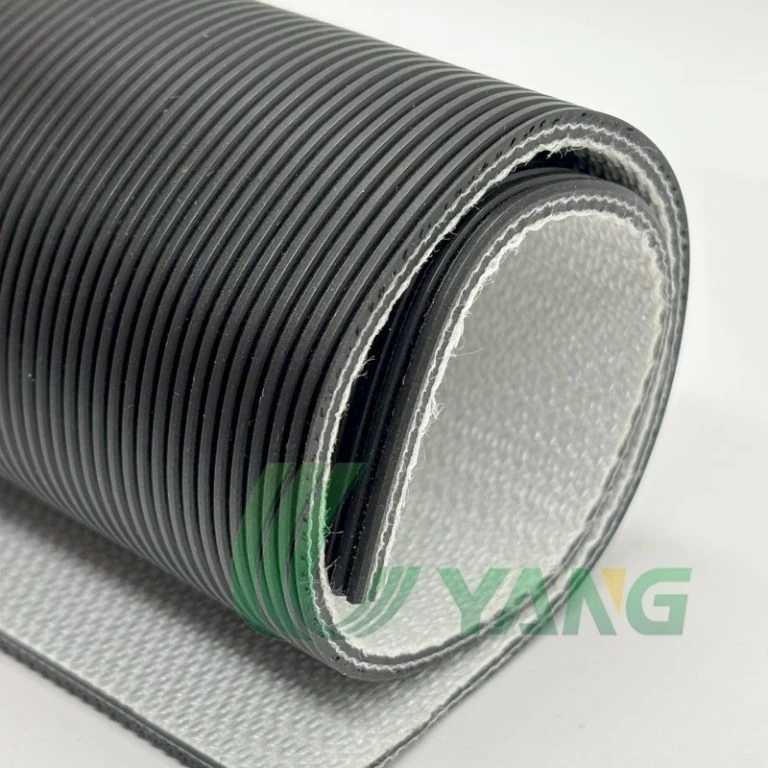
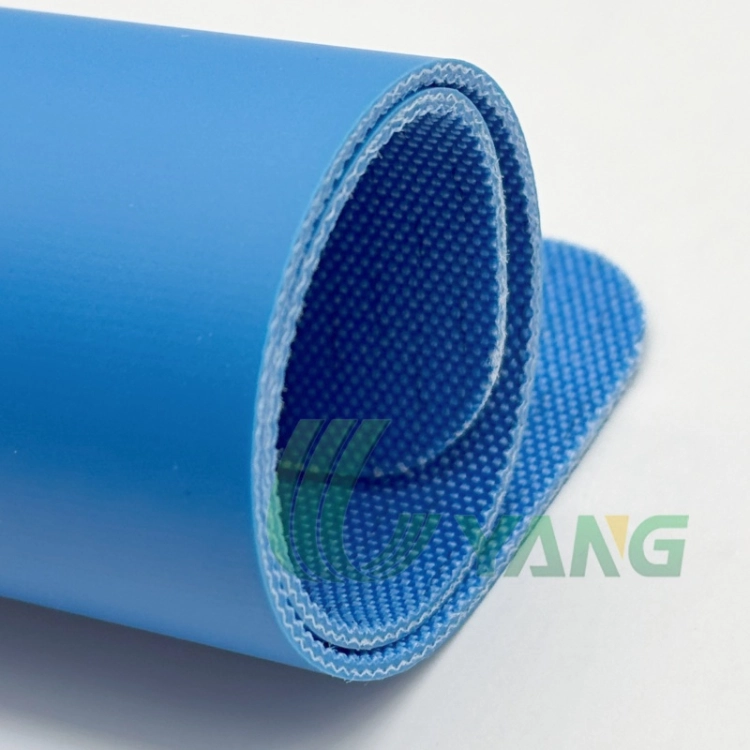
One answer fits most meat lines: food-grade PU belts. Not PVC, not a laminated import, not whatever came with the machine.
Fat, blood, brine, hot foam at five in the morning. PU takes the lot without swelling up or going soft at the edges. This article explains the key material considerations, followed by cover specifications for different processing stations. It also highlights common selection and maintenance mistakes that can lead to premature belt replacement and unnecessary costs.
Why Meat Rooms Are So Hard on Belts
Meat processing environments can expose conveyor belt weaknesses quickly, sometimes within the first hour of operation. Fat smears the cover. Blood and brine pool in the low spots between shifts. Somewhere a knife comes down on the trimming tables. Washdown makes it worse. Hot water, then caustic foam, twice a day in some plants. Cold rooms sit at minus 20. Any one of those an ordinary light conveyor belt survives. All five together, week after week, and the wrong belt is done inside a month.
The Cleanability Problem
Hygiene is where belts get judged. Not tonnage. A cover that drinks fat becomes a bacteria farm, and sanitizer never reaches what has soaked in. Laminated belts are the worst of the lot. Water crawls through a worn edge or a knife nick, then stays for the life of the belt. HACCP auditors find it. So does anyone with a nose.
Why Standard PVC Struggles Here
PVC earns its keep on cartons, dry goods, packaging. Meat is a different animal. Park PVC next to animal fat for a couple of weeks and the plasticizers start leaving. Cover goes tacky, then puffy. Cold makes it worse, since PVC hardens as the thermometer drops and splits along every flex line. Bare product on PVC? Wrong chemistry.
Why PU Belts Hold Up on Meat Lines
PU is built for exactly this. Fat cannot bite into the cover, so it stays flat where other materials swell. Caustic foam lifts the grease at shift end and leaves the texture alone. Minus 20? A good grade still bends. Bone ends and frozen chunks? A year of that does little more than scuff the surface.
Food-Grade Contact, No Odor
Product sits on this surface at nearly every step. The cover has to be food-grade. Non-toxic, with no odor of its own. Certified PU grades arrive that way out of the box. Nothing migrates into the meat. Nothing carries a smell across. Buyers notice the day a customer asks why the product smells like a factory.
Cut Resistance at the Work Table
Trimming crews cut on the belt or right above it. An ordinary cover loses its surface in a shift. Compounded incision-resistant PU takes blade contact and keeps running. Debone, chop, trim, wipe. Repeat for eight hours.
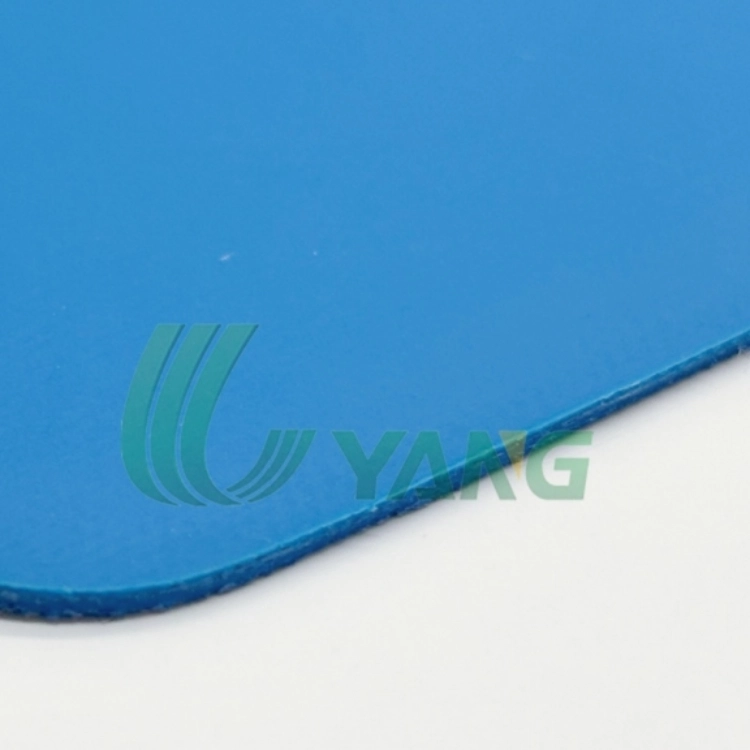
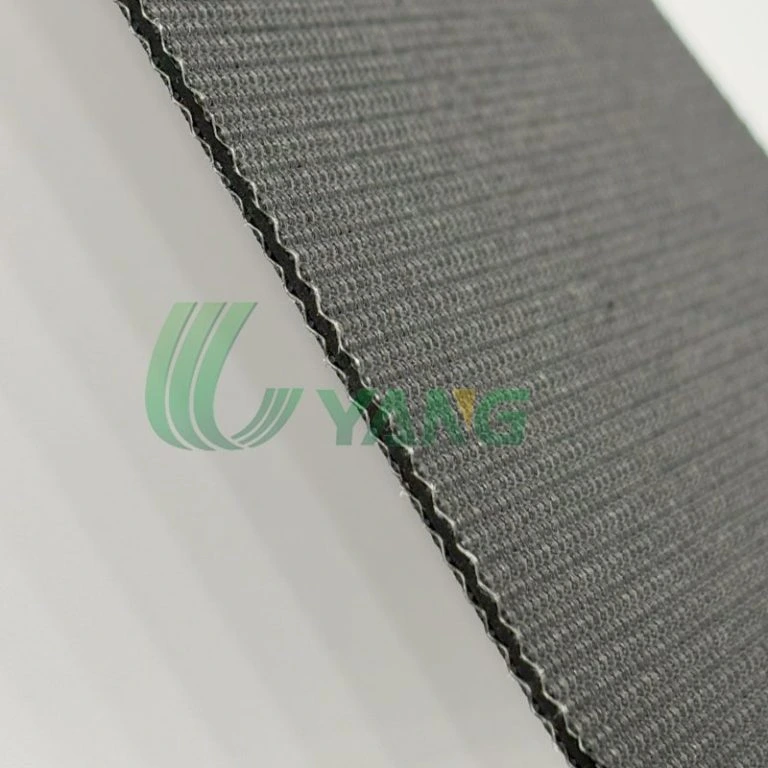
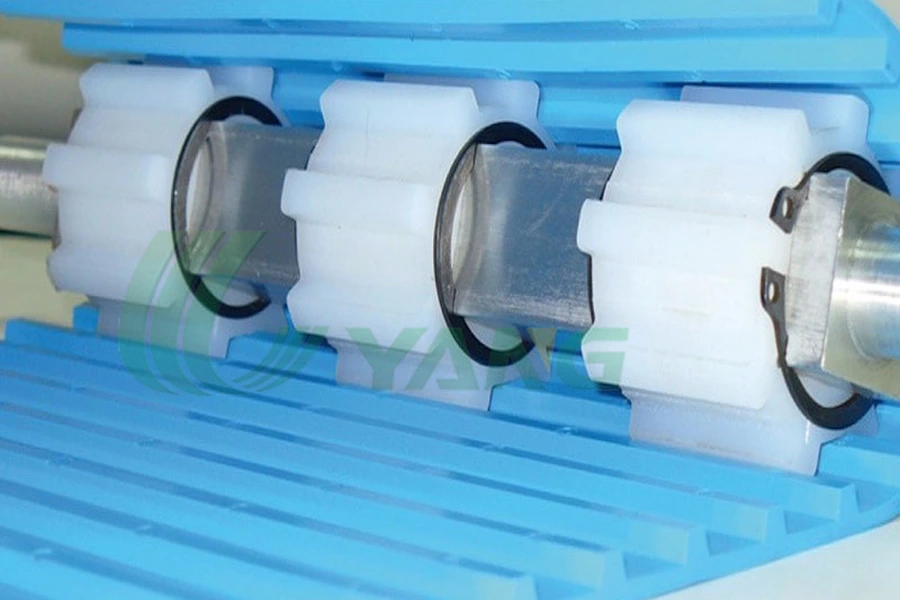
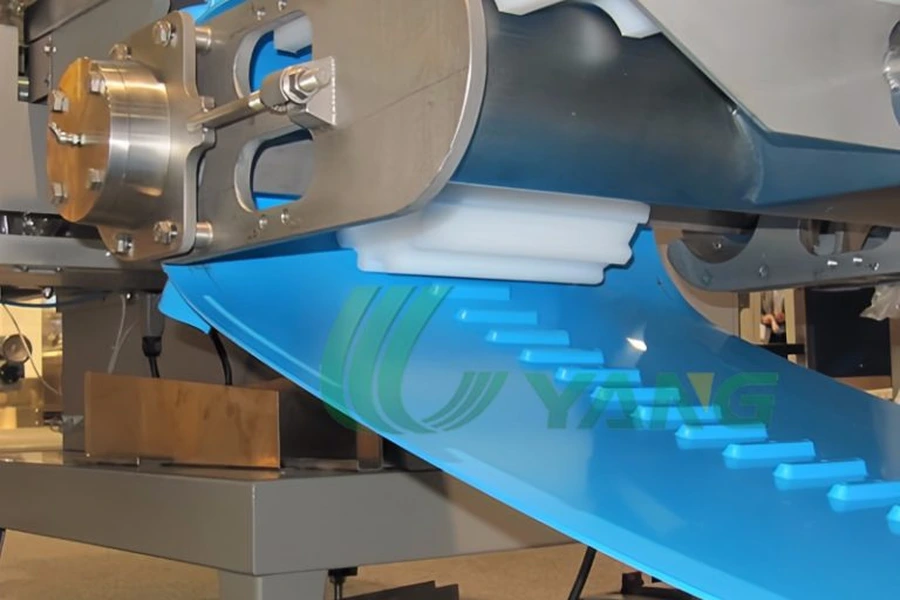
For example, UYANG BELTING’s food processing conveyor belt for meat and poultry features a food-grade PU cover over a polyester tension layer designed for dimensional stability. A scraper can be used to remove grease before the belt is rinsed with water. Product specifications, including thickness, ply count and effective pull, are available on the product page and in the accompanying technical documentation.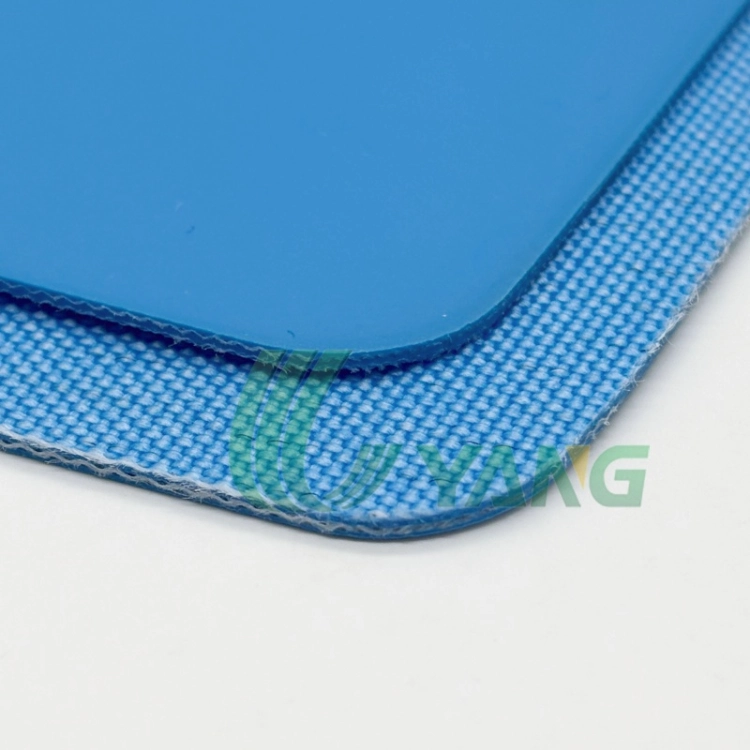
Matching the Belt to the Station
One belt for the whole line is how plants overspend. Sort the stations first. Specs come after.
Surface Texture and Grip
Smooth covers shed product and rinse fastest, so transfer points and inspection tables want them. Inclines need something to bite. Embossed, or grip top. Packaging runs live or die on rough-top, because a slipping bag jams the sealer every ten minutes.
Thickness, Ply, and Pulley Size
A heavier cover lasts longer against abrasion. It also needs a bigger pulley. Miss that last part and the belt flex-cracks at the drum inside a season. Two-ply covers most meat work. Three-ply earns its money on long center-drives pulling real load.
Colour earns its place on the spec sheet too. Blue covers dominate the meat rooms I visit, because a blue chip in a tray of trim is about the only foreign-object find an operator can make at a glance. White goes to dairy and bakery, where the product is pale. Green still gets ordered out of habit. Total thickness usually lands between two and four millimetres, and bone-in work sits at the top of that band.
About UYANG BELTING
Where this comes from matters. Tianjin UYANG BELTING has spent twenty years on light conveyor belts. The plant covers 80,000 square meters. Fifteen lines run PVC, PU and PVK in dozens of surface patterns, plus the matching machines. Food processing sits high on the industry list. So do tobacco, logistics, printing and electronics. Belts come cut to width, guides and sidewalls welded on. Endless splices get finished in house. That last detail matters at two in the morning when a line is standing still.
Factory history, certificates and floor photos sit on the About UYANG BELTING page. Worth a look before you order a sample.
Getting More Life Out of the Belt
Three habits keep a belt alive, and none of them cost money. Rinse on time, in the right temperature band, and let foam degrease instead of scrubbing the cover with a brush. Check tension once a month. Overtensioned belts die at the tension layer, not the cover. Weld every nick while it is small. Two minutes now. A replacement order later.
Weld speed decides whether a nick gets fixed this shift or next month. A water-cooled press runs twenty minutes of heat, three of dwell, two of cooling. Call it twenty-five to thirty minutes a splice, and the line stands still the whole time. The air-cooled set travels in a flight case: 4.5 minutes of heat, three of dwell, 2.5 of cooling, so nine to twelve minutes on site. Small cuts stop turning into belt orders.
Conclusion
Short version. Food-grade PU anywhere meat touches the belt. Dry goods can stay on PVC. Spec each station properly and keep tension sane. Weld the nicks while they are small. Do that and the conveyor belt stops showing up in the monthly expense review.
FAQ
Q1: Can PVC be used in a meat plant?
A1: Not where product touches it. Fat pulls the plasticizers out of PVC. Cold rooms harden the rest. Packaging stations with sealed, dry product are a different story.
Q2: What temperatures do PU belts handle?
A2: Minus 20 to plus 80 Celsius, most food-grade PU grades. Cold room, cutting floor, hot washdown. One belt handles all three.
Q3: Are PU belts safe for direct food contact?
A3: Order the food-grade version and yes. Non-toxic, odor-free, made for direct contact with fresh meat and poultry.
Q4: How often should a meat plant replace its belts?
A4: No fixed date. Right grade plus honest tension usually gives a year or more. A failure at three months? That points to cover chemistry or overtensioning, not age.
Q5: Fastest way to clean a belt between shifts?
A5: Hot water to lift the fat, food-safe caustic foam next, final rinse. Smooth PU lets the residue go easily. Minutes, not hours.