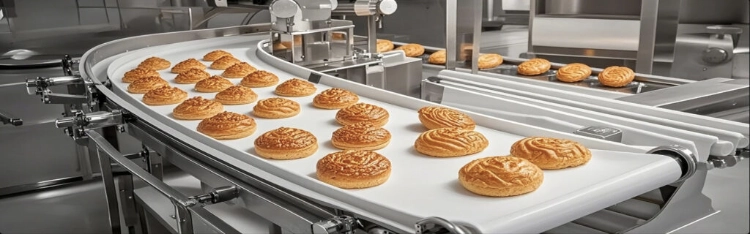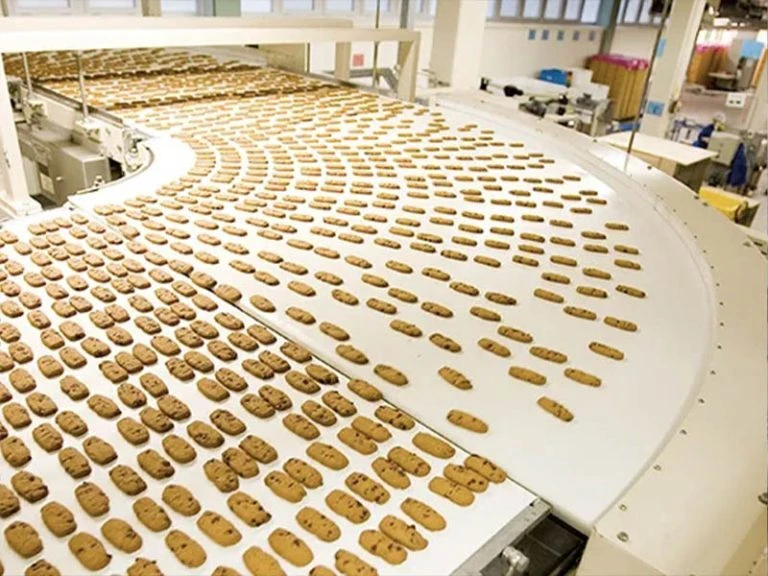
Whether to select a smooth PU conveyor belt or a patterned PVC conveyor belt for a bakery line depends on the specific application at the various transfers. Smooth PU is normally the preferred option where clean release, small pulley distance, visibility of products on the belt, and contact with products are key. Patterned PVC on the other hand is ideal for light packed cartons, trays and wrapped products that require extra grip on slight inclines. When selecting the appropriate material for bakery applications, consideration should be given to product temperature, flour and oil exposure, cleaning of the conveyor, pulley size and the belt’s performance after a practical production trial.
Key Takeaways
When choosing a top cover many factors must be considered. These include the thickness of the belt, the type of fabric used, the underside of the belt, the type of joint used, the edge finish, the pulley diameter, the support bed and how the belt is to be cleaned.
· Smooth PU coatings are used where release, hygiene inspection and tight transfer are critical.
· Use the diamond texture to add grip only where a measured slip problem can be solved by it.
· Test the conveyor belt with real dough, tray, package, speed, inclination and soil load.
· Inspect joint and edge finish with same care as top surface finish.
Match the Belt to the Product Path
Bakery lines often have sticky dough in the front of the line, hot pans in the middle and sealed cartons at the end. So one belt description is rarely going to cut it. Map out the entire line and identify potential problems with slipping, marking, residue and poor tracking that can cause a complete stoppage of production.
Start at the Most Difficult Transfer
Many problems become apparent very early on. The smallest nose roller, largest speed change, steepest incline and warmest product all indicate a poor choice. Record the product state at these points. Soft dough will stretch or fold whilst a cool loaf or a solid tray will behave differently. Is the product in contact with the belt or is it in a pan, wrapped up in a package or in a carton?
Measure the transfer gap and height difference. Even on long horizontal beds a seemingly stable belt can still affect product at the discharge. If a small pulley is used on a conveyor check the belt flexibility and approved minimum pulley diameter before beginning to select a surface pattern.
Define the Soil Before Discussing Cleanability
Record the different types of residues left by flour, dough, glaze, oil, sugar, crumbs and adhesive and note whether cleaning is dry, wet or mixed. It may take longer to inspect and brush a useful texture.
The food-processing application section can support an initial discussion, but a bakery RFQ should still state product contact, cleaning chemistry, water temperature, pressure, and drying practice. Do not rely on a broad food-grade label to settle every sanitation detail.
Use Smooth PU for Release and Flexible Transfers
Many light bakery tasks are carried out with smooth PU as the flat surface will not have as many bumps and ridges for soft goods to get caught up in or for residue to form in. Smooth PU is not the answer for all angles, loads and washes but it has value when it is constructed to match the pulley it is to be used with and the goods need to release cleanly.
Check the Thin Belt Against the Conveyor
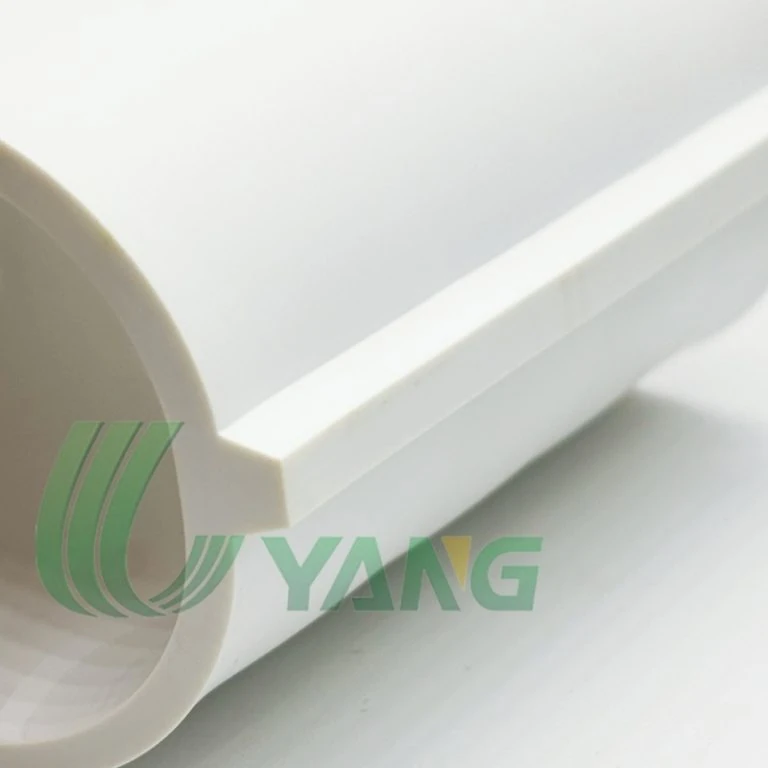
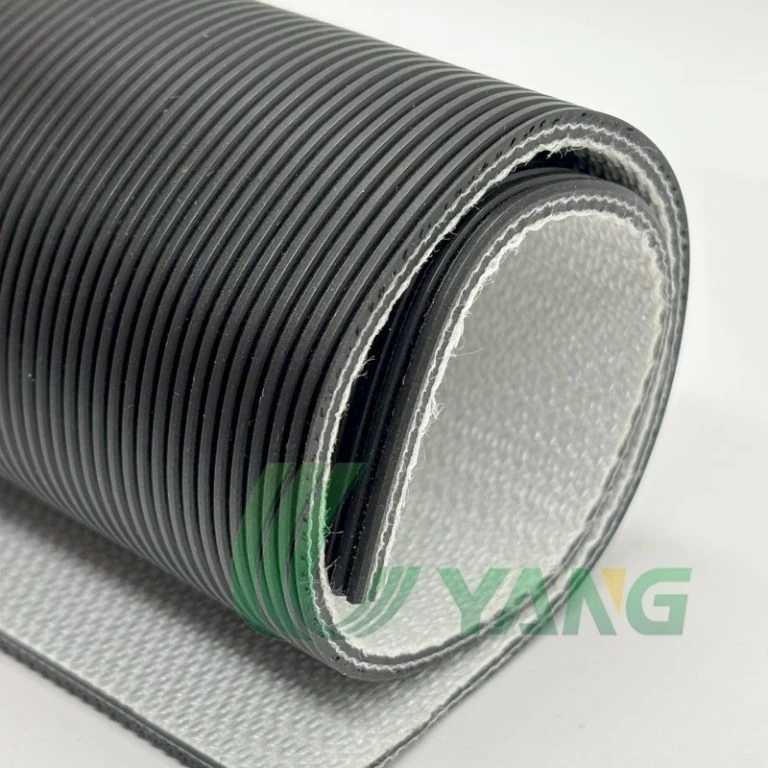
The UYANG BELTING 0.8 mm white PU smooth conveyor belt features a smooth white PU top, single-ply polyester carcass, and fabric backing. The belt operates in the temperature range of -20°C ± 20°C to +80°C. This belt is intended for light duty, small pulleys, transport of bakery and confectionery products, inspection conveyors, and other compact units.
I look for this information to verify sample data; minimum pulley diameter, load on support bed, operating speed, joint and edge finish. Sample flexible belts can still cause damage by poor tracking, rough transfer plates or excessive tension.
Inspect Release Under Real Conditions
Run warm and cool samples. After the flour or oil has had time to run and develop characters, repeat the test. Look for sticking, abnormal orientation, surface marking, and buildup on the scraper or transfer plate. A seemingly clean sample may develop into problems in the middle of a shift.
For direct food contact, request the compliance evidence that applies to the exact belt construction and destination. The product page states that FDA or EU food compliance is available upon request. Treat that as a document request for the ordered specification, not as approval of every possible configuration.
Use Patterned PVC Where Grip Is the Measured Need
A patterned belt can change the contact between the item being carried and the surface. Although a slight incline or the start of movement can cause items to slip, more friction is not necessarily better. An excess amount of grip can cause light items to be dragged, interfered with during transfer, and create residue that is difficult to remove.
Compare Grip With Cleaning Time
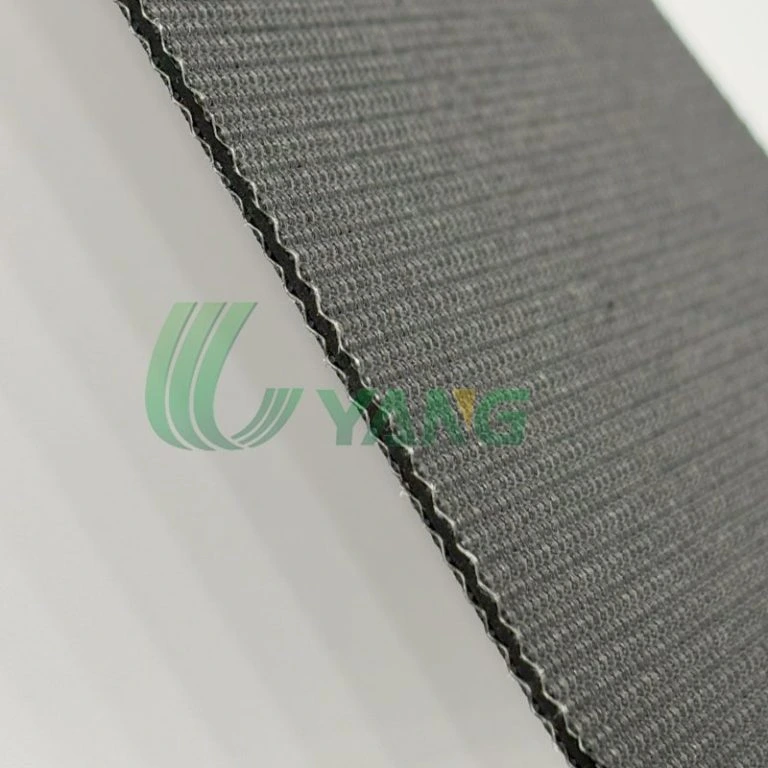
This gray diamond pattern PVC light-duty conveyor belt features a diamond-embossed gray PVC top, a PVC bottom cover, and two-ply polyester reinforcement. This conveyor belt is designed for use within a temperature range of -10 degrees C to 80 degrees C for packaging, warehouse distribution, parcel sorting applications and slight inclines. It is ideal for use in conveying trays, cartons and wrapped goods within the bakery, and is not necessarily recommended for direct contact with all types of food.
Check if the diamond recesses will hold flour, sugar or glaze. Test cleaning, inspection and drying time. A smooth belt already doing the work could simply add to the maintenance without giving any control.
Check Product Stability at Start and Stop
Incline tests are run at normal speed as well as during acceleration. Additionally, controlled stops and restarts with a representative load are marked. The product is then placed in the same position and the test is repeated after the surface has picked up expected soil. The friction of a belt changes when it is dirty, oily or wet.
Solving tracking problems with a more aggressive top pattern is not recommended. Frame alignment, pulley condition, joint squareness, tension, loading position, and the underside of the belt are all factors which must be checked separately.
Build a Bakery Belt Trial That Produces Comparable Data
A good sample can be distinguished from a poor one most quickly by testing them in identical circumstances. This means testing them with the same product, at the same speed, using the same angle, with the same soil, same cleaning implements, and after the same time has elapsed.
| Trial Item | Smooth PU Check | Patterned PVC Check |
| Product transfer | Release, folding, edge catching | Texture marks and drag |
| Incline stability | Slip at normal and restart speed | Grip without product disturbance |
| Soil response | Visible film and scraper behavior | Residue inside the diamond pattern |
| Cleaning | Brush or rinse time and inspection | Groove access, rinse, and drying time |
| Mechanical fit | Small pulley flexing and tracking | Pulley fit, joint flexing, and tension |
Approve the Joint and Edges
Joint crosses over every pulley and transfer point. Check thickness, alignment, flexibility and surface continuity. Edge sealing or alternative treatment may be required where joint is exposed to moisture and in contact with product.
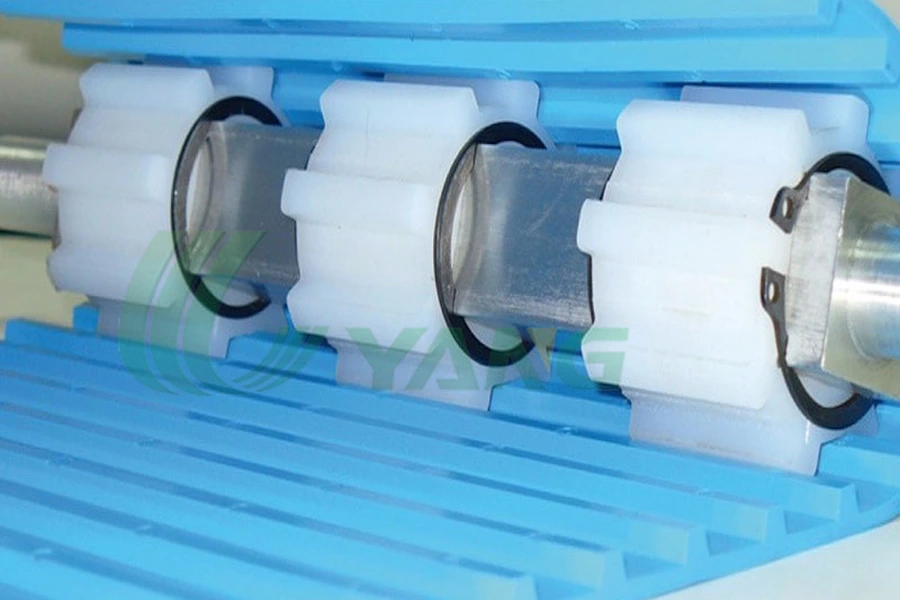
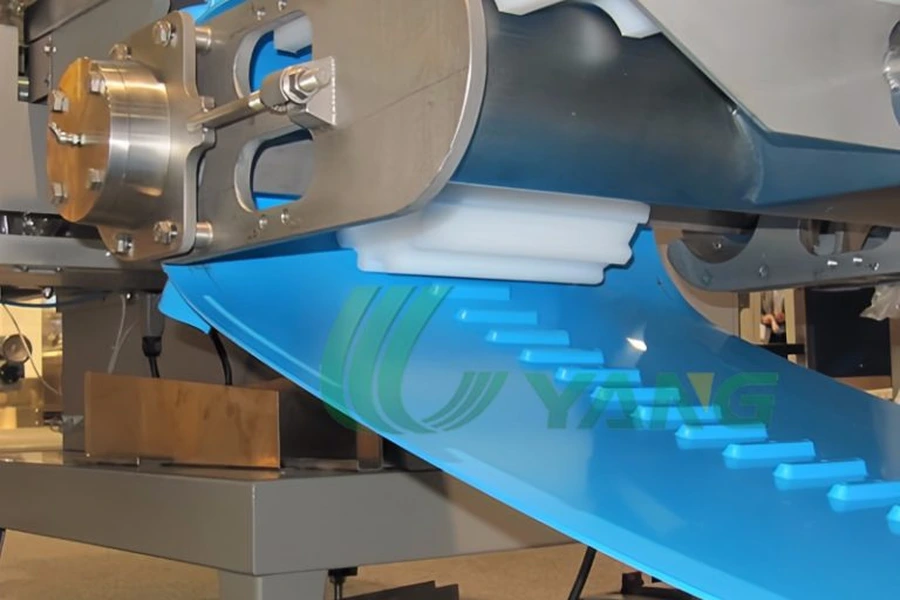
The endless list of possible fabrication, perforation, edgebanding, special dimensions of width and length, cleats and guides for the smooth PU conveyor belt should be whittled down to the minimum required for the actual application. Each feature added to the basic work must have a clear function. Drawing or sample approval points must be defined for each additional feature.
Put Measurable Fields in the RFQ
Belt size, thickness, top and underside surface, speed, pulley diameter, support type, angle, product mass and temperature, cleaning agent and contact conditions etc. and drawing of critical transfer point. The UYANG BELTING product center outlines some major product families. The company profile outlines a wider spectrum of solutions including PVC, PU, solid woven belts, various patterns and processing equipment.
Record the results from the trial of a representative sample before releasing a bulk order. This enables production, purchasing and maintenance to subsequently compare like with like when making any future substitutions.
Frequently Asked Questions
Is Smooth PU Always Better for Dough Conveying?
No. Smooth PU is usually of use for release and for inspection purposes, but many other factors can influence the result of using a smooth PU belt such as the belt construction, product temperature, oil, flour, transfer geometry and cleaning of the dough and joint. It is best to test the actual dough and joint on the actual conveyor.
Can Patterned PVC Be Used on a Bakery Line?
This material can be used to cover trays, cartons or wrapped products to give additional grip. For use in direct contact with food, evidence of the construction must be provided and the pattern must be capable of being cleaned and inspected and meet the site’s criteria for such.
What Should a Buyer Send With a Conveyor Belt RFQ?
Send dimensions, pulley data, speed, incline, support-bed details, product and load information, soil and cleaning conditions, joint preference, edge treatment, and a drawing of the difficult transfers. A sample trial should follow before bulk approval.
Please forward line data, test parameters and target service duty in a formal message via our official UYANG BELTING channel. Request to be quoted for a specific belt construction, supply of fabrication drawings and relevant compliance certificates as well as a sample to be checked against the relevant trial data sheet.