A conveyor belt slips when the drive pulley turns faster than the belt can move. The line may hesitate at startup, slow under load, or stop while the motor keeps running. Heat, glazing, and underside wear often follow. Tightening the take-up may help briefly, but it can hide contamination, worn lagging, seized rollers, overload, or the wrong drive arrangement. Start with the symptom pattern before changing tension.
What Does Conveyor Belt Slippage Actually Mean?
Slippage is a loss of grip between a friction-driven belt and its drive pulley. Available traction must exceed the resistance from the belt, product, rollers, scrapers, transfers, and startup load. Belt construction changes the checks, so compare options in the conveyor belt product center before replacing the belt.
Separate Belt Slip from Product Slip and Mistracking
True belt slip occurs under the belt: the pulley moves faster than the belt and the drive area may heat. Product slip occurs on top: belt speed stays normal, but cartons, dough, bags, panels, or food move backward. Mistracking is lateral movement toward one edge. Edge rubbing can add resistance and later trigger drive slip, so watch the pulley, belt, and product together.
Which Conditions Reduce Available Traction?
Friction-drive performance depends on effective tension, pulley contact, surface condition, and total running resistance. When the fault appears often reveals the cause.
Low Effective Tension and Limited Take-Up Travel
A belt can settle after installation, lengthen in service, or lose usable take-up travel. Startup is the usual trouble point because acceleration requires more torque than steady running. Common signs include squealing, unstable speed, drive-area heat, and repeated tension adjustments. Hand pressure alone is not a reliable tension check.
Moisture, Oil, and Worn Pulley Lagging
Water, detergent, grease, animal fat, flour, starch, dust, and adhesive can form a thin film between belt and pulley. Contamination may remain on the underside even when the visible surface looks clean. Hardened, polished, cracked, or loose lagging also reduces grip.
Cleaning and belt selection should match the process. The industry application library covers food, logistics, printing, wood, stone, and other lines with different moisture, residue, and surface needs.
Excess Resistance and Limited Wrap Angle
Seized rollers, return-side buildup, tight scrapers, edge contact, damaged support beds, and stiff splices raise the force needed to move the belt. A small wrap angle reduces pulley contact. A thick or distorted splice can create a repeated bump, while an undersized pulley adds bending resistance and shortens joint life.
How Should You Diagnose Slippage before Adding Tension?
Stop and isolate the conveyor before inspection. Clean the drive area, check the full belt path, and test again under normal load. Repeated take-up adjustments without diagnosis usually cost more later.
Read the Symptom Pattern
Slip only at startup points toward low tension, high starting load, rapid acceleration, or weak pulley grip. Slip after washdown suggests moisture or detergent residue. Slip only at full load calls for checks on lagging, wrap angle, rollers, scrapers, loading rate, and drive capacity.
| Symptom | Likely Cause | Check | First Action |
| Startup slip | Low tension or heavy start | Take-up and startup load | Reset or reduce load |
| After washdown | Water or detergent film | Pulley and underside | Clean and dry |
| Full-load slip | Low grip or high resistance | Lagging, wrap, rollers | Restore grip |
| Heat or glazing | Continuous drive slip | Pulley and underside | Stop and repair |
| Product moves only | Product slip | Top surface and incline | Match belt surface |
Inspect the Drive Path
Inspect lagging, take-up movement, roller bearings, return-side buildup, scrapers, guides, and pulley alignment. Make small, equal tension changes only after cleaning and mechanical checks. Excess tension can heat bearings, bend shafts, stretch the belt, raise motor load, and shorten splice life.
Test under Normal Load
An empty conveyor may run normally and still slip in production. Test startup, steady speed, stopping, and repeated cycles with a centered working load. Record when the fault begins. A side-view video can help compare pulley speed with belt speed, but guards and safe distance come first.
Which Corrective Action Fits Each Root Cause?
A lasting repair removes the cause. Use a simple order: clean, inspect, reduce resistance, set tension correctly, then review the drive design.
Restore Grip before Raising Tension
Clean the drive pulley and belt underside. Replace worn lagging and correct a take-up that is jammed, uneven, or out of travel. Use cleaning chemicals compatible with the belt and rinse fully; detergent residue can reduce grip too.
Remove Mechanical Resistance
Replace seized rollers, clear buildup, reset scraper pressure, stop edge rubbing, and repair damaged support beds. Inspect a belt that jerks once per revolution for a thick, angled, or distorted splice.
Check Startup Load and Drive Capacity
Where the process allows, start the belt before feeding product and avoid sudden loading. If slip continues after mechanical faults are removed, confirm motor power, gearbox ratio, pulley diameter, wrap angle, and actual load with the equipment designer.
When Should You Consider a Different Drive Method?
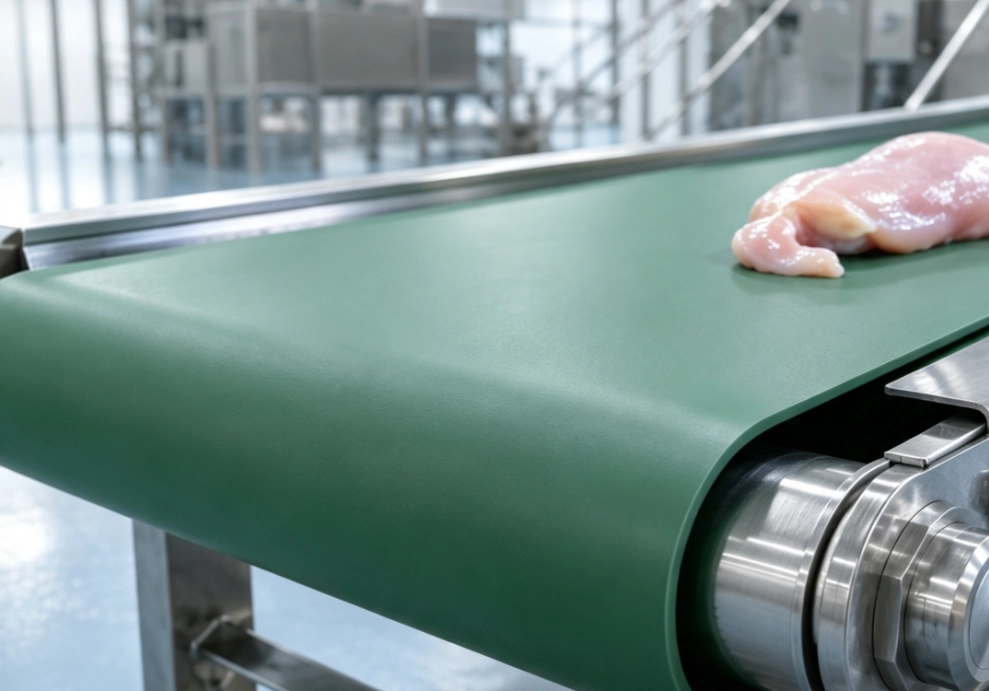
Changing belt type should follow the mechanical checks. Friction-driven PVC or PU belts and positive-drive homogeneous belts use different drive principles.
Keep Friction-Drive Repairs Separate
For a friction-driven belt, correct pulley grip, wrap angle, effective tension, alignment, and resistance first. A rougher carrying surface will not repair slip at the drive pulley, and extra tension cannot compensate for oily lagging or a seized roller.
Use Positive Drive for Specific Wet Applications
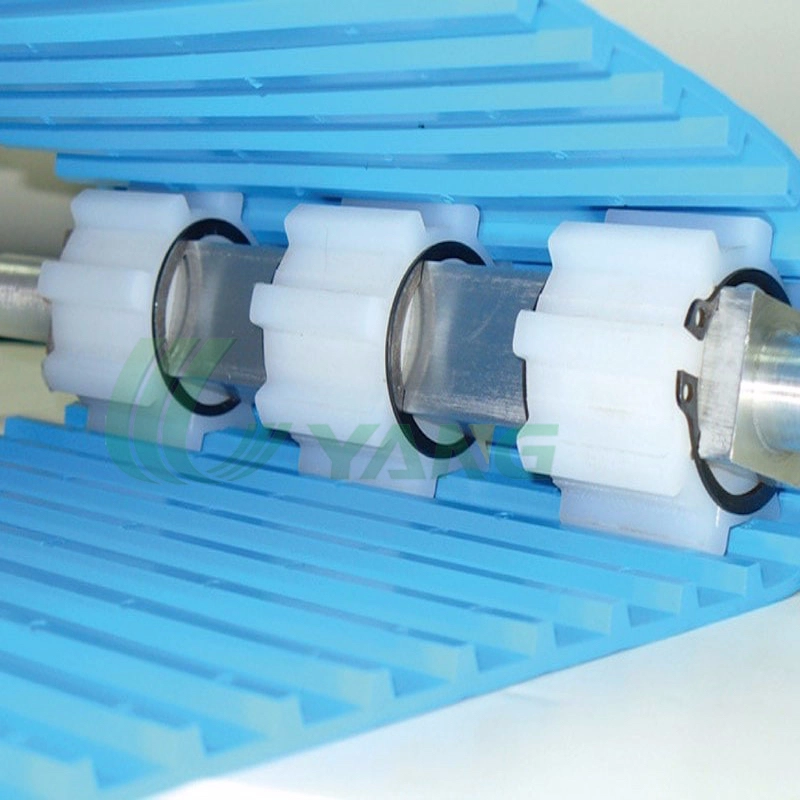
Wet or greasy food lines with repeated washdowns may struggle to keep stable friction. A positive-drive homogeneous belt engages matching drive wheels, reducing reliance on a smooth pulley. Drive-wheel pitch, shaft alignment, support layout, width, and tension still need to match.
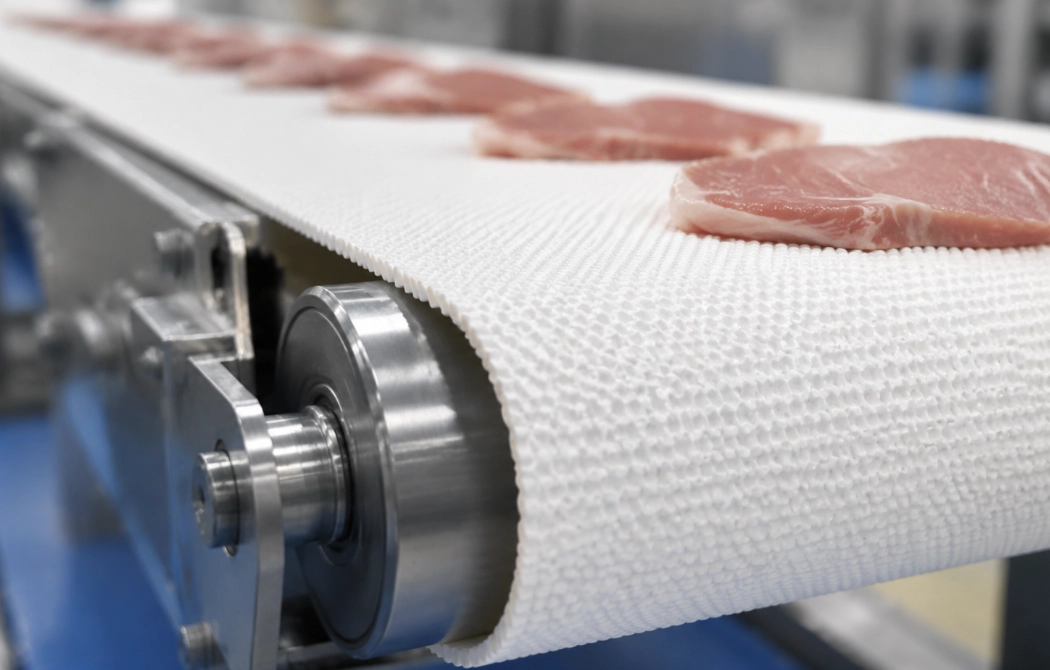
The Easy-to-Clean Homogeneous Belt K00 Series uses a fabric-free TPU structure for hygienic handling of raw meat, fruit and vegetables, frozen food, and fried products. Surface patterns and accessories can be selected around cleaning and product movement. Its one-piece structure avoids fabric absorption and layer separation, while heat-fused joints support easier sanitation.
img.Easy-to-Clean Homogeneous Belt-K00 Series-Golf as TOP.webp
This is not a universal slippage fix. It suits applications where sanitation, water, fats, or repeated friction loss justify a positive-drive conversion.
How Can UYANG BELTING Support Your Project?
UYANG BELTING supplies PVC, PU, homogeneous, PVK, silicone, rubber, patterned, modular, and transmission belts, plus accessories and processing equipment. The company has more than 20 years of industry experience and 15 conveyor belt production lines.
Send Complete Application Data
For a slippage review, send belt material, width, endless length, speed, load, incline, pulley diameters, wrap angle, take-up travel, pulley surface, cleaning method, temperature, liquid or oil exposure, splice type, photos, and a running video.
Review the company profile before discussing custom surfaces, guides, cleats, joints, or a move from friction drive to positive drive. Clear operating data is more useful than the old belt name alone.
FAQ
Q1: Why Does a Conveyor Belt Slip Only during Startup?
A: Startup requires more torque. Low effective tension, heavy loading, rapid acceleration, worn lagging, or high resistance may cause short periods of slip.
Q2: Can Every Slipping Belt Be Fixed by Tightening It?
A: No. Check contamination, lagging, rollers, wrap angle, take-up travel, splice condition, load, and drive capacity first. Excess tension can damage the conveyor.
Q3: How Can You Tell whether the Belt or Product Is Slipping?
A: If the pulley moves faster than the belt, the belt is slipping. If belt speed stays normal but the product moves backward, the product is sliding.
Q4: Why Does a Conveyor Slip after Washdown?
A: Water, detergent, grease, or food residue may remain between the belt and drive pulley. Clean and dry the drive area, then inspect the lagging.
Q5: When Is a Positive-Drive Homogeneous Belt Worth Considering?
A: Consider it when wet, greasy, or frequently washed food lines repeatedly lose friction-drive traction. UYANG BELTING can match the belt, drive wheels, surface, and dimensions.