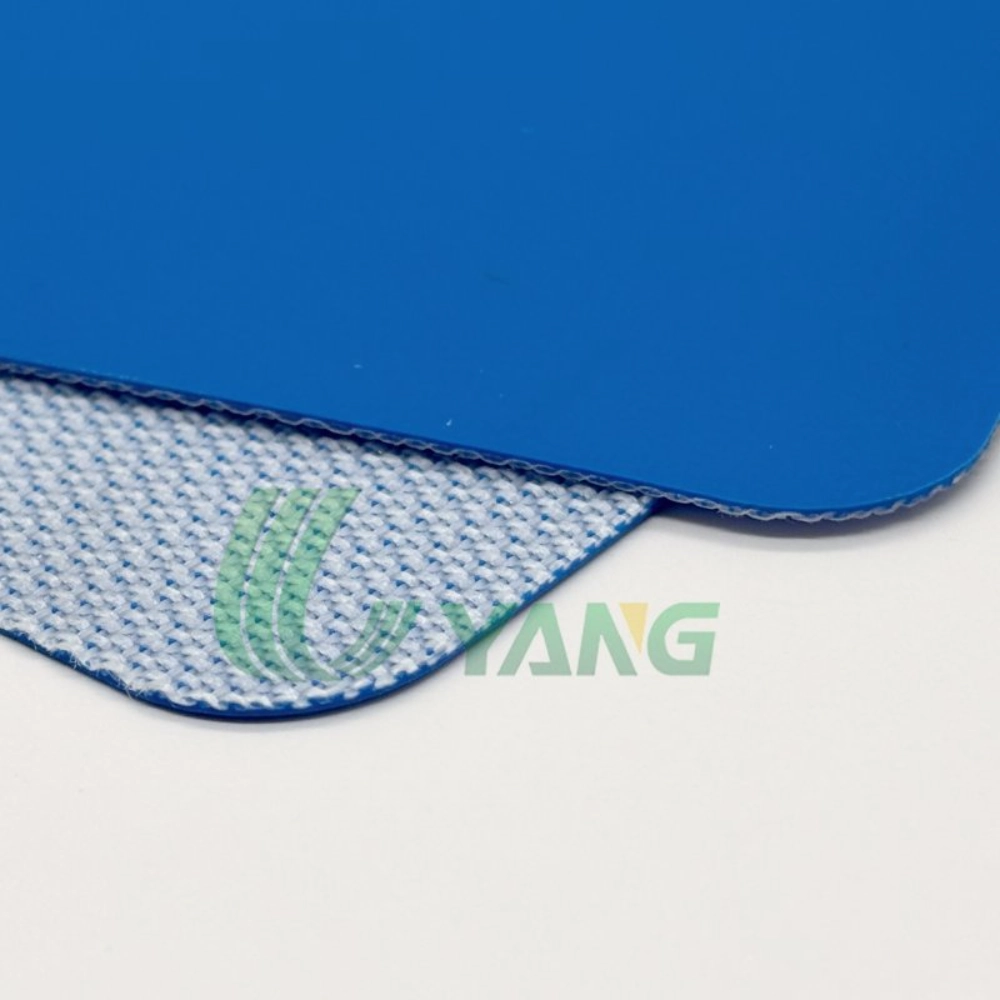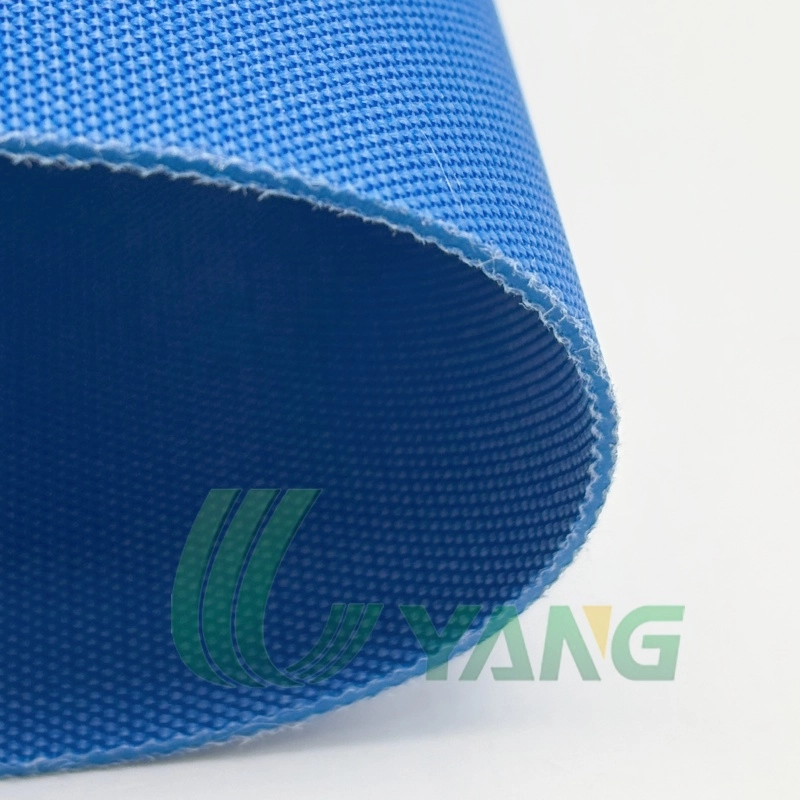
When selecting fabric reinforcement for a conveyor belt, there are five key points to consider: working tension, load, length of conveyor, pulley diameter and amount of flexing that the belt will undertake during operation. For light to medium duty applications a 2-ply construction can be sufficient, whilst for higher load, longer operating hours or longer conveyors a 3-ply construction can offer the necessary support. Whilst more fabric is generally better than less, more does not necessarily mean better. A belt with extra plies can be thicker and stiffer, resulting in reduced bending performance. Therefore, a balance must be sought between the amount of reinforcement required to cope with the specified loads and the required bending performance.
The fabric carcass sits inside the belt, but it affects much more than tensile strength. It influences elongation, tracking, edge stability, pulley compatibility, splicing, and how the belt behaves after thousands of running cycles. That is why choosing only by top-cover material or total thickness often leads to trouble later.
Why Does Fabric Reinforcement Change Conveyor Belt Performance?
Fabric reinforcement acts as the structural frame of a conventional PVC or PU conveyor belt. The cover deals with the product and working environment, while the fabric layers carry tension and help the belt keep its shape. You need to look at both parts together.
Tensile Strength and Working Elongation
A belt that stretches too much needs repeated tension adjustment. It may start tracking poorly, slip at the drive pulley, or create unstable product positioning.
Rather than comparing nominal thicknesses of light conveyor belt, ask for working tension or 1% elongation strength figures. A current light conveyor belt specification will include the fabric ply count and 1% elongation strength, minimum roller diameter, temperature range and belt weight. These figures give a much better indication of the performance of the light conveyor belt on your machine.
This matters even more on packaging, sorting, labeling, and automated transfer lines where a few millimeters of belt movement can affect product position.
Tracking and Lateral Stability
A fabric layer must resist lengthwise tension, but lateral stability matters too. Polyester fabric constructions are used in current PVC belt designs specifically with lateral stability in mind, while reinforced 3-ply polyester structures can provide controlled elongation and steadier tracking under load.
If your existing belt keeps wandering to one side, do not immediately blame the surface coating. Check the carcass, belt width, pulley alignment, tension distribution, and load position as well.
Pulley Diameter and Splice Behavior
Ply count alone does not tell you whether a belt can bend around your pulleys. Two belts with the same number of fabric plies may still require different minimum roller diameters because their total thickness, cover construction, pattern, and carcass differ. Current 2-ply belt specifications, for example, show minimum roller diameters ranging from 50 mm to 80 mm depending on the complete construction.
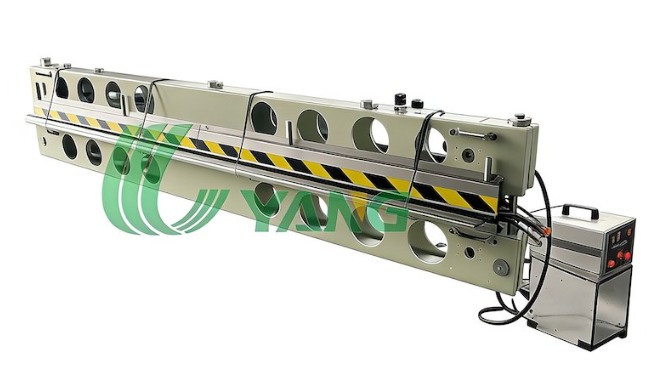
Splicing also needs attention. Light PVC and PU belts can be joined by heating and pressure to form a strong endless joint. Proper preparation matters because the layers at both belt ends must match correctly before joining.
Which Fabric Reinforcement Should You Choose?
There is no single fabric that suits every conveyor. The right choice depends on what the belt carries and how the machine operates. The industry application range covers food processing, agriculture, automotive and tire production, airport and logistics systems, textile and printing, wood, stone, and several other environments. Each puts different stress on the belt carcass.
Polyester Fabric for General Industrial Conveying
Polyester is a practical starting point for many PVC and PU conveyor systems because it combines tensile support with relatively good flexibility. Current product constructions use polyester in both 2-ply and 3-ply formats, so you can match the reinforcement level to the actual duty rather than changing the whole belt material.
For parcel handling, packaging, warehouse conveyors, light manufacturing, and similar work, check polyester reinforcement first unless your process has a special requirement.
Cotton Canvas for Process-Specific Applications
Cotton canvas should be treated as an application-specific construction, not simply as a stronger or weaker alternative to polyester. The current product center includes cotton canvas PU constructions for tire production, alongside polyester, solid-woven, aramid-related, and other belt structures.
If you are replacing an existing cotton-backed belt, send the old construction details rather than switching material based on thickness alone. Surface contact, process temperature, product tackiness, splice style, and machine design may all be part of the original reason that fabric was selected.
Solid-Woven Construction for Tougher Handling
A solid-woven carcass is another route when you want a more integrated textile structure rather than separate conventional plies. These belts appear in the current portfolio alongside PVC and PU fabric-reinforced belts and are used across material-handling applications where wear resistance and carcass strength matter.
This can make more sense than simply adding ply after ply to a standard light belt.
When Fabric-Free Belting Makes More Sense
Not every conveyor should use fabric reinforcement.
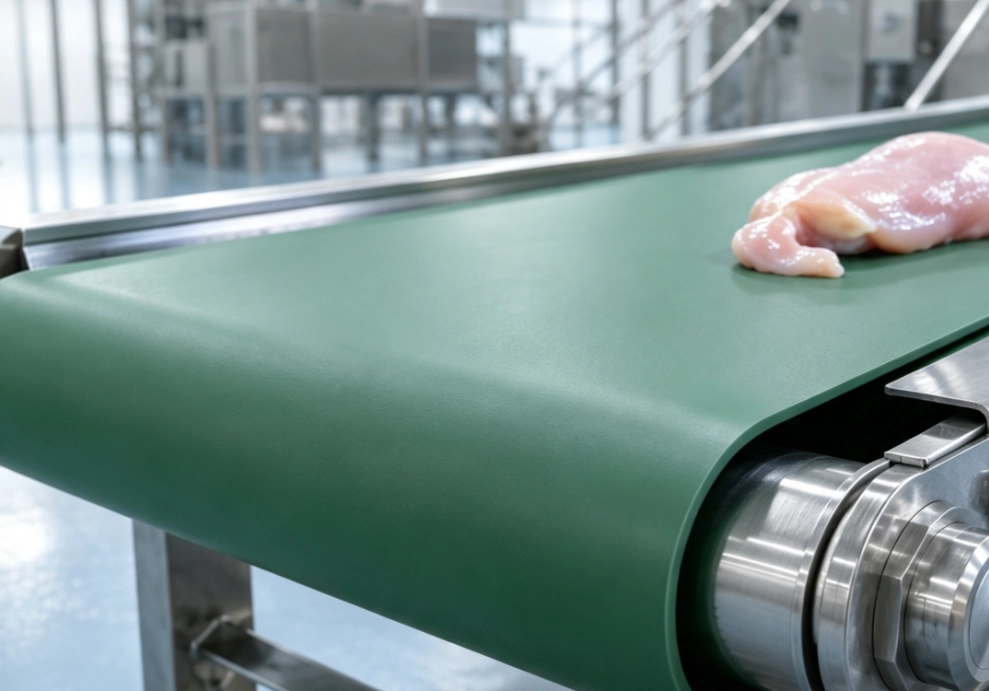
For highly sanitary food lines, a homogeneous belt can remove the fabric layer completely. This construction uses a one-piece thermoplastic structure, commonly TPU or TPE, with no textile carcass or laminated fabric interface. Typical thicknesses range from 1.5 mm to 5 mm, and heat-fused joints can keep the structure continuous.
That design is particularly useful where frequent washdown, liquid ingress, contamination traps, or edge fraying are bigger concerns than conventional fabric reinforcement.
How Many Fabric Plies Do You Actually Need?
Ply count is easy to compare on a quotation, which is probably why buyers focus on it so much. In practice, it is only one part of the belt specification. Load, width, pulley size, speed, cover thickness, and operating hours still need to be checked.
Two Plies for Many Light and Medium-Duty Lines
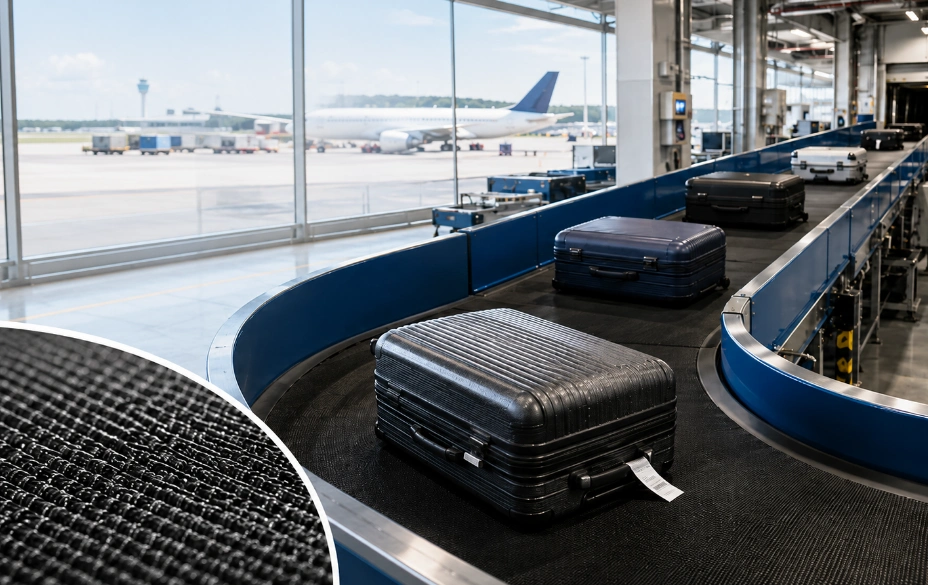
A 2-ply structure can give a useful balance between tensile support and flexibility. Current 2-ply designs are used in packaging, electronics, food handling, airport systems, logistics, agriculture, and other light or medium-duty applications.
Small pulleys are common on compact machines, so keeping the carcass flexible may be more useful than adding another fabric layer.
Three Plies for Greater Load Support and Stability
Three fabric plies become more relevant when the conveyor carries heavier products, runs for longer periods, or needs a more stable carcass.
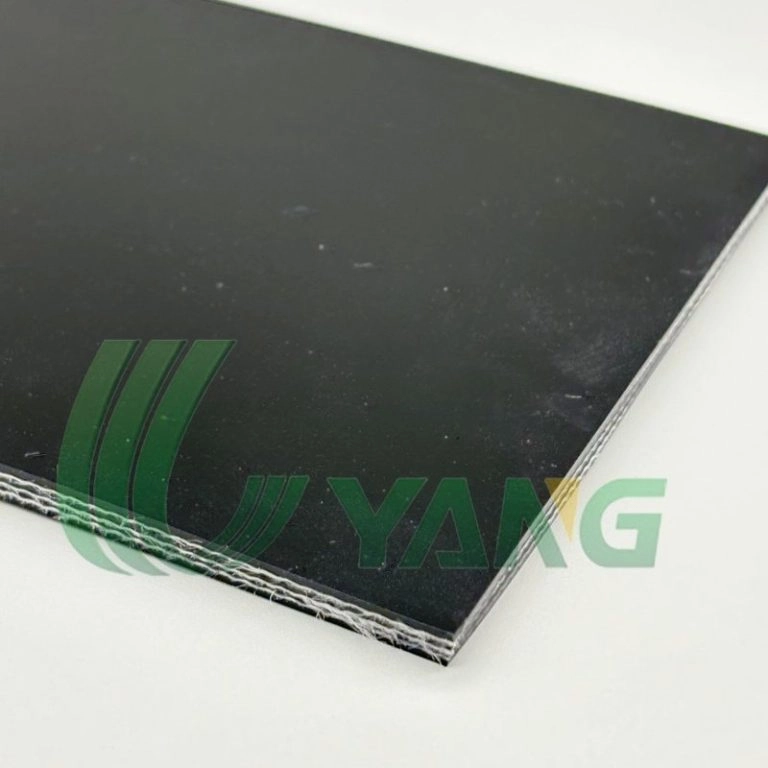
A good example is the UYANG 3 Fabrics 4 PVC Cover Black Matte/Smooth PVC Conveyor Belt. It uses 3-ply polyester fabric reinforcement with a 3 Ply 4 Cover structure. The belt is intended for medium-to-heavy industrial conveying and is listed for logistics, packaging, warehouse systems, bagged materials, and general assembly conveyors. Its stated operating range is -10°C to +80°C, with an antistatic option available.
Why More Plies Are Not Always Better
Extra reinforcement normally brings extra thickness and stiffness. That can be useful on a longer or more heavily loaded conveyor, but not on every machine.
A compact conveyor with small pulleys, frequent reverse bending, and light products may gain little from a heavy carcass. You may end up paying for strength you do not use while making installation and flexing harder. Even heavier 5-ply structures exist for specific bulk applications, which is exactly the point: they belong to specific jobs, not every conveyor.
What Should You Send Your Supplier Before Ordering?
A useful belt recommendation starts with machine data, not a request such as “need a strong 3-ply conveyor belt.” The more precise your information is, the less guesswork goes into reinforcement selection. Current technical guidance also recommends supplying pulley diameter, speed, load, belt dimensions, operating environment, old belt construction, and the previous failure mode.
Before requesting a quotation, send:
- Belt width, length, and total thickness
- Existing fabric type and number of plies
- Drive and tail pulley diameters
- Conveyor speed and operating hours
- Product weight or load per meter
- Horizontal, incline, or decline operation
- Working temperature
- Oil, water, dust, chemicals, or cleaning conditions
- Current problems such as stretching, tracking, fraying, delamination, or splice failure
- Required surface, bottom fabric, antistatic properties, food-contact documentation, and splice type
A small but useful detail: sending a clear photo of the old belt edge often helps because the layer structure is visible there.
How Can UYANG BELTING Help With Belt Selection?
UYANG BELTING supplies conveyor belts and related processing equipment, with more than 20 years of manufacturing experience. Its company profile lists an 80,000-square-meter facility, 15 production lines, and a portfolio covering PVC belts, PU belts, solid-woven belts, patterned constructions, and belt-processing machinery.
For B2B buyers, production control matters as much as the catalog. The current product information describes online thickness monitoring along with physical, chemical, and appearance inspection for production batches. The supplied service information also includes a 12-month quality guarantee from the Bill of Lading date under normal operating conditions and lifetime technical support.
The final rule is simple: choose fabric reinforcement from the conveyor inward, not from a catalog outward. Start with tension, load, pulleys, tracking, environment, and splice requirements. Then decide the fabric and ply count.
FAQ
Is Polyester Fabric Always the Best Conveyor Belt Reinforcement?
No. Polyester works well in many light and medium-duty PVC and PU belts because it can provide good tensile stability without excessive bulk. Cotton canvas, solid-woven constructions, or fabric-free belts may make more sense in specialized processes.
Does a Higher Ply Count Mean a Longer Conveyor Belt Life?
Not necessarily. More plies can increase carcass support, but belt life also depends on cover wear, tension, pulley diameter, tracking, splice quality, contamination, and operating conditions. Choosing too stiff a belt for small pulleys can create a new problem instead of solving the old one.
When Should You Choose a Conveyor Belt Without Fabric Reinforcement?
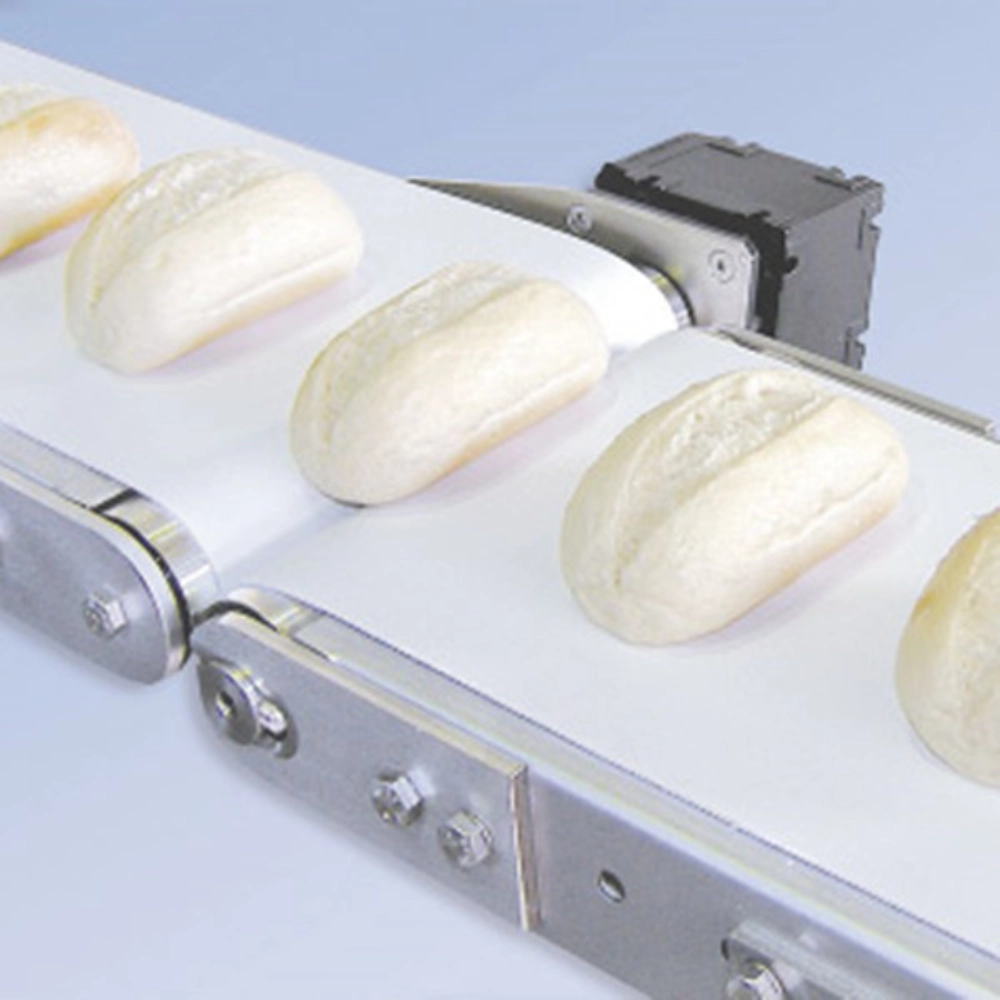
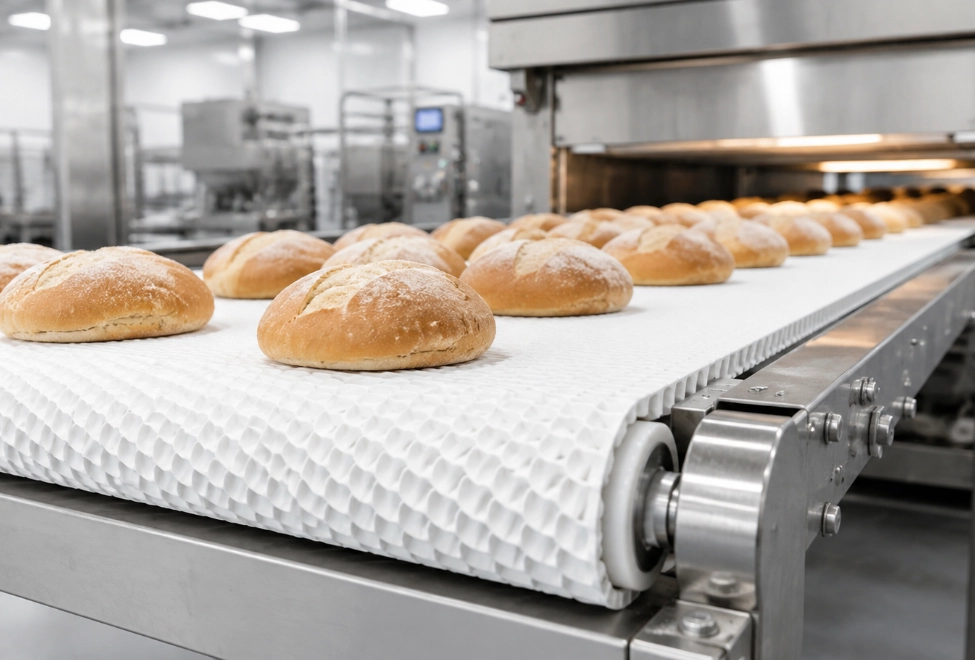
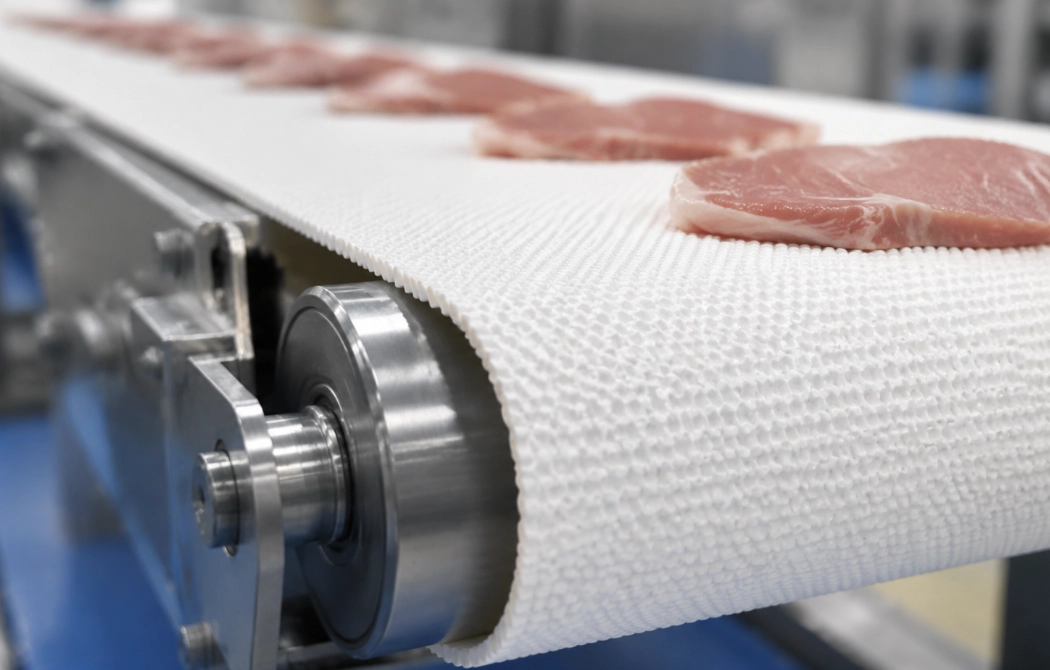
Consider a fabric-free homogeneous belt when sanitation, frequent washing, liquid resistance, and eliminating textile edges are major priorities. Its one-piece construction removes fabric layers and lamination points, which can be useful in meat, seafood, dairy, bakery, frozen-food, and other high-hygiene processes.