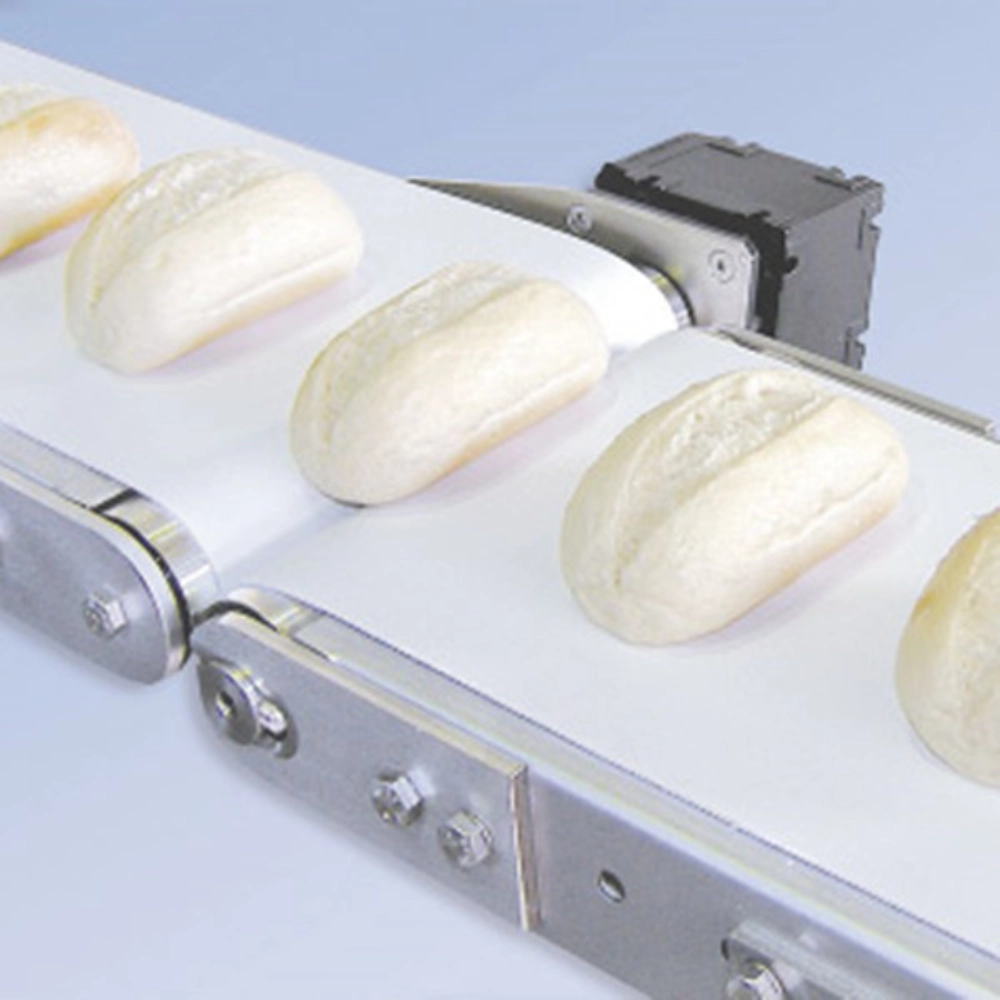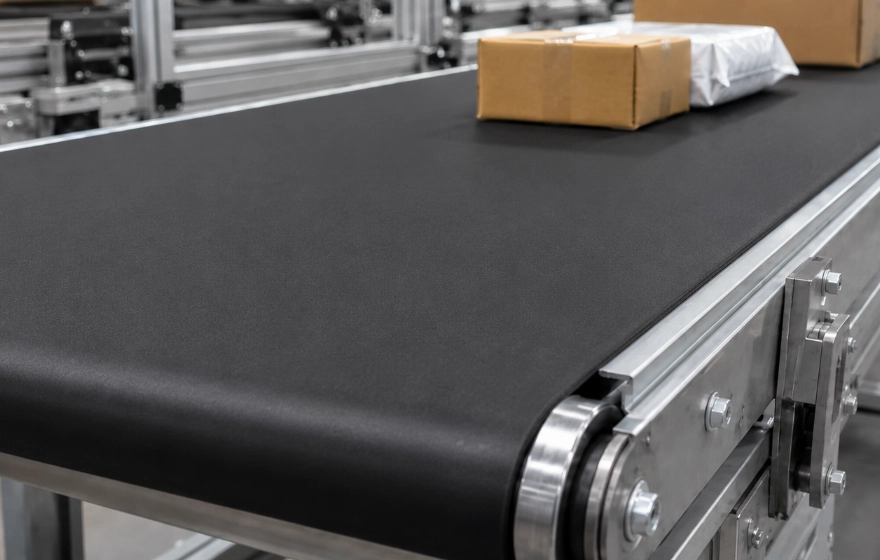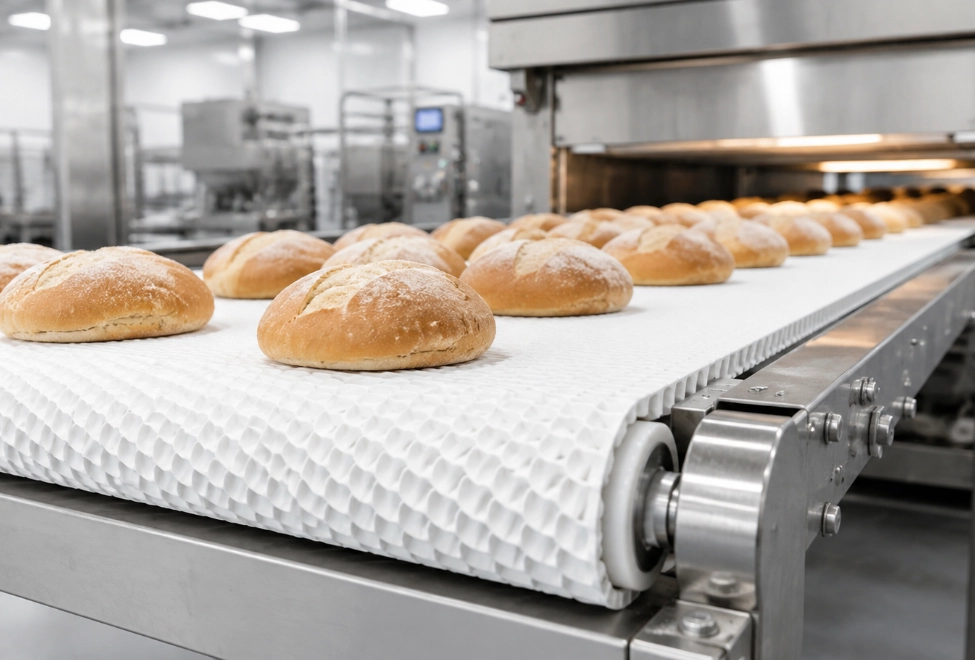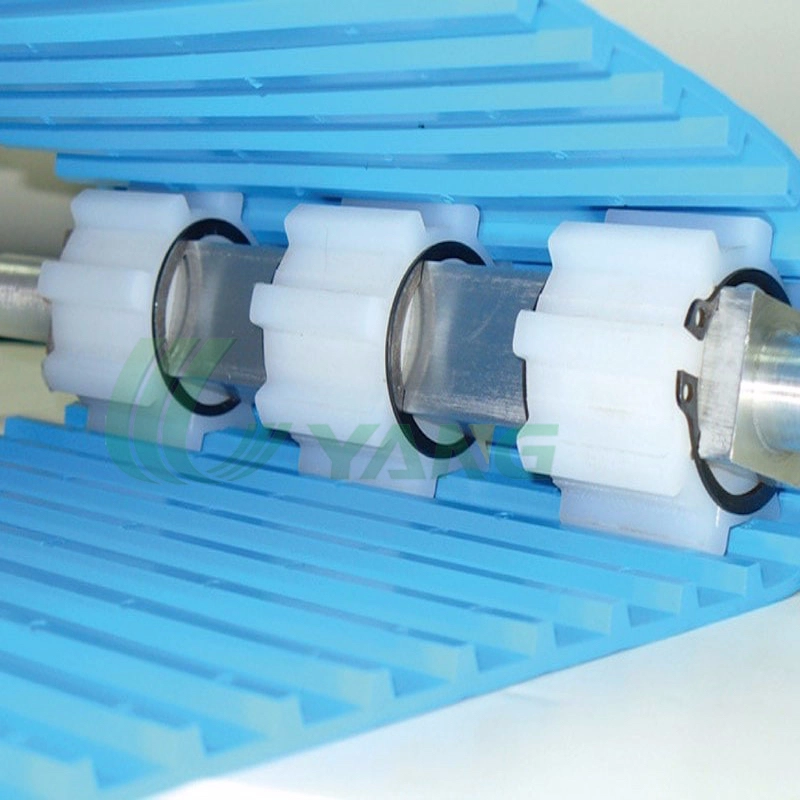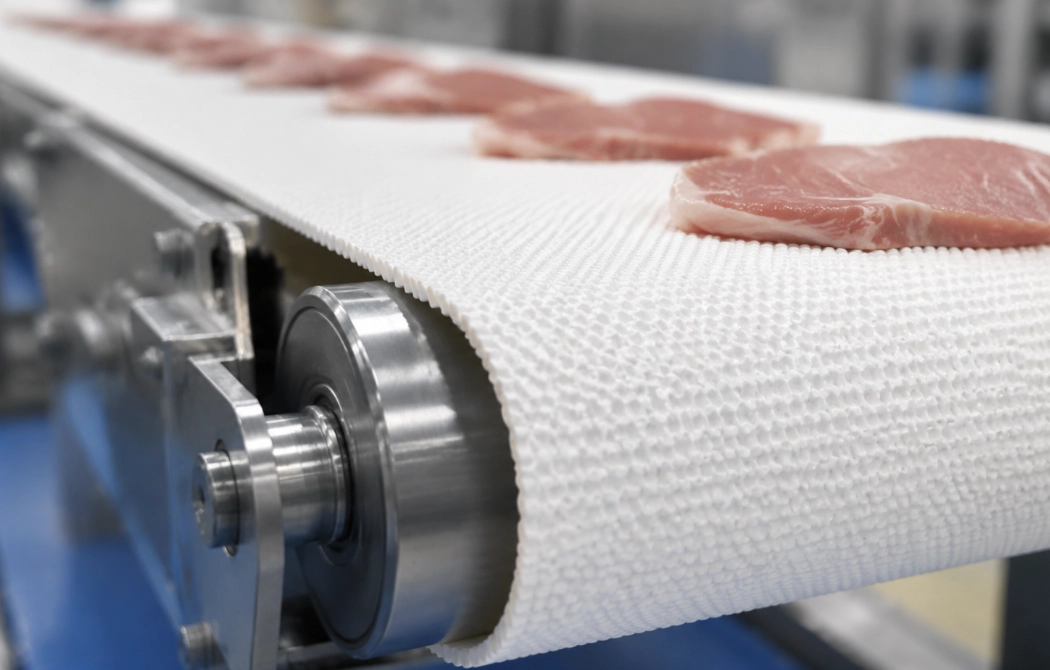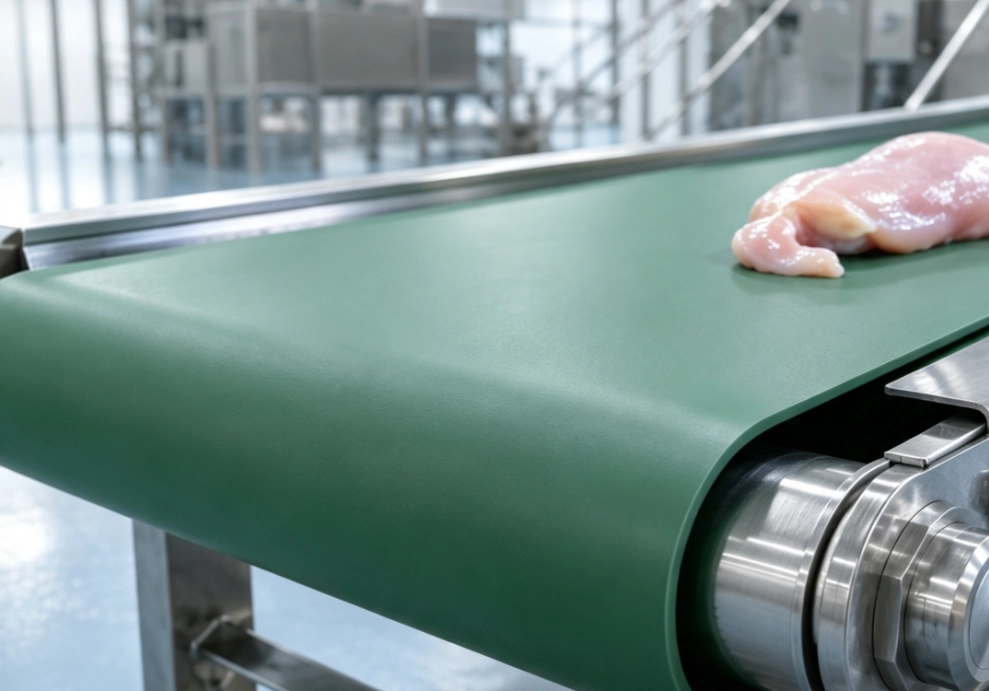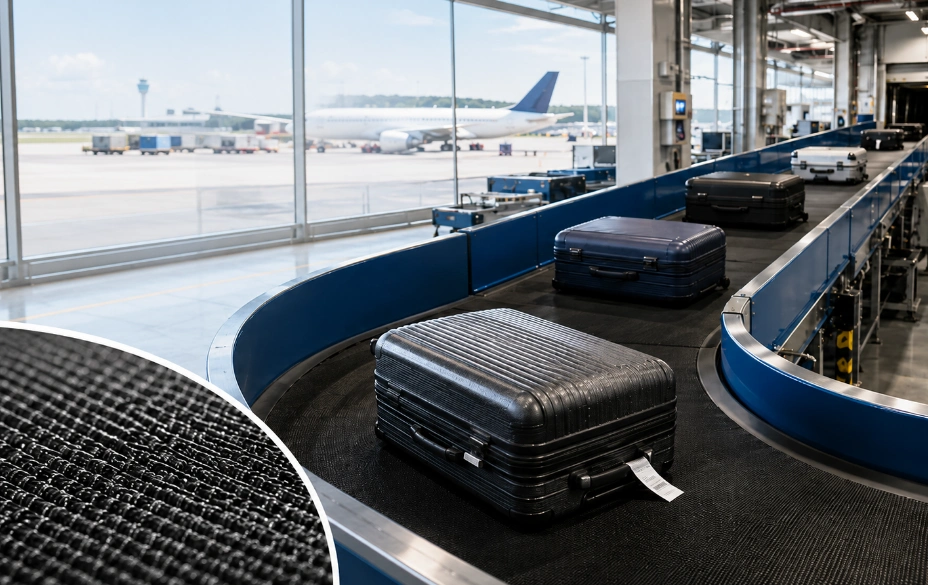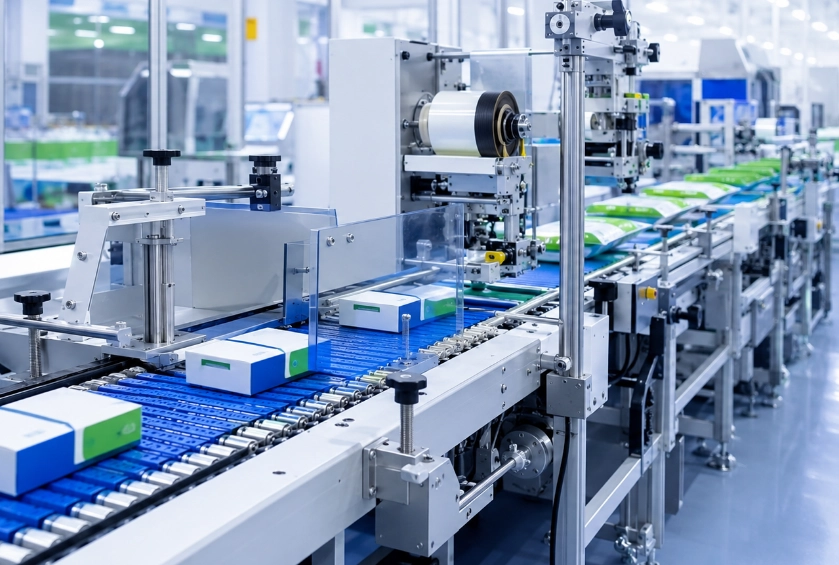
A conveyor belt is more than a simple strip of plastic or rubber traveling on a series of pulleys. Typically, the parts of a light industrial conveyor are constructed to work together, as a team. There are the carrying surface, the internal reinforcement, the running side of the belt, the splice, and, where necessary, the guides, the cleats, the sealed edges, and the drive teeth. The precise make-up of a conveyor can vary quite considerably from one application to another. For example, a bakery belt, a tire production belt, and a washdown meat processing belt all look very similar, but contain very different components.
What Are the Main Parts Inside a Conveyor Belt?
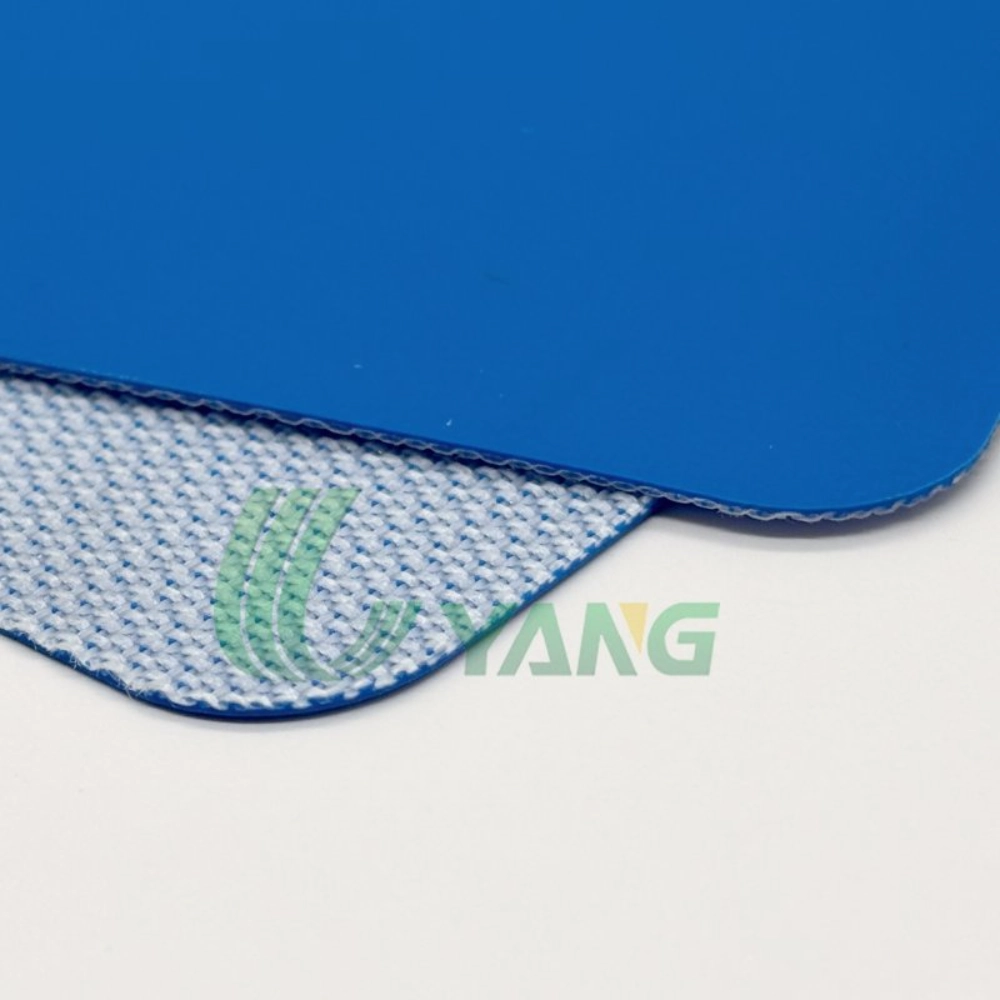
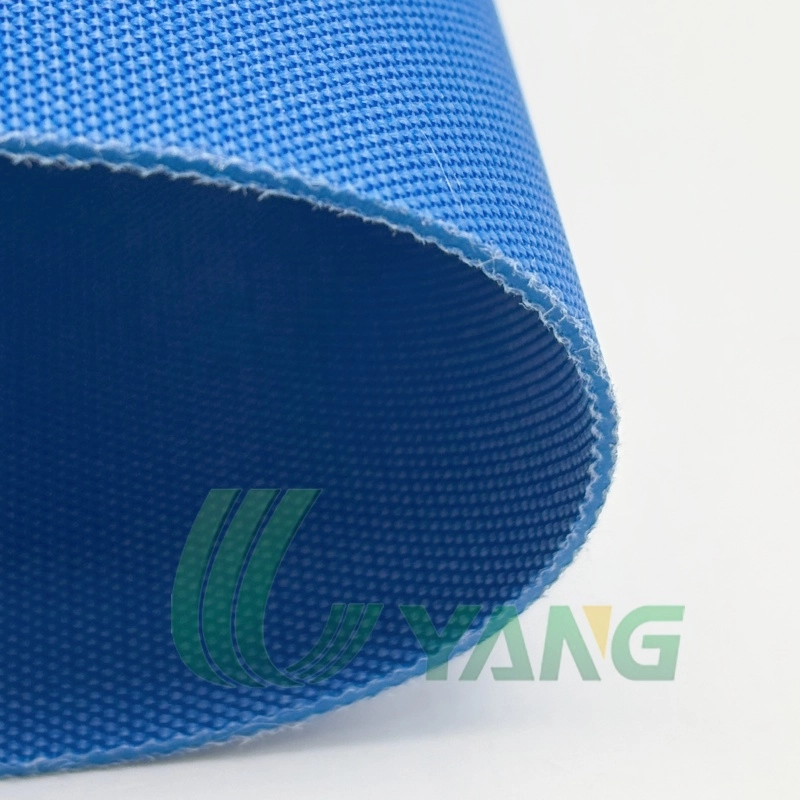
Many PVC and PU conveyor belts use a layered build. A polymer surface contacts the product, while internal fabric carries tension and helps the belt keep its shape. Some designs add a coated or fabric running side. A homogeneous belt takes a different approach: it is one continuous thermoplastic body without a fabric carcass or laminated layers.
Top Cover
The top cover touches your product. A smooth surface can make cleaning and product release easier. A textured surface adds grip where boxes, dough, wet food, or other products may slide.
For food lines, resistance to fat and oil, cleanability, abrasion, and low contamination risk are major selection points.
Fabric Carcass or Reinforcement Layer
A conventional layered belt has a fabric section that forms the main skeleton of the belt to carry the tensile load, to regulate the extension and to provide stability on rollers and pulleys. The design of the individual plies influences the stiffness, flexibility, suitability for pulleys and the behavior under varying loads.
That is why thickness alone tells you little. Two 3 mm belts can have different internal structures and run very differently on the same conveyor.
Bottom Cover and Running Side
The bottom side contacts the pulley, slider bed, or support rollers. Depending on the design, it may be fabric-backed or coated. The key balance is grip, friction, wear, noise, and tracking.
Too much friction can raise heat and power demand. Too little can cause slip on a friction-driven conveyor.
Why Does Belt Construction Change by Application?
There is no single best belt structure. The job decides what should be inside the belt and what should be left out.
UYANG BELTING supplies PVC, PU, homogeneous, solid woven, rubber, modular and other conveying solutions for food processing, logistics, automotive and tyre, printing, electronics, wood, stone, and more. It has more than 20 years of industry experience, an 80,000 m² site, and 15 production lines.
Load and Tensile Demand
Higher loads usually need stronger reinforcement and better dimensional stability. A belt moving cartons through a distribution line does not have the same demand as one carrying small food portions.
When comparing the product center, check more than thickness and color. Ask for ply structure, material, maximum load, pulley requirement, working temperature, surface finish, and splice method.
Hygiene and Liquid Exposure
Fabric layers can become a concern in severe washdown service if water, oil, or residue reaches damaged edges or laminate points. Homogeneous belts remove that fabric structure. TPU or TPE versions can use a fabric-free, one-piece body, usually 1.5 to 5 mm thick, with sealed edges and heat-fused joints available.
They are used in meat, seafood, bakery, dairy, frozen-food, and pharmaceutical conveying, where cleaning is frequent.
Temperature, Oil, Chemicals, and Wear
The belt has to survive the real line, not just a specification sheet.
Tyre production may demand wear, impact, chemical, heat, and hydrolysis resistance. Airport and logistics systems may put more weight on directional stability, anti-static behavior, low noise, and performance across changing temperatures.
A belt can perform well in a dry trial and behave quite differently after repeated washdowns, oil exposure, cold starts, or thousands of flex cycles.
How Does a Fabric-Reinforced PU Conveyor Belt Work?
A fabric-reinforced PU conveyor belt uses several working layers rather than a single solid body. The PU surface handles product contact and wear, while the internal fabric provides tensile strength and helps the belt stay stable during continuous running. This construction is common on light and medium-duty production lines because you can adjust thickness, surface finish, and reinforcement according to the conveyor layout.
For buyers, the main point is not simply whether a belt is made from PU. Two PU belts can behave very differently if their fabric layers, total thickness, surface pattern, or bottom construction are different. These details affect tracking, flexibility, pulley compatibility, and belt life.
Fabric Layers Provide the Main Support
The fabric inside the belt carries much of the working tension. A multi-layer structure can help control stretching while keeping the belt flexible enough to pass around pulleys.
A suitable example is the PU Conveyor Belts-Fabrics as Top-For Food Processing. It uses two fabric layers with a PU interlayer, giving the belt a stable internal structure for medium-duty conveying. Available thicknesses range from 0.8 mm to 3.0 mm, so the belt can be selected according to conveyor size, load, and required flexibility.
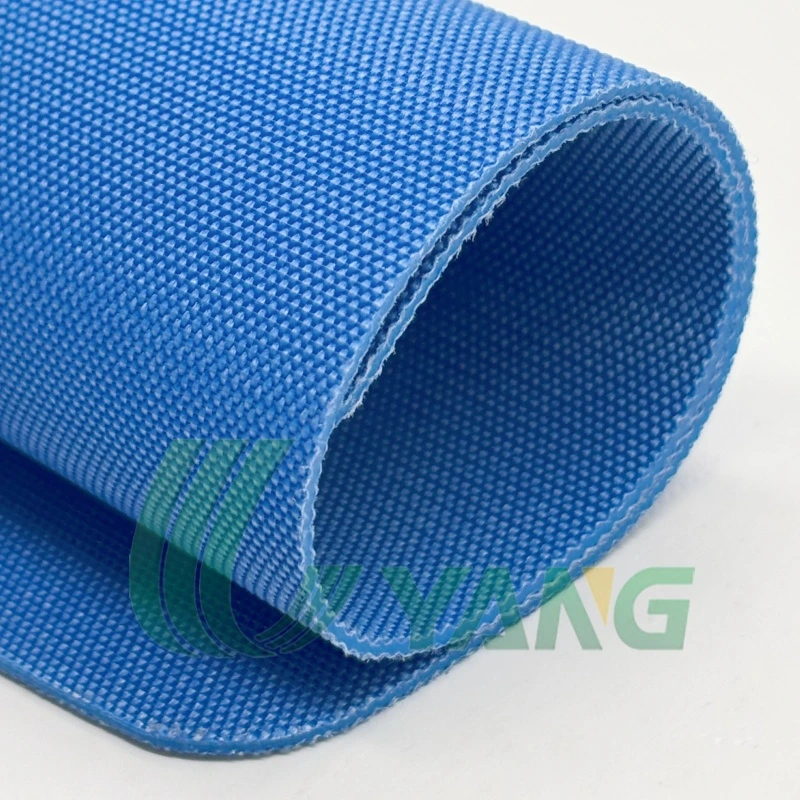
This type of construction is useful when you need a relatively thin belt but still want good dimensional stability. It also makes sense on equipment where pulley diameter limits how stiff the belt can be.
Surface Design Changes How the Belt Handles Products
The top surface does more than protect the internal fabric. It also affects how products move.
A smooth finish is useful when easy release and cleaning are more important. Textured or patterned surfaces provide extra grip when products tend to slide. The right choice depends on whether the line is horizontal, inclined, wet, dry, or handling products with irregular contact surfaces.
When checking a belt like this, pay attention to:
- total belt thickness
- number and type of fabric layers
- top-surface texture
- pulley diameter
- running-side friction
- product weight
- operating temperature
- cleaning method
For B2B purchasing, these details are usually more useful than choosing a belt by color or material name alone. A belt may look almost identical to another sample but run quite differently once installed on the conveyor.
Why Are the Splice and Edges Part of Belt Construction?
A strong material can still fail early at a poor joint. Once installed, the splice becomes part of the belt, so it should be specified before the roll arrives.
PVC and PU light belts can be hot-spliced with heat and pressure to form a strong endless joint. A smooth, properly made joint supports stable running and longer service life.
Splice Quality
Check joint flatness, bond strength, alignment, and cleanability. For hygienic homogeneous belts, heat fusion is commonly used to keep the joint continuous and reduce hard-to-clean gaps.
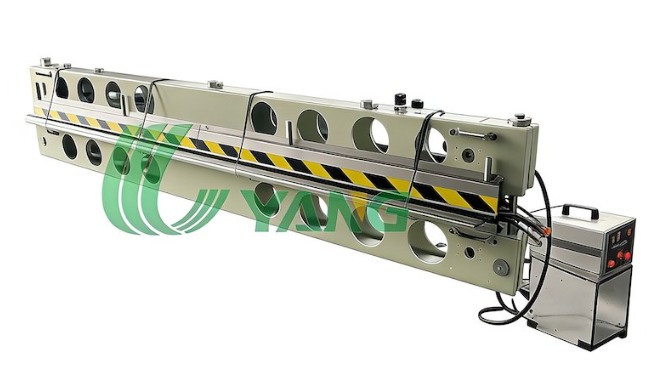
Portable air-cooled presses can suit field work because heating, cooling, and pressure systems are integrated. A typical air-cooled splicing cycle is about 9 to 12 minutes, depending on belt type and thickness. Water-cooled equipment is more workshop-oriented and typically takes about 25 to 30 minutes.
Edge Sealing and Tracking Features
Edges are easy to ignore until they fray, absorb liquid, or rub the conveyor frame. Sealed edges can help prevent liquid entry. Guides can also improve tracking and reduce side movement.
The industry application section is useful when you want to compare requirements by sector rather than material name. Food, logistics, automotive, wood, and stone lines place very different stress on the same basic belt construction.
How Should You Specify Conveyor Belt Construction Before Buying?
Start with the conveyor and product, not a belt code. A short specification sheet saves a lot of back-and-forth later.
- Product:weight, shape, temperature, oil content, sharp edges.
- Conveyor:belt width, length, speed, pulley diameters, slider bed or rollers.
- Conditions:dry, wet, washdown, cold room, heat, dust, chemicals.
- Structure:fabric-reinforced or homogeneous, ply count if relevant, top and bottom finish.
- Surface:smooth, matte, grip pattern, cleats, guides, or sidewalls.
- Splice:endless hot joint, field splice, or another approved method.
- Compliance:food-contact or other market-specific documentation.
Customization and technical support are also available. For B2B purchasing, that matters because belt construction often needs to fit an existing pulley layout rather than forcing a conveyor rebuild.
A sample helps, but sample approval should not stop at surface feel. Confirm the internal construction and operating parameters too. A belt that looks right on a desk can still be wrong on a 12-hour production shift.
FAQ
What Is the Most Common Conveyor Belt Construction?
For light industrial conveying, a common design uses a polymer top surface with fabric reinforcement inside and a suitable running side underneath. Food-grade or washdown lines may instead use a homogeneous, fabric-free thermoplastic belt where sanitation and edge sealing matter more.
How Many Layers Should a Conveyor Belt Have?
There is no fixed number for every conveyor. Ply count should match load, belt width, pulley size, tracking demand, flexibility, and working conditions. More layers can add strength and stiffness, but too much stiffness can be a problem on small pulleys.
Is a Homogeneous Belt Better Than a PVC or PU Fabric Belt?
Not automatically. A homogeneous belt is especially useful where frequent cleaning, water exposure, hygiene, and delamination risk are major concerns. Fabric-reinforced PVC or PU belts remain practical for many packaging, logistics, manufacturing, and general conveying jobs. The better choice is the construction that fits your load, environment, pulley geometry, and cleaning routine.