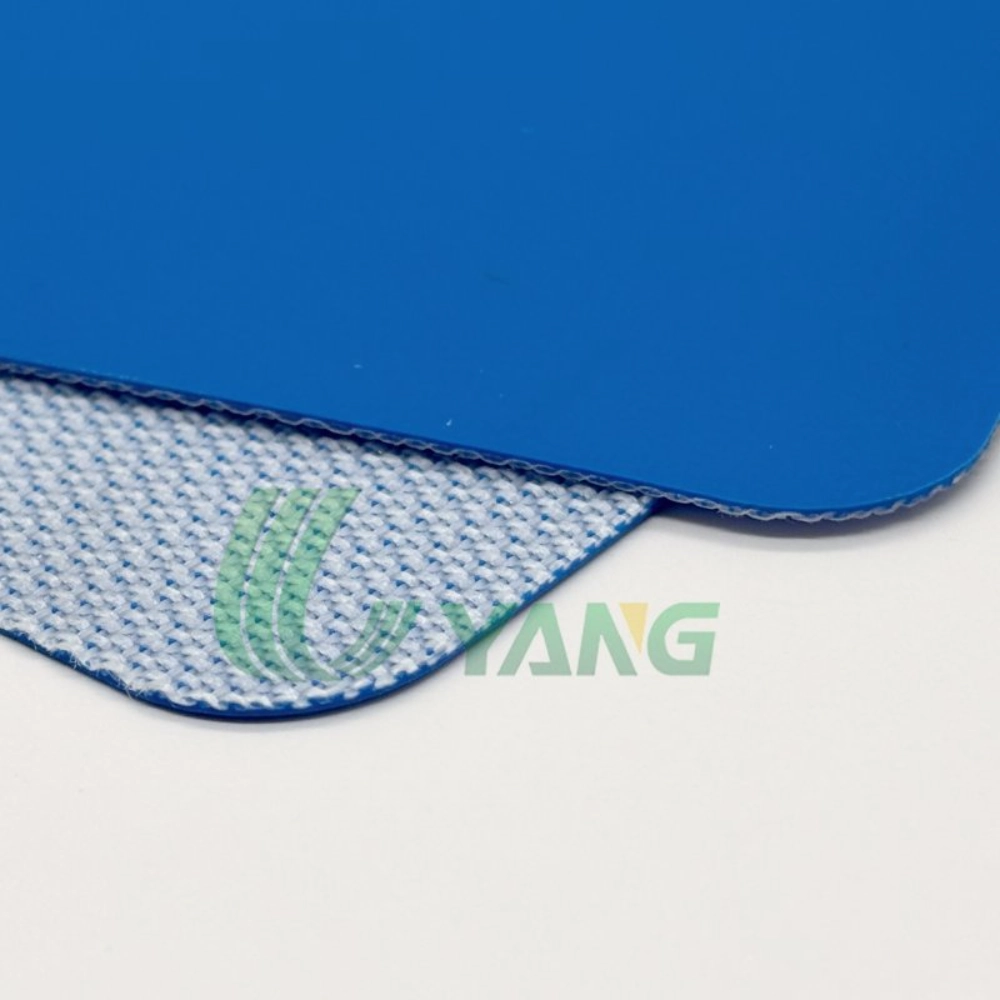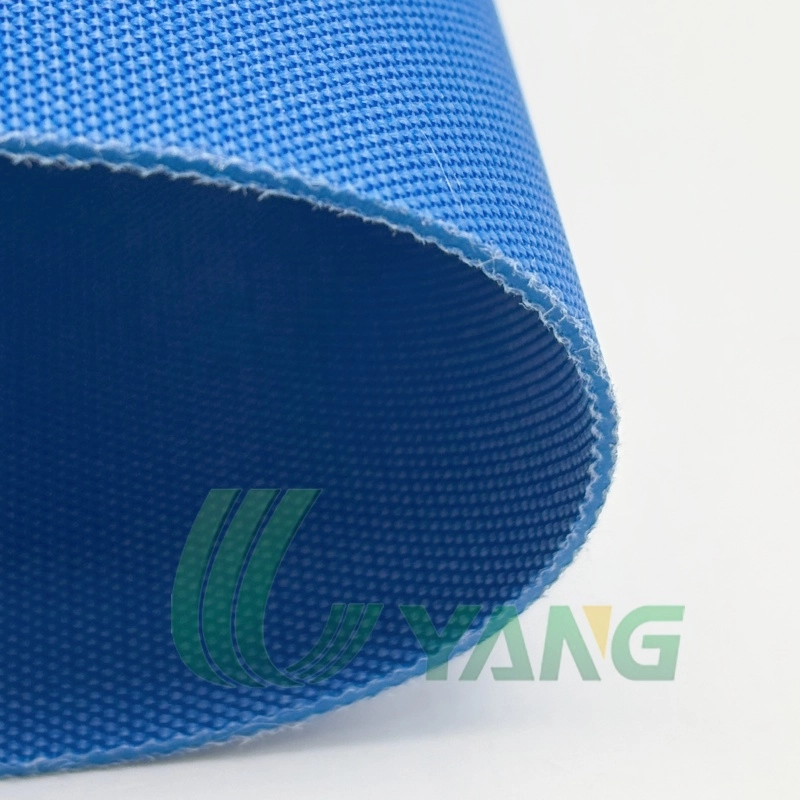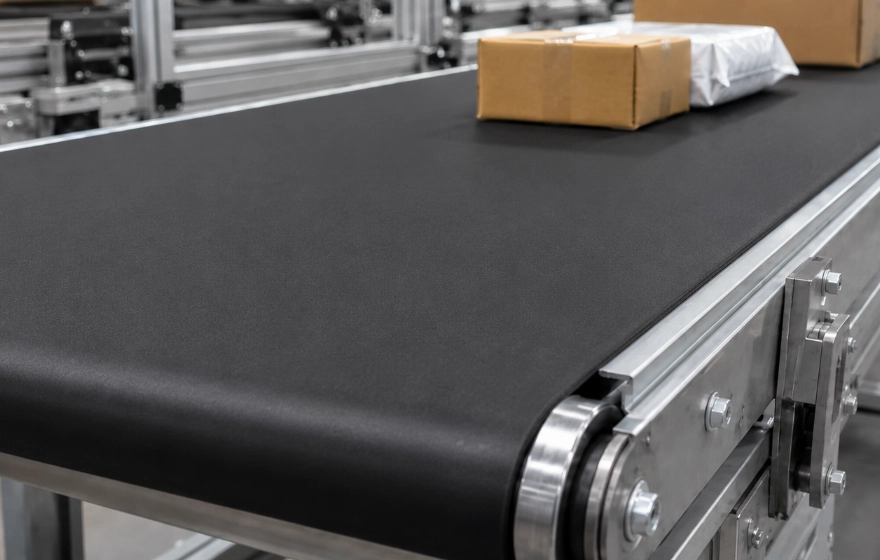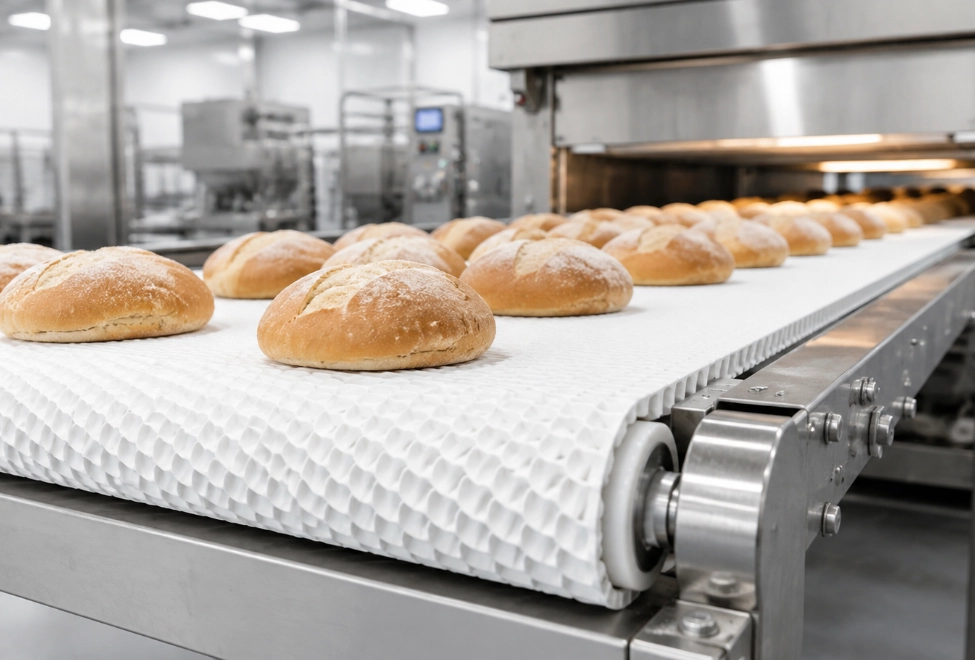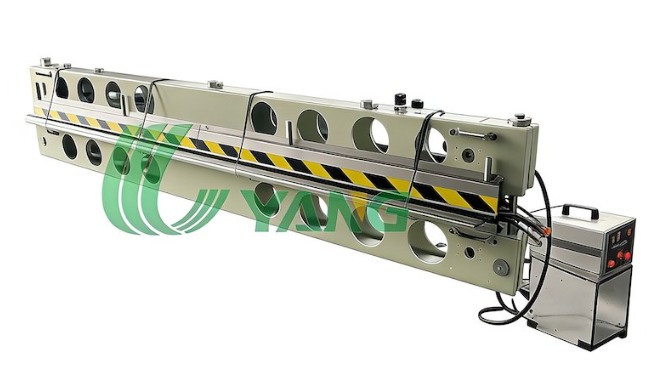
Typically PVC and PU conveyor belts are used. Which conveyor belt is needed, depends on more than just the name of the material. A few important points to consider are: What does the belt come into contact with? How is the production line operated? How often is the belt washed down and how does this impact on the potential for contamination? What happens if products slip, stick, drift off or damage the conveyor belt? Logistics lines usually care more about wear, tracking, grip, and fast replacement.
A useful selection list covers the product, load, speed, pulley size, temperature, chemicals, cleaning method, surface grip, release needs, and expected service life. The conveyor belt product range includes PVC, PU, homogeneous belts, PVK, silicone, rubber, modular belting, transmission belts, accessories, and processing equipment, so material choice does not have to stop at PVC and PU.
Start With the Job, Not the Belt Material
A belt that works in one factory can fail quickly in another. The same general-purpose belt used for cartons may be a poor fit for wet seafood, oily dough, abrasive boards, or sharp stone edges. Before asking for a quotation, write down the actual working conditions.
Check What the Belt Carries
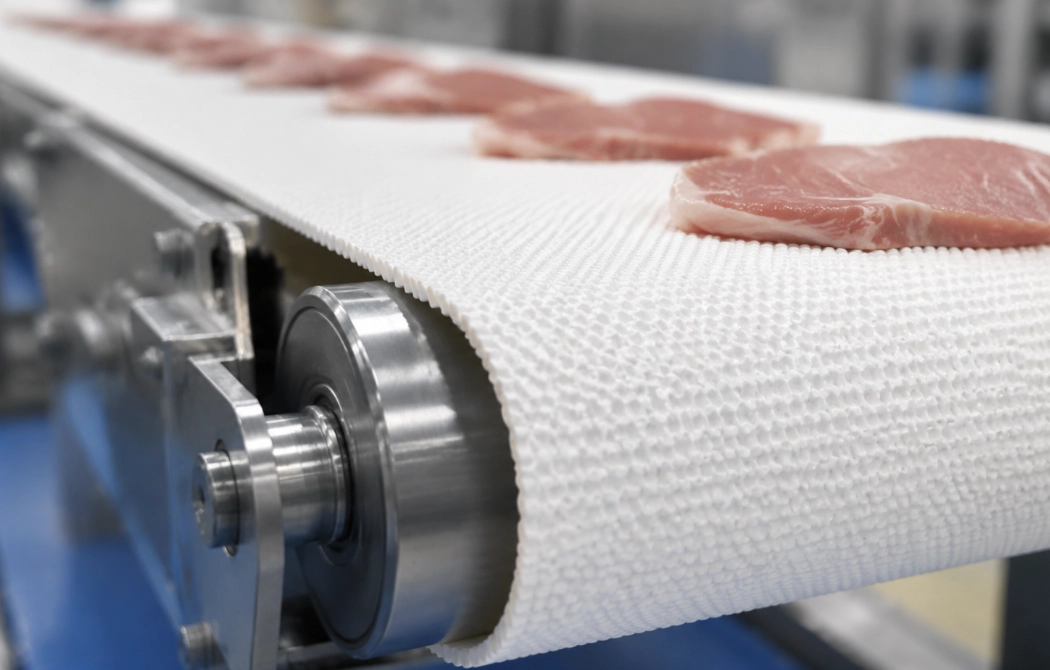
For dry cartons or packaged goods, wear and tracking may matter more than hygiene. For raw meat, seafood, dairy, or wet vegetables, the belt should resist water, oil, and frequent cleaning. Direct food contact also changes the documents you should request.
Product shape matters too. A smooth surface can help release sticky or delicate goods, while texture can reduce sliding. Cleats, guides, sidewalls, grooves, or perforations may help with incline conveying, drainage, or product positioning.
Check the Mechanical Limits
Ask for more than thickness and color. Useful data includes total thickness, plies, allowable load, minimum pulley diameter, working temperature, surface pattern, splice type, and available width.
Small pulleys often need a more flexible belt. Heavy loads may call for stronger fabric, PVK, rubber, or another reinforced construction. High speed makes tracking and splice quality more important. A strong belt can still run badly if it is too stiff for the pulley or too slippery for the product.
Check the Cleaning and Maintenance Routine
Dust, oil, resin, chocolate, flour, rubber compound, and fine stone particles all affect belt life. State how the belt will be cleaned: dry brushing, water wash, high-pressure wash, steam, or chemical sanitation.
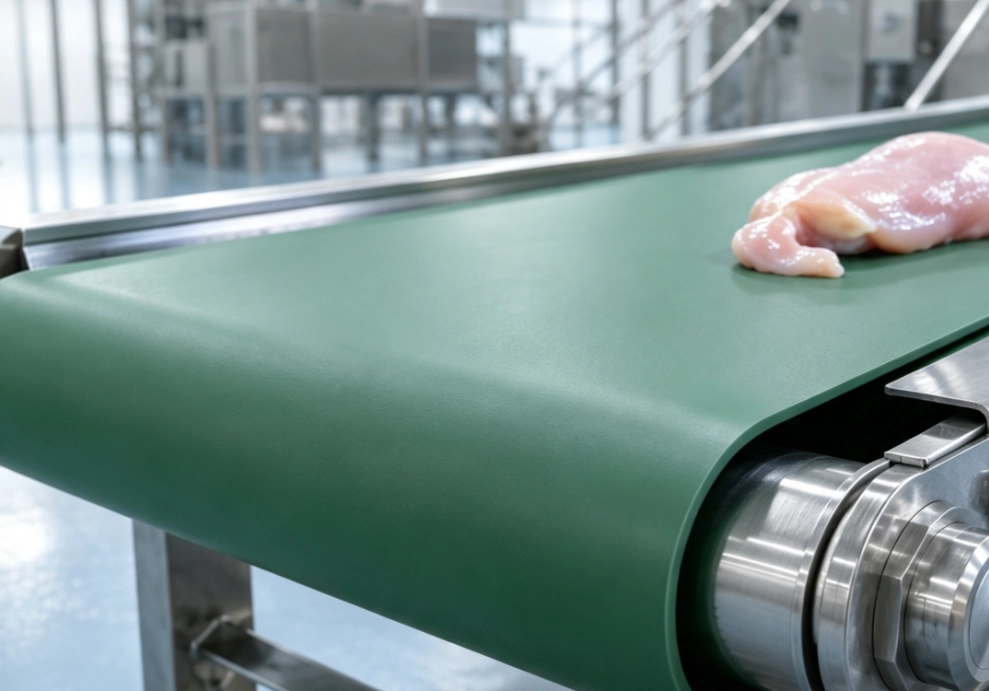
For hygienic production, a fabric-free homogeneous belt removes one common weak point. Its one-piece thermoplastic structure has no internal fabric layer, which reduces places where liquid and residue can enter. Food-processing requirements also include resistance to fat and oil, easy sanitation, gentle handling, release, abrasion resistance, and lower contamination risk.
Go Beyond PVC and PU When the Application Calls for It
PVC still fits many general conveying jobs, and PU remains useful for food, packaging, printing, and light industrial lines. Still, neither should be the automatic answer. Other constructions handle specific problems better.
Choose a Homogeneous Belt for Wet, High-Hygiene Food Lines
Homogeneous belts suit applications where cleaning time, liquid ingress, delamination, and contamination risk matter. A solid thermoplastic construction can be easier to wash than a multilayer fabric belt.
One practical option is the Flat Homogeneous Driven Belting for Food Processing. It is offered for raw meat, fresh produce, frozen food, and fried food. Configurations include 2.0 mm and 3.0 mm TPU versions, several surface finishes, and customizable width, length, pattern, pitch, cleats, guides, and sidewalls. Several TPU grades are listed at -5°C to +80°C, while some dark-blue versions are listed at -20°C to +60°C.
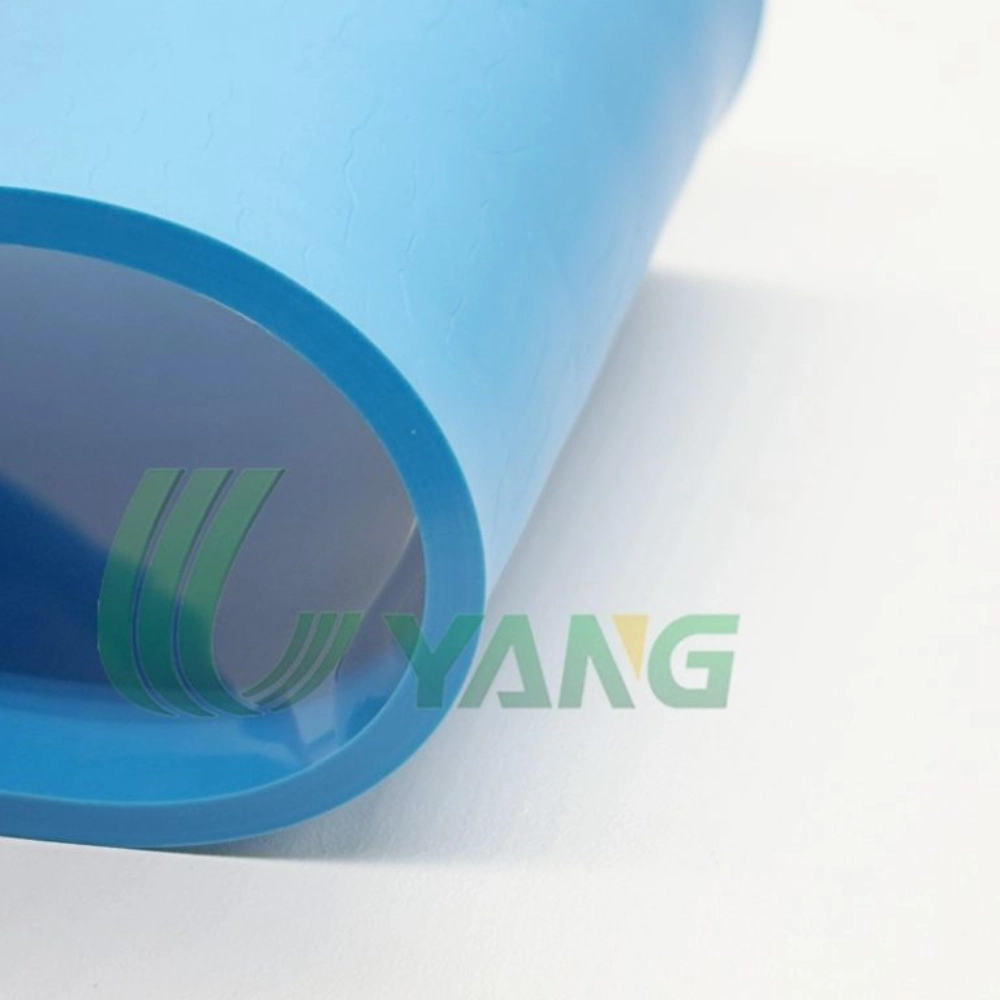
This type makes sense when sanitation cost is part of the buying decision. A cheaper belt becomes expensive if every shift needs extra cleaning, edge repair, or early replacement.
Consider PVK, Rubber, Felt, Silicone, or Modular Belting for Special Jobs
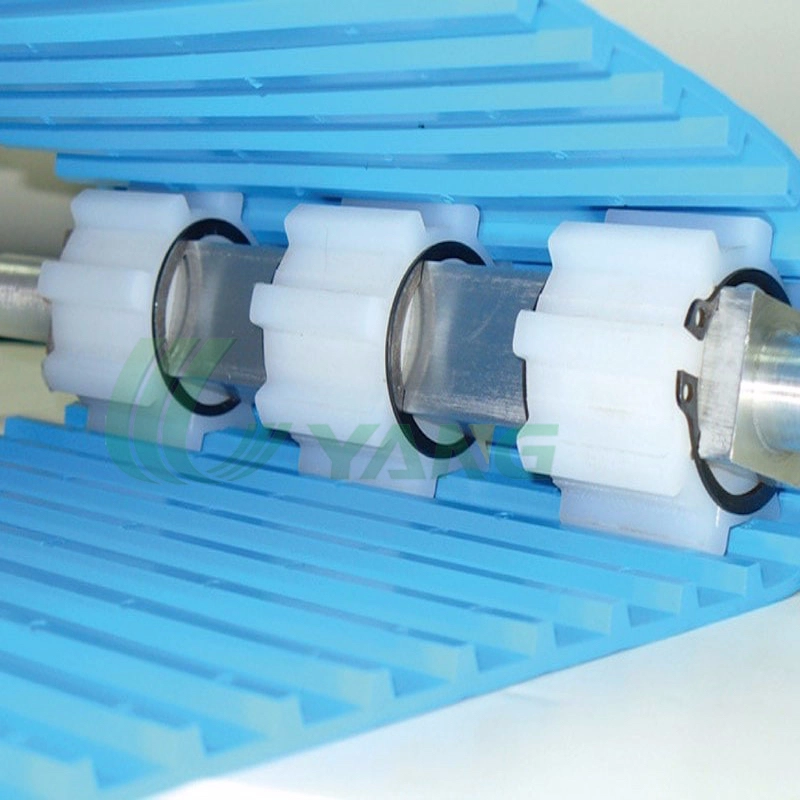
PVK is useful where parcel handling needs strength, wear resistance, and steady running. Rubber suits rougher handling, higher grip, or heavier duty. Felt gives softer contact. Silicone can suit heat or release-sensitive work. Modular plastic belts are worth checking when drainage, open-area design, section replacement, or complex layouts matter. UYANG BELTING lists these material families across its product portfolio.
There is no benefit in choosing a more complex material unless it solves a real production problem.
Match the Surface Before You Add More Belt Strength
Many belt complaints are surface or tracking problems. Product sliding may need a pattern, not a thicker belt. Poor release may need a smoother top. Side drift may point to tension, pulley alignment, or guide design.
Reviewing industry applications helps because different lines need different combinations of grip, release, abrasion resistance, chemical resistance, hygiene, temperature resistance, and tracking behavior.
Match Belt Selection to Your Industry
Industry labels help only when they lead to real operating details. “Food belt” is too broad. A bakery dough line, meat cutting line, and chocolate cooling line may all use food-contact belts, but they do not need the same surface or construction.
Food, Bakery, Meat, Seafood, and Chocolate
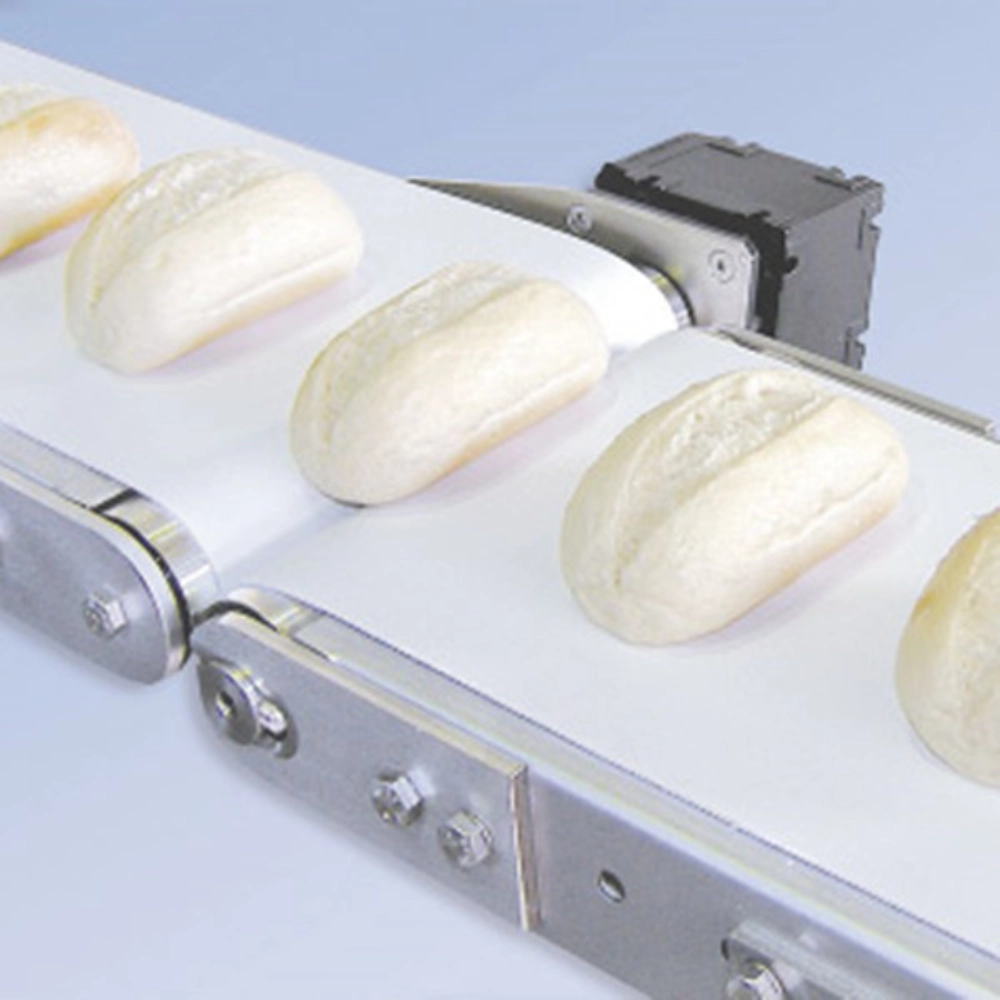
For bakery work, check dough release, flour buildup, soft handling, and pulley size. For meat and seafood, focus on washdown, oil resistance, cut resistance, clean edges, and good splices. Chocolate lines may need good release and stable running as product temperature changes.
For high-hygiene sections, a homogeneous belt is worth sampling. For lighter bakery or packaged-food sections, a conventional PU belt may be simpler and cheaper.
Logistics, Packaging, Airport, and Electronics
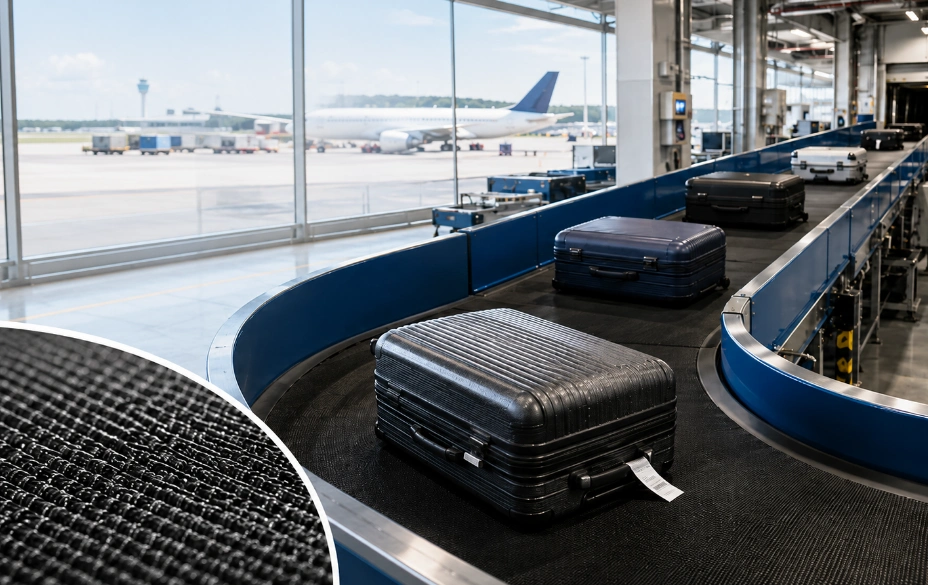
Parcel and airport systems handle mixed weight, shape, and surface conditions for long hours. Check abrasion resistance, splice strength, tracking, noise, and replacement time. PVK and suitable PVC or TPU constructions are common choices. UYANG BELTING also treats airport and logistics as a dedicated application area.
Packaging machines need accurate product position because belt shift can affect sealing, coding, labeling, or feeding. Electronics lines may add anti-static requirements and a need for clean, stable surfaces.
Tobacco, Pharmaceutical, Woodworking, Marble, and Stone
Tobacco handling often needs accurate movement and a surface that does not damage the material. Pharmaceutical work may demand cleaner construction and documented material compliance. Woodworking puts more weight on grip and abrasion resistance through cutting, sanding, and finishing. Marble and stone raise load, wear, water, and impact requirements again. UYANG BELTING’s wood-processing guidance specifically highlights abrasion, chemical, temperature, and release performance.
These are cases where one belt across the whole plant can create avoidable trouble. Select by process step, not only by industry name.
What Should You Ask a Conveyor Belt Supplier Before Ordering?
Material choice is only half the purchase. The supplier should be able to turn your line data into a workable specification, provide samples, explain splicing, and support later replacement.
UYANG BELTING has more than 20 years of conveyor belt manufacturing experience, an 80,000-square-meter production base, and 15 production lines. Its portfolio covers PVC, PU, homogeneous belts, PVK, silicone, rubber, modular belting, accessories, and processing machinery for food, logistics, airport, printing, electronics, wood, stone, tyre, tobacco, and other applications.
Before a bulk order, ask for:
- A sample in the actual thickness and surface
- Recommended pulley diameter and splice method
- Working temperature and chemical limits
- Food-contact or anti-static documents where required
- Thickness, width, and finished-length tolerances
- Lead time for repeat orders and emergency replacement
The online ordering information describes sample checking, a 30% deposit before production, balance after inspection, and typical lead times around 10 to 15 days, with longer timing in peak periods. For more background before sending specifications, review the UYANG BELTING company profile.
FAQ
Most final choices come down to a few repeated buyer questions. Settle these before the sample stage.
Is PU Always Better Than PVC for Conveyor Belts?
No. PU is often preferred where food contact, abrasion resistance, or cleaner surfaces matter, while PVC can be practical for general logistics, packaging, woodworking, and other light-duty conveying. Compare the working conditions rather than the material name.
When Should You Choose a Homogeneous Belt?
Choose one when hygiene, repeated washdown, liquid ingress, edge damage, or delamination is a real cost. Meat, seafood, frozen food, and other wet processing lines are common examples. If the line is dry and lightly loaded, standard PU or PVC may be more economical.
What Information Should You Send for a Conveyor Belt Quotation?
Send the application, conveyed product, belt width and length, load, speed, pulley diameter, temperature, incline angle, cleaning method, surface requirement, splice type, and special needs such as food contact, anti-static performance, guides, cleats, or sidewalls. That gives the supplier enough detail to recommend a belt instead of guessing from “PU belt” or “food belt.”