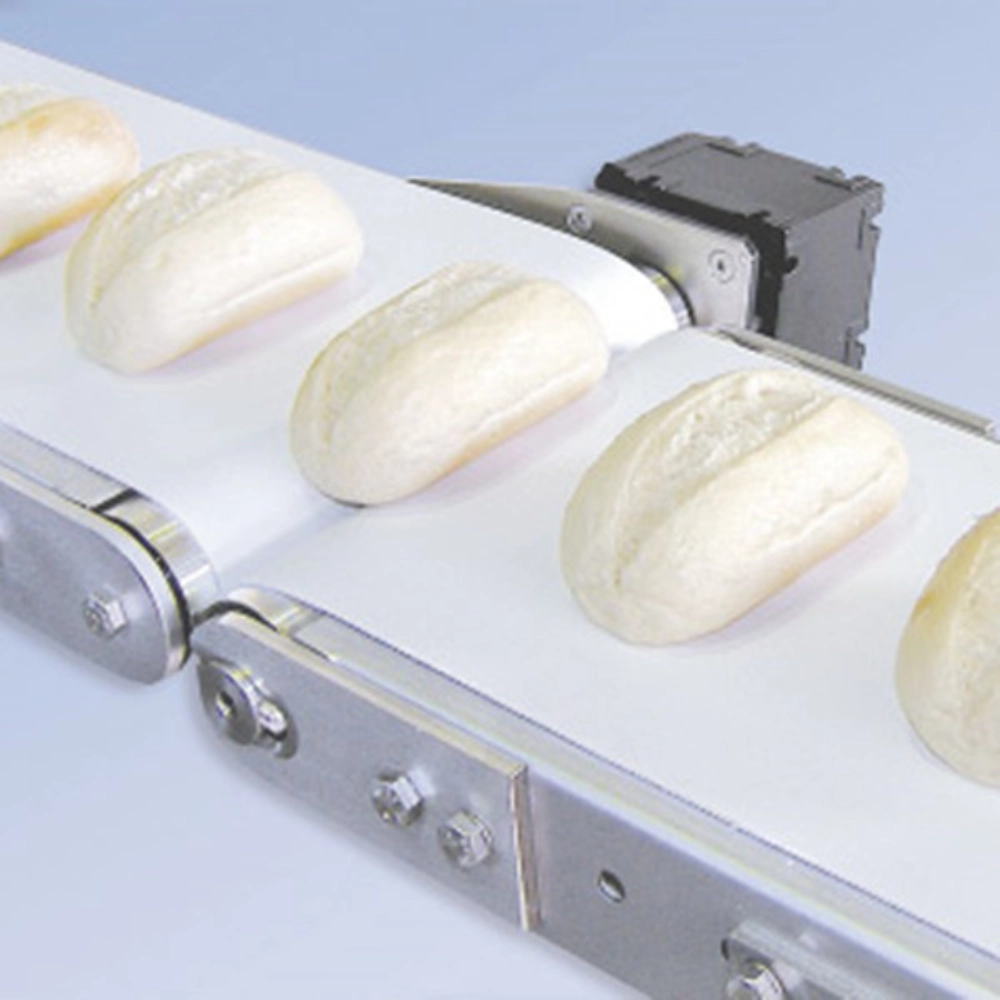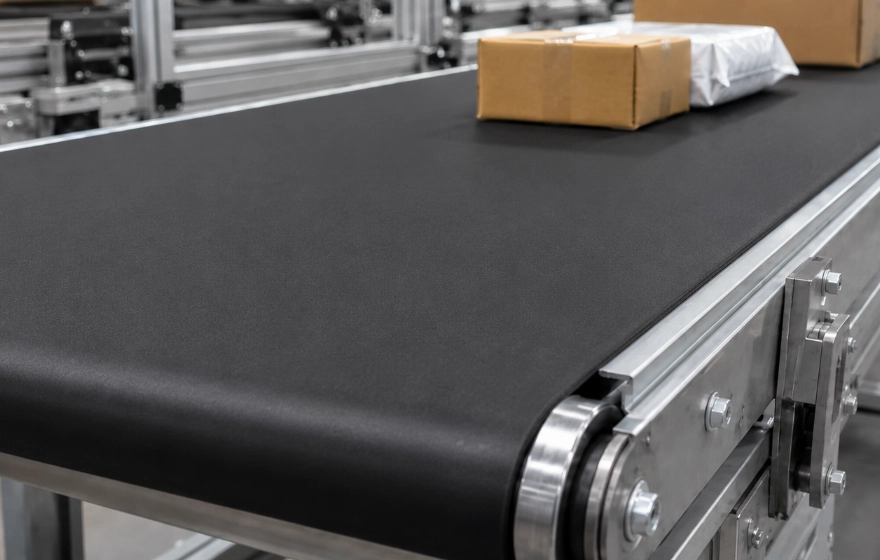
A light-duty conveyor belt is not a light version of a heavy-duty conveyor belt, but rather a completely different design with other priorities. A light-duty conveyor belt for example needs a low bending resistance and must have a stable tracking. Such a conveyor belt has to be suitable for small pulleys, smooth, precise in movement and only with a low amount of tension on the drive. A heavy-duty conveyor belt is designed for higher tensile forces, for bigger loads, for impacts, for strong carcasses and for longer distances. The combination of both types of conveyor belts results in a conveyor belt that does not track properly, in a needlessly running motor, in stiff joints and in a not suitable belt for the respective machine.
What Actually Makes a Conveyor Belt Light-Duty?
“Light-duty” describes how the belt works with the conveyor, not just how much the product weighs. Thickness matters, but so do carcass design, cover material, pulley size, speed, tension, splice, and surface friction. That is why the conveyor belt product center separates PVC, PU, homogeneous, solid-woven, and other structures instead of treating them as one family.
Flexibility Matters as Much as Strength
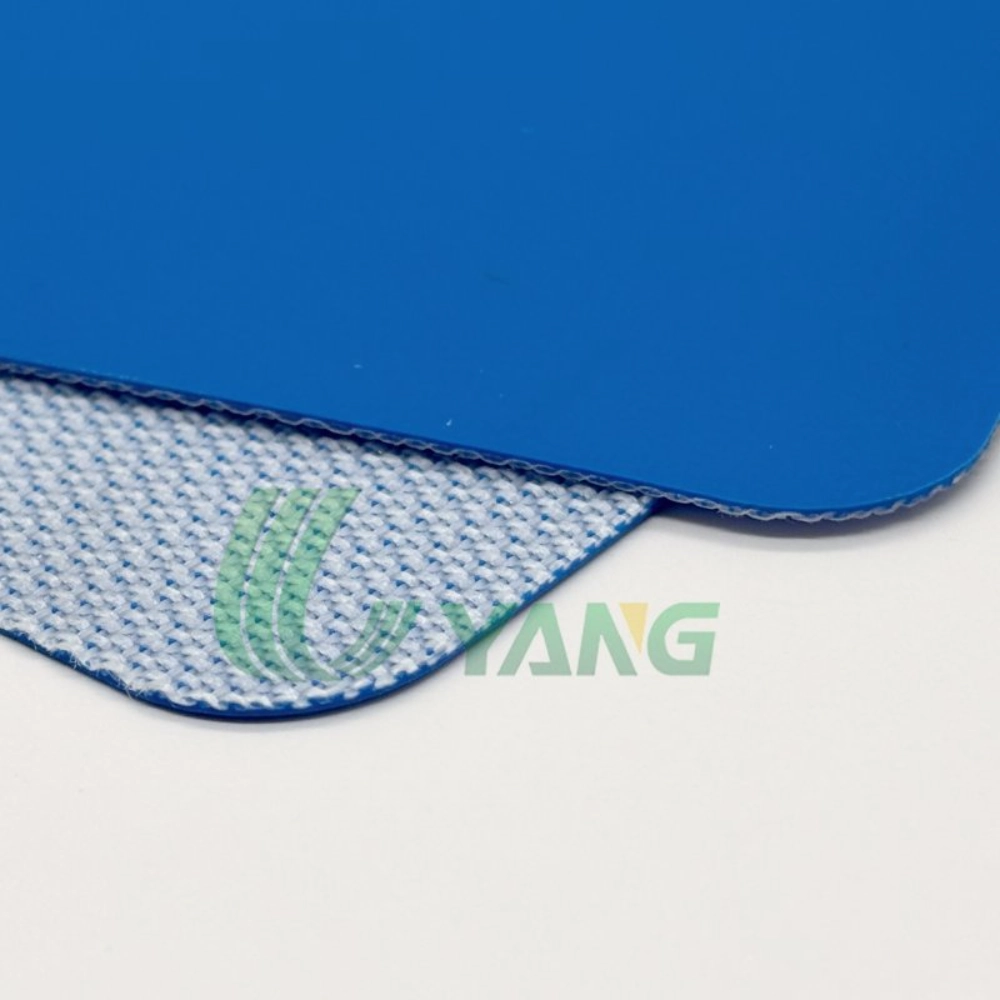
A typical light-duty belt may use one or several textile plies with PVC or PU covers. The goal is enough strength for the load while keeping the belt flexible around smaller pulleys. More reinforcement can add strength, but it also adds bending force.
Actual specifications show the difference well. A 0.8 mm PU belt can use a single-ply polyester carcass for bakery, inspection, packaging, and compact conveyor equipment. A solid-woven PU/PVK belt can reach 5.2 mm total thickness, 6.2 kg/m², and an 80 mm minimum roller diameter for heavier, longer-distance work. These are not simply two sizes of the same belt. They ask different things from the drive, pulley set, tensioning system, and frame.
Small Pulleys Can Rule Out an Overbuilt Belt
Knife-edge and compact transfer conveyors need a belt that bends repeatedly through a tight radius. An unnecessarily thick belt may handle the load but still run badly because its bending resistance is too high.
A few extra millimeters can look safer on a specification sheet. On a compact machine, they may be the problem.
Why Does the Difference Matter in Daily Production?
A conveyor belt works as part of a moving system. The drive pulley pulls it, rollers support it, friction transfers power, and tension keeps it stable. Every added layer and surface feature changes how the belt bends and reacts. So the better question is not “How strong is this belt?” but “How will this belt behave on this machine?”
Precision Can Matter More Than Maximum Load
Packaging, electronics, bakery, printing, inspection, and sorting lines often move light products that still need accurate positioning. A carton drifting sideways or a small part arriving late at a sensor can stop the next process even when the belt is nowhere near its load limit.
Before selection, check:
- minimum pulley diameter
- thickness and ply count
- belt speed and start-stop frequency
- surface grip
- tracking stability
- joint flexibility
- oil, moisture, temperature, static, or washdown exposure
The industry application section covers food processing, logistics and airport work, printing, wood, tobacco, and other sectors. The point is useful for buyers: the industry name is only a starting point. The actual line conditions decide the belt.
Hygiene May Change the Belt Structure Completely
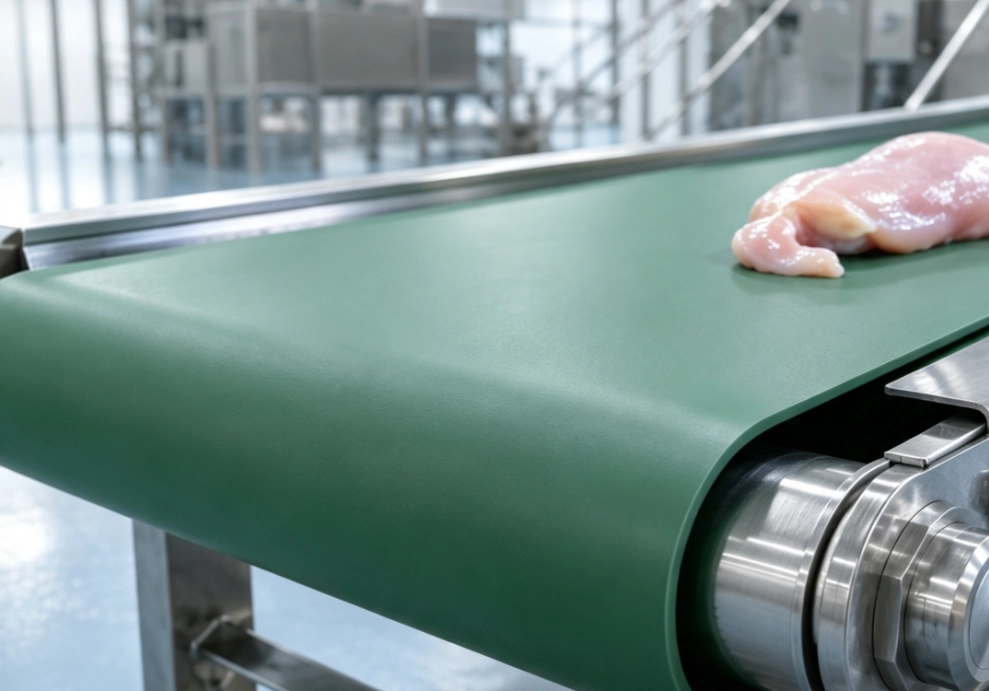
Food processing adds a different requirement. A homogeneous belt, also called an easy-clean belt, uses a fabric-free one-piece thermoplastic structure, commonly TPU or TPE. Without textile layers or laminated interfaces, there are fewer routes for liquid penetration and fewer areas where residue can remain. Heat-fused joints and sealed edges can further reduce hygiene traps.
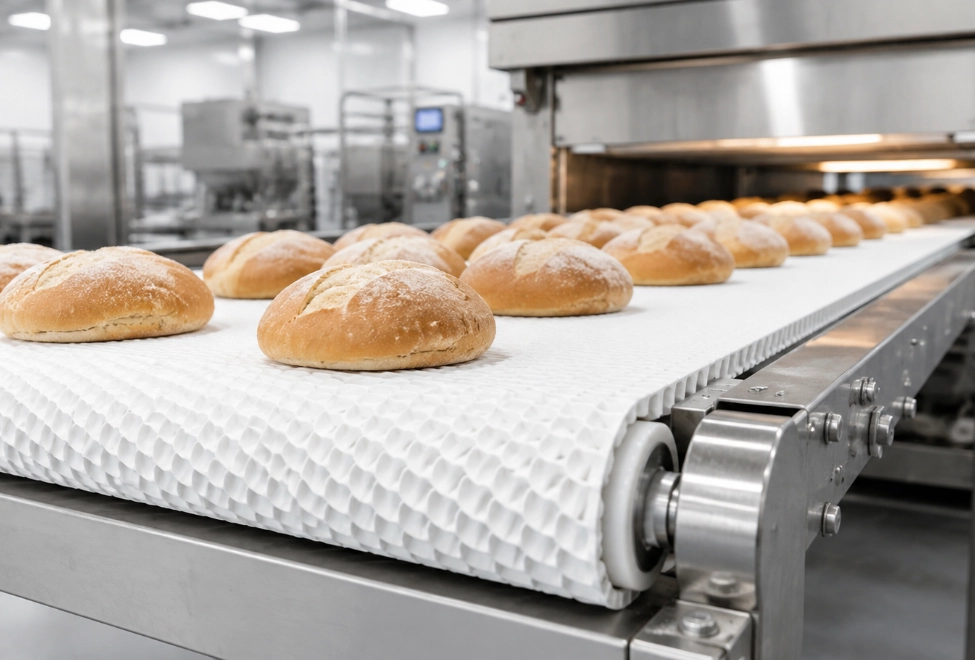
Homogeneous belts can handle demanding cleaning routines such as hot water, high-pressure washdown, steam, and suitable chemical sanitation. They are used in meat, seafood, bakery, dairy, frozen-food, and clean processing lines. In these cases, cleanability may matter more than adding another fabric ply.
Where Do Light-Duty Belts Make the Most Sense?
Light-duty belts fit systems that need controlled product movement without the mass and stiffness of a bulk-material belt. They are common in compact production equipment, packaging lines, food handling, inspection, electronics, and many sorting tasks.
Match the Surface to the Product
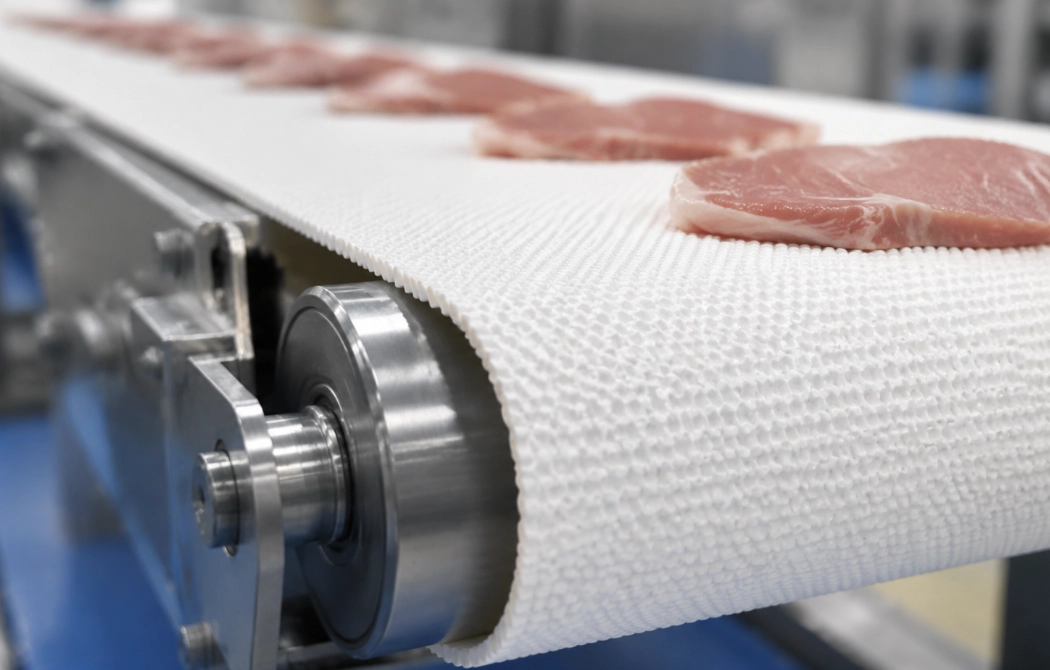
A smooth surface is useful where easy cleaning or clean product release matters. A shallow diamond or other texture adds grip when products slide. Matte surfaces can help controlled movement in packaging or assembly. Cleats, guides, ribs, and sidewalls solve another set of problems.
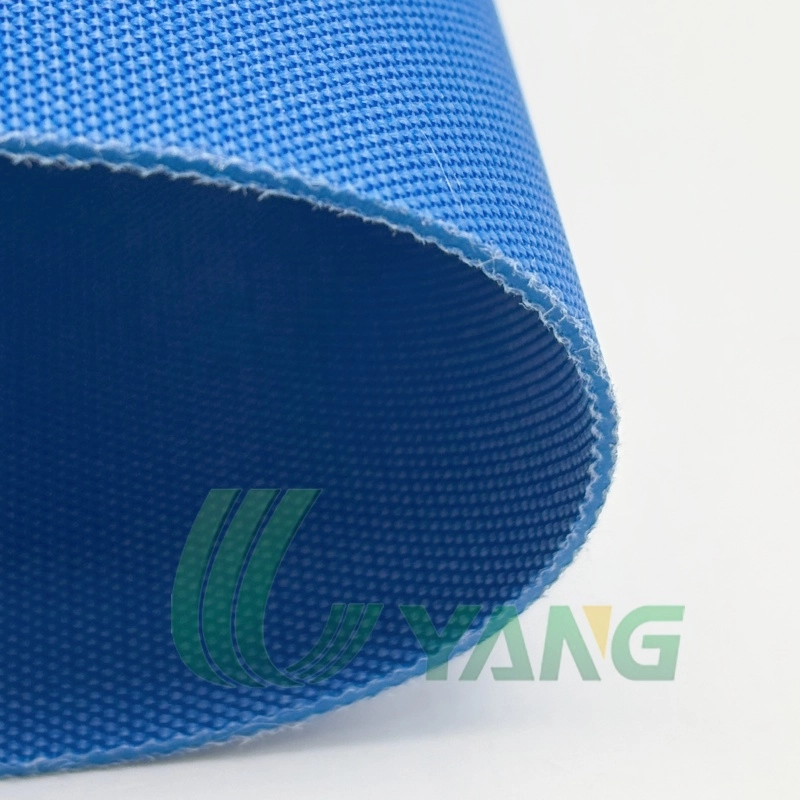
Food belts add color and cleaning considerations. Blue is often selected where foreign-object visibility matters. Thinner homogeneous constructions can suit bakery use, while 3 to 4 mm options are more common for heavier meat handling.
Do Not Treat “Light-Duty” as “Basic”
Some light-duty applications are technically demanding. Electronics may need static control, food lines may need oil resistance and food-contact documentation, and cold rooms need low-temperature flexibility. The load may be light. The specification is not.
How Should You Specify a Light-Duty Conveyor Belt?
Before asking for a quotation, collect the machine details that affect belt behavior. It makes sample testing more useful and cuts down on back-and-forth.
Send These Six Groups of Information
- Product:weight, size, contact surface, sharp edges, oil, moisture, and food-contact needs.
- Conveyor:belt width and length, minimum pulley diameter, nose-bar size, incline, and support-bed type.
- Motion:speed, start-stop frequency, reversing, accumulation, and positioning needs.
- Environment:temperature, washdown, chemicals, dust, humidity, and static-control needs.
- Surface:smooth, matte, fabric, rough top, diamond, ribs, cleats, sidewalls, or guides.
- Splice:finger joint, stepped joint, hot weld, mechanical fastener, or another method suited to the belt.
For sanitary applications, also confirm material, thickness, color, surface, and cleaning method. For replacement work, send photos of the old belt, joint, pulleys, and the failure area. A worn edge or cracked splice often tells more than a product name. Similar specification checks on pulley diameter, temperature, cleaning method, operating hours, moisture, oil, speed, and tracking are used when matching belt rolls to real conveyor conditions.
What Does a Practical Light-Duty Product Look Like?
A good example is a belt designed around flexibility first rather than bulk strength. The product below suits that point because its structure is clearly aimed at compact light-duty conveying.
UYANG Food Grade 0.8mm Blue PU Conveyor Belt
The UYANG Food Grade 0.8mm Blue PU Conveyor Belt uses a blue TPU top cover, a single-ply high-strength polyester carcass, and a fabric-backed bottom. Total thickness is 0.8 mm, and the listed working range is -20°C to +80°C. FDA or EU food-contact documentation is available on request.
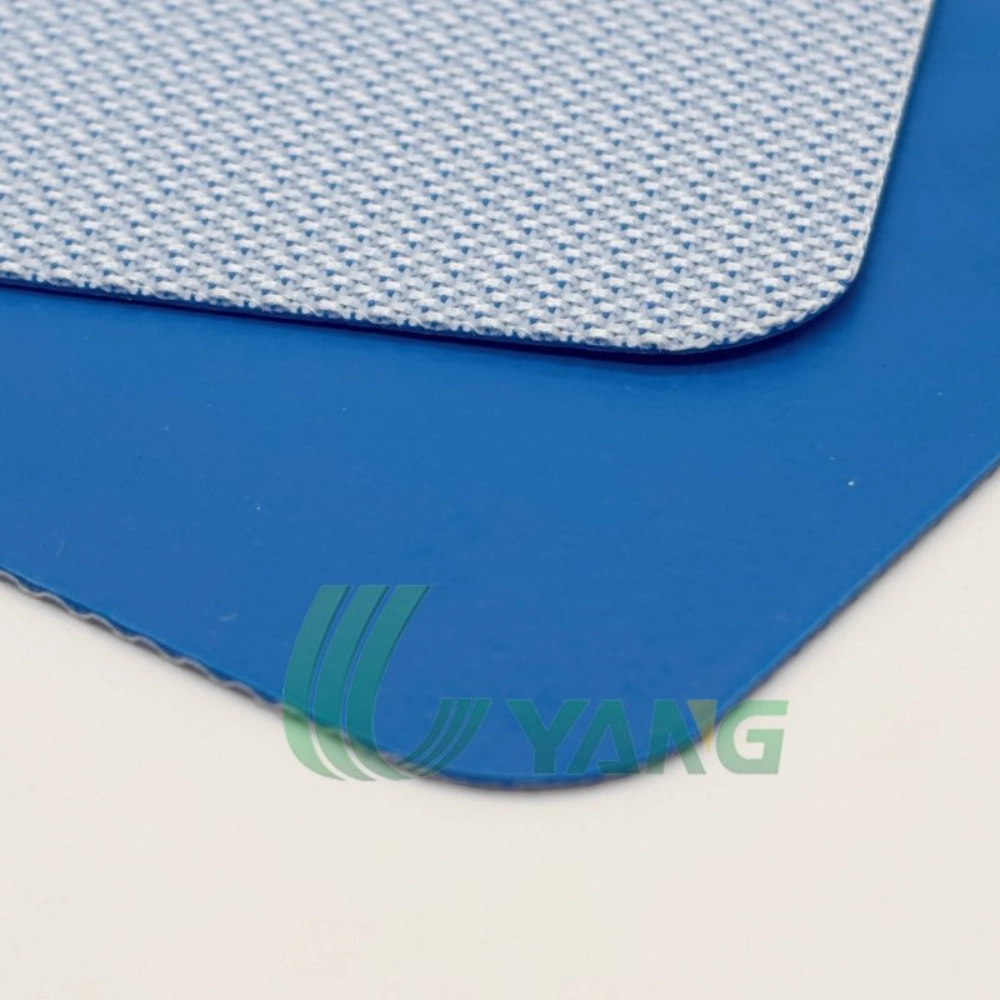
Its value is not that it is simply “small.” The thin construction suits small-pulley systems, low-tension designs, smooth start-stop movement, bakery processing, light packaging, inspection conveyors, electronic component handling, and compact OEM equipment.
If a machine was designed around a flexible 0.8 mm belt, replacing it with a much thicker belt can create a mechanical problem while trying to solve a strength problem that was never there.
Why Does Supplier Capability Matter After Belt Selection?
A B2B order involves more than belt material. Repeatability, processed-belt accuracy, samples, splicing support, documentation, and response time matter once production starts. UYANG BELTING supplies PVC, PU, homogeneous, solid-woven, patterned belts, processing equipment, and related belt components.
Custom Processing Helps Reduce Procurement Risk
The about UYANG BELTING page states more than 20 years of manufacturing experience, an 80,000 m² production site, and 15 production lines. Its portfolio covers PVC, PU, solid-woven belts, patterned constructions, and processing machinery for industries including food, logistics, printing, electronics, wood, and stone processing.
The service framework includes a 12-month quality guarantee under normal operating conditions, lifetime technical support, samples, small trial orders, OEM/ODM support, and remote troubleshooting. These points matter because belt problems often appear after installation, not while comparing quotations.
The practical rule is simple: do not buy a light-duty conveyor belt by thickness alone. Match it to pulley size, tension, surface behavior, product contact, cleaning method, and motion profile. A belt that looks stronger on paper can still be wrong for the machine.
FAQ
Is a Thicker Conveyor Belt Always More Durable?
No. Extra thickness may improve wear life in some jobs, but it also increases bending stiffness. On small pulleys or compact drives, that can create more resistance. Durability comes from matching material, carcass, surface, splice, tension, and pulley geometry to the job.
Can a Light-Duty Conveyor Belt Carry Heavy Products?
Sometimes, within the belt rating and conveyor design. “Light-duty” usually describes the belt and system class, not one fixed product weight. High impact, long distances, bulk loads, or high tension may call for a solid-woven or rubber construction.
What Information Should You Send Before Ordering?
Send the product details, belt dimensions, pulley diameter, speed, load, incline, temperature, surface requirement, cleaning method, splice type, and any food-grade, anti-static, oil-resistant, or cut-resistant requirement. If replacing an old belt, add photos of the belt and failure area.