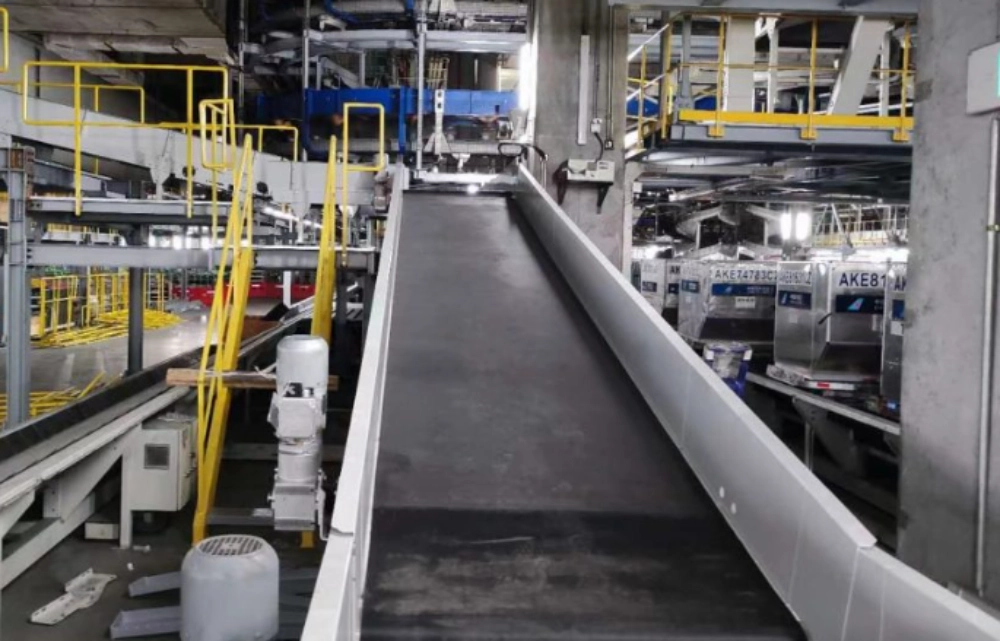
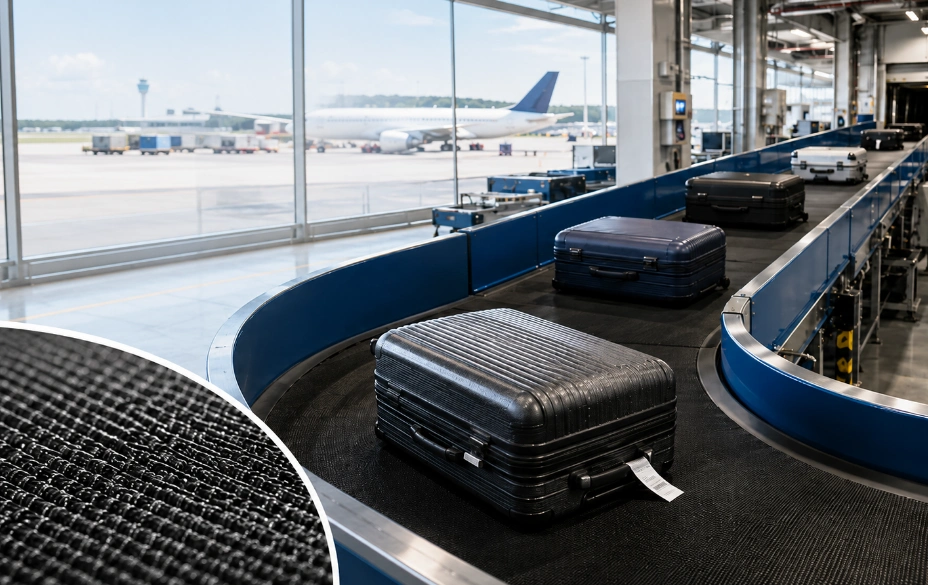
Since hours of operation and various shapes and weights of luggage are typical for baggage handling at airports, each transfer must be kept under control. A delayed or misaligned bag can cause problems at check-in, screening, sortation or at the reclaim. In addition to surface strength of the PVK conveyor belt for airport baggage handling, stable tracking, good grip, low noise and easy removal of cover for maintenance are requirements for such applications. Also the structure of the belt must be able to withstand the frequent starts and stops as well as the sharp bends and inclined sections. The belt must also be able to deal with the hard luggage corners, buckles and the wheels.
Choosing the wrong airport baggage belt can cause sliding, bag skewing, edge fraying, repeated tension adjustment, and downtime. The right belt keeps luggage positioned through scanners and transfers while reducing emergency checks. This guide explains how to compare belt materials, surface patterns, technical data, and supplier support before ordering.
Why Is a PVK Conveyor Belt Used in Airport Baggage Handling?
The airport baggage handling system is designed to transport a variety of different bags throughout the check-in, security, sortation, makeup, conveyors and reclaim areas. The bags travel along the baggage belt in an uncontrolled manner and can come into contact with the belt surface moments later. The belt must therefore be able to handle these varying contact situations without becoming too slippery, too aggressive or unstable at transfers.
Stable Carrying for Mixed Baggage
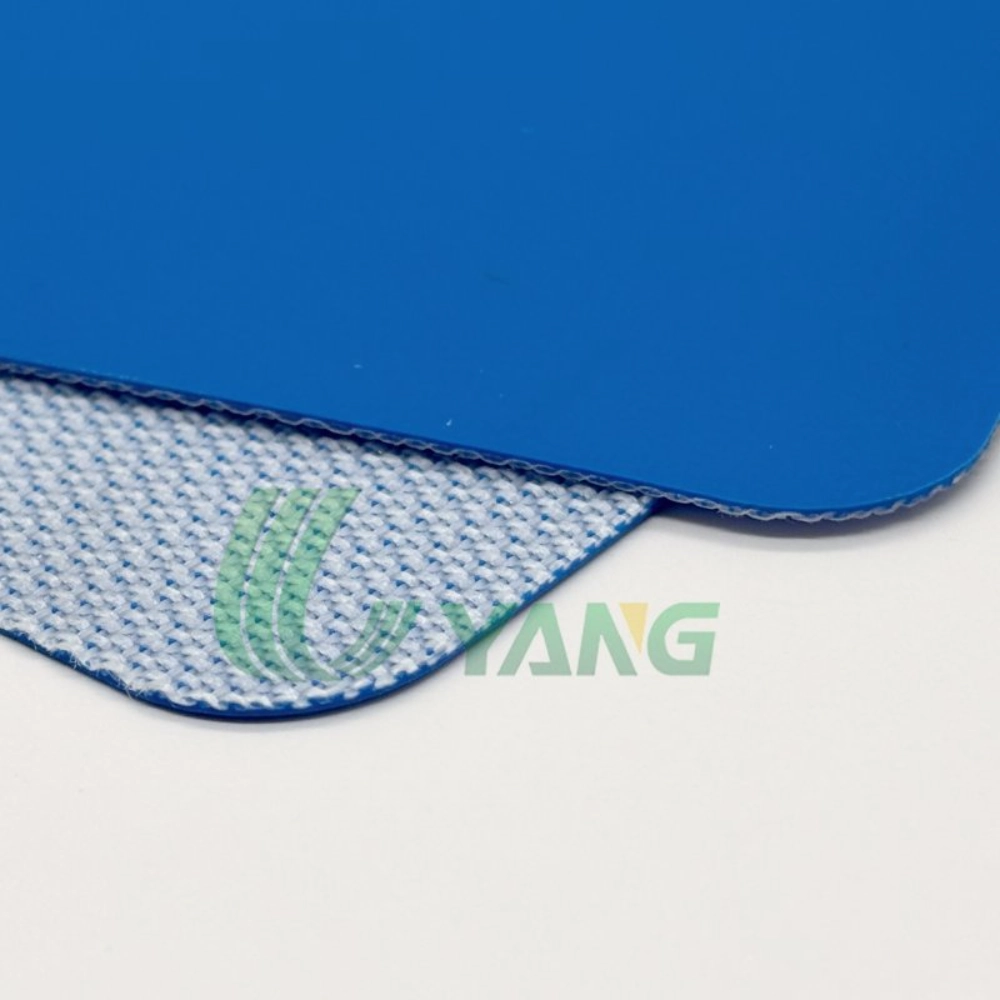
A PVK conveyor belt is often selected for airport baggage handling because its solid woven structure supports repeated medium-duty conveying while maintaining a stable carrying surface. This matters when bags arrive in uneven shapes. Some lie flat, some roll toward one edge, and others have wheels, straps, or metal corners that create concentrated contact. Poor belt stability can allow luggage to drift, bounce, or rotate before scanning and routing equipment.
The key question is whether the belt keeps baggage moving correctly without constant operator correction. Stable positioning matters near barcode readers, weighing equipment, security scanners, diverters, and sortation points. Better control reduces missed reads, poor transfers, side contact, and manual handling.
Stable Performance Through Screening and Transfer Sections
Airport baggage routes include check-in, screening, sortation, and reclaim conveyors that accelerate, stop, and transfer luggage repeatedly. These positions need a belt body that resists wear, maintains tension, and releases bags consistently. Material and construction should therefore match the conveyor load, pulley size, and transfer geometry rather than be chosen only by price.
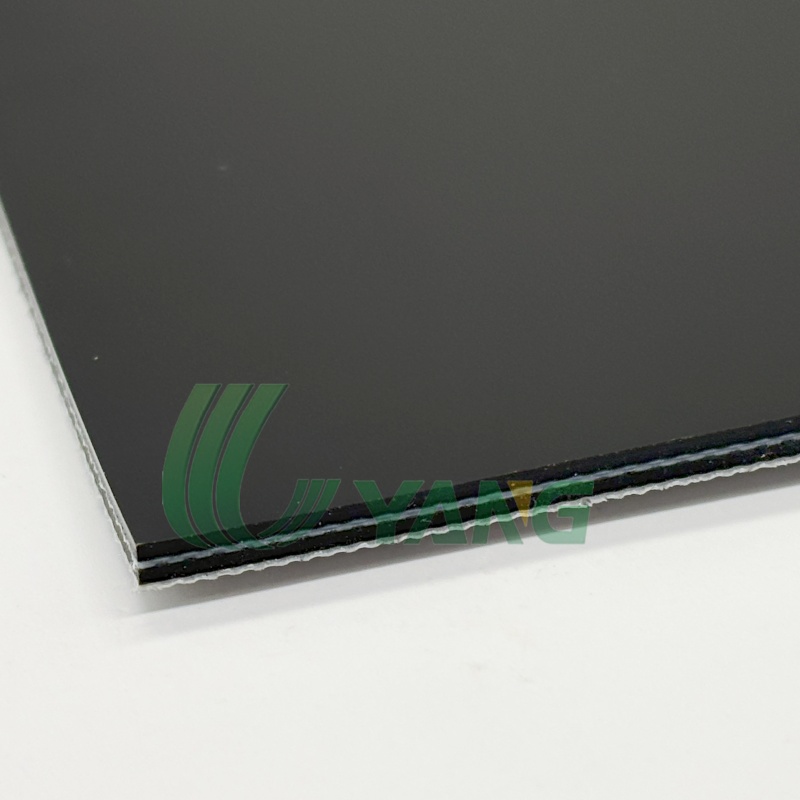
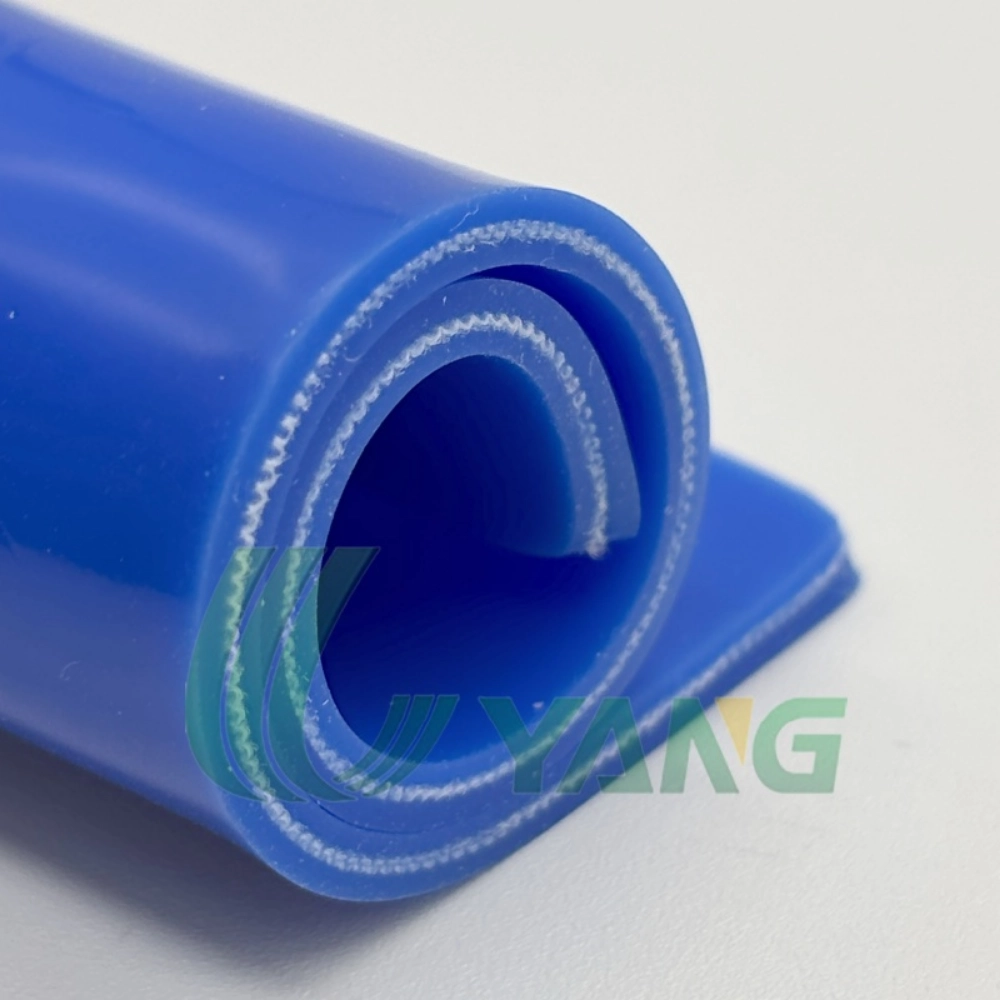
For high-wear baggage sections, UYANG BELTING recommends its PVK 130 Black Double-Sided PVK Conveyor Belt as a practical option for airport baggage handling. Its solid woven, double-sided construction provides strong load capacity, abrasion resistance, and dimensional stability, while suitability for metal detection units supports baggage routes that pass through screening equipment.
What Belt Features Matter Most for Airport Baggage Handling?
A well-matched baggage belt runs quietly, tracks correctly, and transfers luggage without repeated intervention. A poorly matched belt becomes noticeable quickly. Noise, slipping, tracking drift, rough transfers, and sudden edge damage often appear during busy periods, when maintenance access is limited and every stoppage affects baggage flow.
Surface Grip and Wear Resistance
Grip must match the conveyor section. A smooth belt may suit horizontal carrying, while a patterned surface can control luggage on inclines or declines. Airport belts must also resist abrasion from wheels, buckles, hard-shell edges, straps, and repeated loading while releasing bags cleanly at the next transfer.
The PVK 130 Black Double-Sided PVK Conveyor Belt has a 4.0 mm total thickness, a belt weight of 4.2 kg/m², 85 Shore A hardness, and 22 N/mm strength at 1% elongation. Its minimum roller diameter is 90 mm, its maximum width reaches 3400 mm, and its operating range is -10°C to +80°C, giving airport buyers a clear basis for checking conveyor compatibility.
A short scanner infeed may receive highly uneven contact. Bags arrive at different angles, wheels strike repeatedly, and rapid acceleration concentrates stress in a small area. These sections need the same technical review as the main baggage line.
Belt Body Strength and Tracking
For airport baggage handling, the belt body should resist excessive elongation. Poorly controlled stretch causes unstable tension and repeated tracking problems. Warning signs include side rubbing, edge dust, belt wandering, guide contact, and shortened service life during frequent starts, stops, and changing loads.
When checking a PVK conveyor belt for airport use, ask for:
l Total thickness and ply structure
l Tensile strength or elongation strength
l Minimum pulley or roller diameter
l Width tolerance
l Temperature range
l Recommended joint method
l Suitable speed range
l Surface pattern options
These specifications prevent installation problems. A belt may look suitable on paper but fail if the minimum roller diameter is too large, the splice is unsuitable for the speed, or the structure does not match the frame and tracking system.
How Should You Compare PVK, PVC, and Patterned Airport Baggage Belts?
Not every airport baggage section needs the same belt. Horizontal conveyors, check-in inclines, scanner infeeds, and reclaim feeds require different strength, flexibility, noise control, and friction. Using one belt everywhere may simplify purchasing but reduce transfer quality and service life.
PVK Compared with Lightweight PVC Belts
PVK belts are generally used in baggage carrying and sortation areas, due to the solid woven structure having good dimensional stability and high wear resistance. PVC belts are generally lighter and more flexible, however due to the many factors involved, i.e. pulley diameter, speed, load, splice, noise and surface friction, the decision to use either a PVK or PVC belt is usually made on these considerations.
PVK 130 for High-Wear Baggage Sections
The PVK 130 construction is suitable where durability, load capacity, and stable tracking matter more than minimum belt weight. Its double-sided interwoven fabric structure can support main baggage conveyors, screening approaches, and transfer sections exposed to wheels, buckles, hard-shell edges, and frequent starts and stops.
For these duties, the PVK 130 Black Double-Sided PVK Conveyor Belt can be considered for main carrying, sortation, and screening positions. The product is specified as abrasion resistant, chemical resistant, cold resistant, and suitable for metal detection units, while its flame-retardant positioning adds another factor for airport safety reviews.
Patterned Surfaces for Anti-Slip Zones
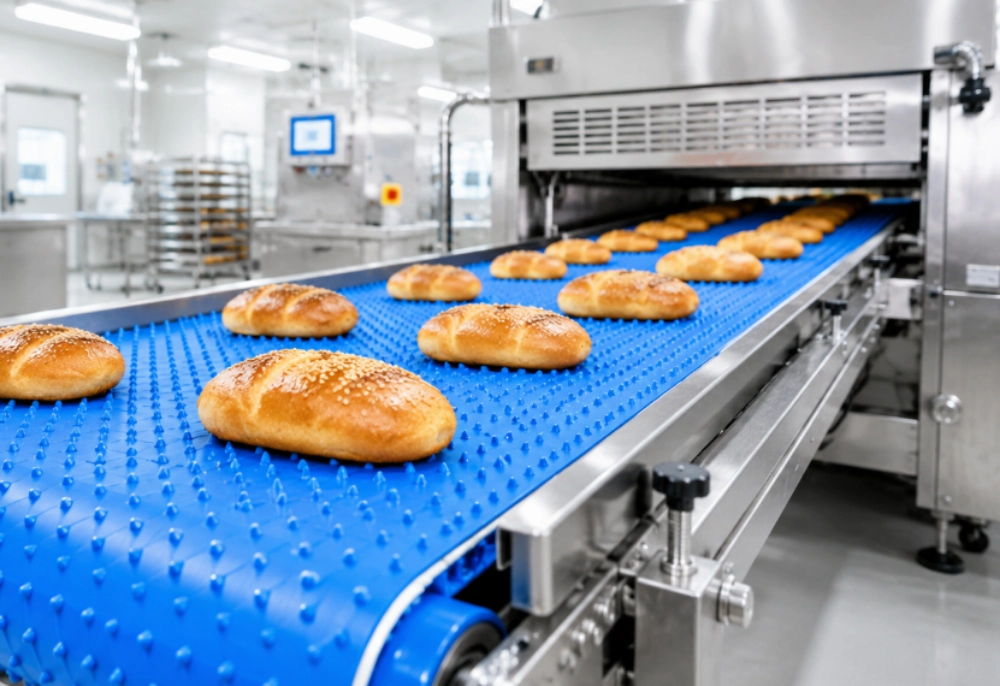
A patterned belt helps when luggage slides, rotates, or loses position. Rough-top, crescent, and other profiles create different friction levels. The goal is not the roughest pattern, but reliable control without harsh discharge, excessive drag, or unstable transfer.
In an airport baggage system, a higher-grip belt may suit inclines and short acceleration zones, while a smoother belt can be better where bags must transfer across rollers or enter another conveyor cleanly. Using different belt types within the same baggage route is normal and allows each section to match its mechanical demands.
How Can You Select the Right Belt Supplier for an Airport Baggage Project?
An airport baggage belt supplier should support construction, width, thickness, pattern, splice method, tracking guides, packaging, spares, and after-sales service. For a new installation or major replacement, sample testing can reveal grip, tracking, noise, and transfer issues before production.
Check Manufacturing Capacity and Custom Support
UYANG BELTING is a conveyor belt total-solution manufacturer with more than 20 years of manufacturing experience. Its company information states an 80,000-square-meter production area and 15 advanced production lines. Its range includes PVC, PU, solid woven, and patterned belts, plus accessories and processing machines for different positions in an airport baggage system.
This manufacturing background matters because airport baggage belt replacement is rarely one size fits all. A project may require a specific thickness, pattern, color, width, carcass structure, edge guide, splice design, logo, or packaging method. Broad production capability also helps buyers coordinate belts for several conveyor sections without forcing one construction to perform every duty.
Review Lead Time, MOQ, and Technical Support
For airport operators, maintenance contractors, and system integrators, delivery planning is a practical concern. UYANG BELTING supports flexible MOQ, sample service, OEM and ODM requirements, and different shipping options. Standard orders are usually planned around 15 to 25 days, while urgent orders may be handled faster through express service. The company also provides 12-month quality coverage and lifetime technical support.
Airport maintenance teams should keep a documented spare-belt plan. Failures may occur outside service windows. A spare roll or endless belt with the correct width, length, surface, and splice can prevent a prolonged shutdown. Store matching installation data with the spare.
For product comparison, the UYANG BELTING product center provides PVC, PU, and solid woven PVK belts, accessories, and processing machines for comparing structures and surfaces across baggage carrying, incline, screening, induction, and transfer positions.
What Should You Confirm Before Ordering an Airport Baggage Belt?
A correct order begins with current conveyor data, not only a photo or old invoice. Recheck pulley sizes, guides, drive settings, and transfer geometry because repairs may have changed them. Accurate input prevents a belt from fitting the dimensions but performing poorly.
Key Data to Send to the Supplier
Before placing an order, prepare:
l Belt width and total length
l Conveyor speed
l Pulley or roller diameter
l Incline or decline angle
l Load weight range
l Surface requirement, smooth or patterned
l Belt color
l Working temperature
l Joint method
l Edge guide or tracking guide requirement
l Static or flame-related requirements if needed
l Drawing, photo, or old belt sample if available
Also state whether the belt passes through scanners, metal detection units, tight transfers, or guided curves. Note low-noise, static, flame-related, or tracking requirements so the supplier can match the belt to the baggage route.
Where PVK 130 Black Double-Sided PVK Fits in the System
The PVK 130 Black Double-Sided PVK Conveyor Belt is worth reviewing when an airport baggage line needs high load-bearing capacity, stable tracking, wear resistance, and low-maintenance operation. It is particularly relevant for main carrying, screening approach, sortation, and transfer sections where repeated luggage impact and long operating hours demand a robust solid woven belt.
For an airport-focused reference, the airport baggage handling application section outlines baggage conveying requirements. Use it with actual width, length, speed, pulley diameter, incline angle, load range, splice method, and surface needs. Confirm the final selection against a conveyor drawing or belt sample.
FAQ
Q1: What Is the Main Advantage of a PVK Conveyor Belt for Airport Baggage Handling?
A: A PVK conveyor belt can provide stable carrying, wear resistance, and dimensional control for mixed luggage. These qualities help wheeled cases, soft bags, and irregular baggage remain positioned during long operating hours and repeated transfers.
Q2: Is the PVK 130 Double-Sided Belt Suitable for Airport Baggage Lines?
A: It can suit main carrying, screening, sortation, and transfer positions that need wear resistance, stable tension, and high load capacity. Confirm its 90 mm minimum roller diameter, 4.0 mm thickness, splice method, and required surface friction against the actual conveyor.
Q3: What Data Should Be Confirmed Before Buying an Airport Baggage Conveyor Belt?
A: Confirm width, length, speed, pulley diameter, baggage weight range, incline angle, surface type, temperature, splice method, and tracking-guide needs. Conveyor drawings, photos, and an old belt sample improve selection accuracy.
Q4: Can One Belt Type Be Used Across the Whole Airport Baggage System?
A: It is possible on some layouts, but many systems perform better with different belts. PVK 130 may suit main carrying, screening, and sortation zones, while a higher-grip patterned belt may still be required on steep inclines or short acceleration sections.
Q5: Why Choose UYANG BELTING for an Airport Baggage Belting Project?
A: UYANG BELTING offers more than 20 years of manufacturing experience, broad belt coverage, customization, sample service, flexible MOQ, and technical support for matching belt construction and surface design to airport baggage positions.