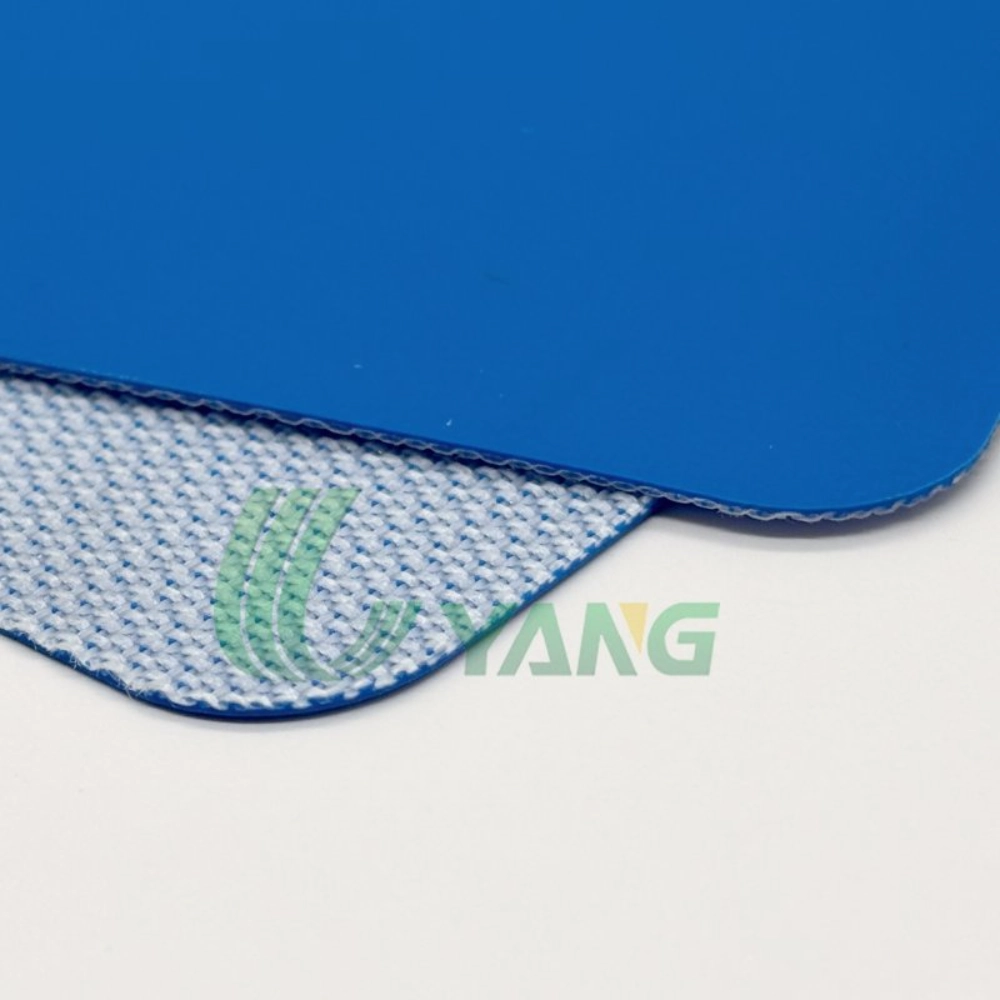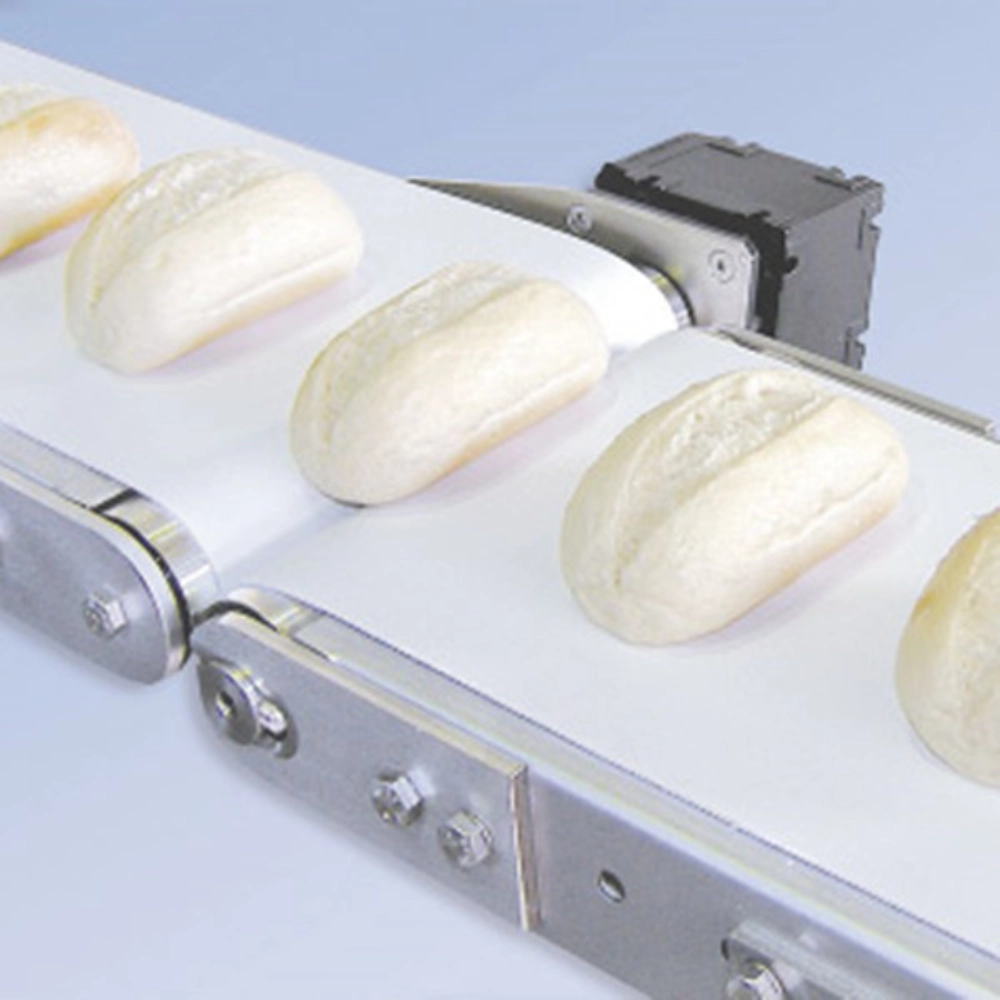
Food grade PU conveyor belts are common in meat, seafood, bakery, dairy, frozen food, packaging, and inspection lines. The color choice looks simple at first, but it affects hygiene checks, foreign object control, cleaning habits, and even how operators judge product residue on the belt surface. Blue and white PU belts are both used in food plants, yet they fit different production zones.

Why Does Food Grade PU Belt Color Matter?
Color is not decoration on a food conveyor belt. It helps your team find residue, product fragments, oil marks, stains, and possible foreign objects faster. PU is widely chosen because it has good wear resistance, low friction, and good durability. In food work, buyers also care about oil resistance, cleanability, and stable running on compact conveyors.
Blue Belt Means Faster Foreign Object Checks
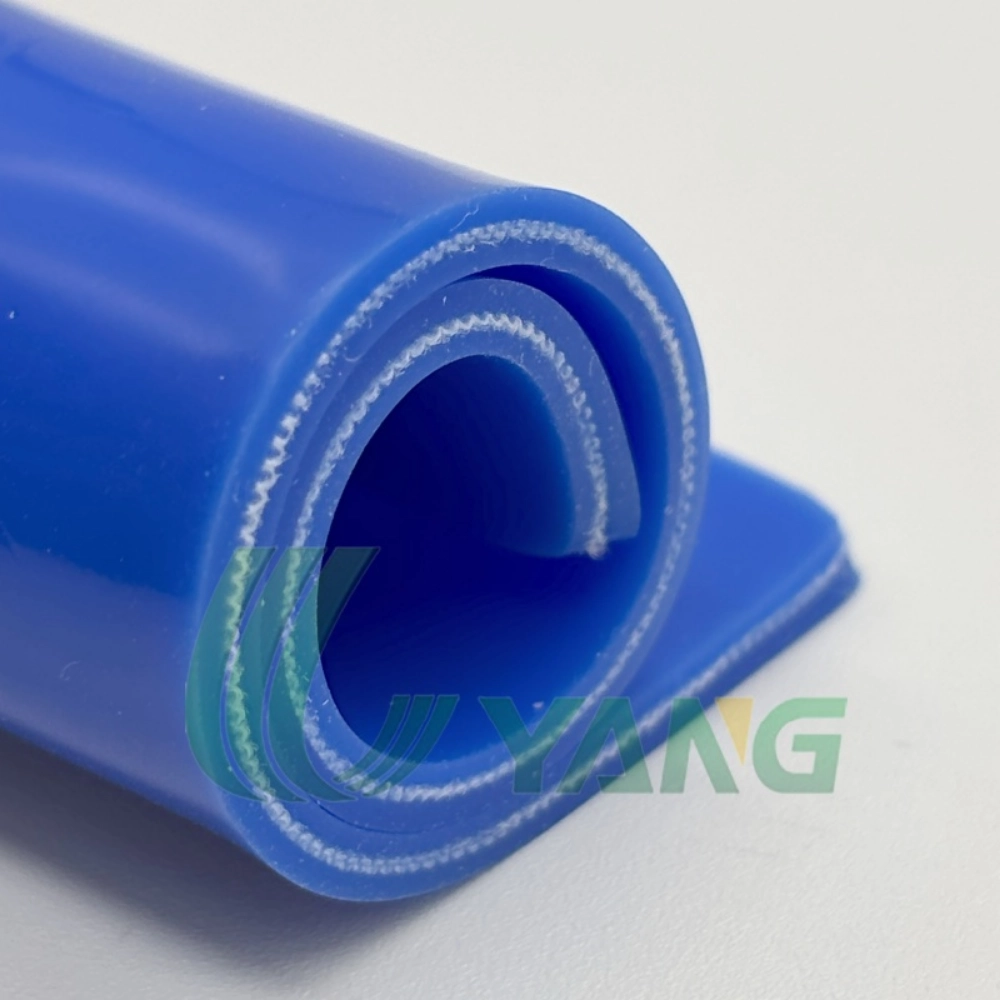
Blue PU belts are popular in raw meat, seafood, poultry, and high hygiene zones because blue is rare in natural food. A small piece of food, fat, or foreign matter is easier to see on a blue surface. That is why many food plants prefer blue belts for HACCP checks. Small note from the shop floor: operators often trust a belt more when they can see the dirt quickly.
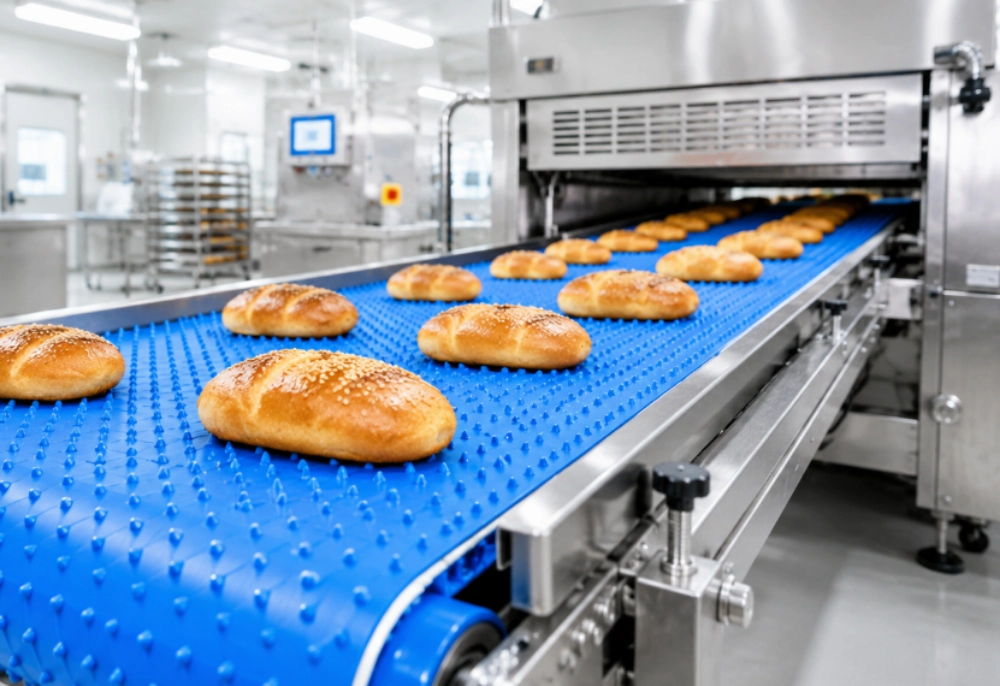
Blue belts also work well when your line handles wet or oily products. For example, beef steak, fish fillets, and poultry pieces can slide during transfer. In this case, the surface texture matters as much as the color.
White Belt Gives a Cleaner Visual Baseline
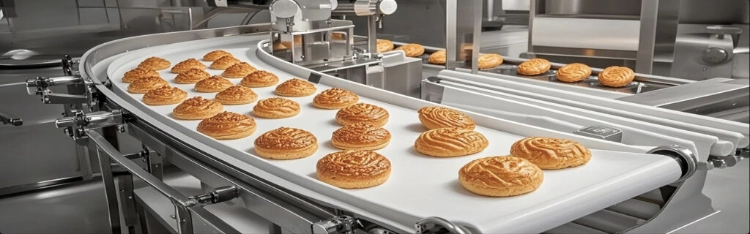
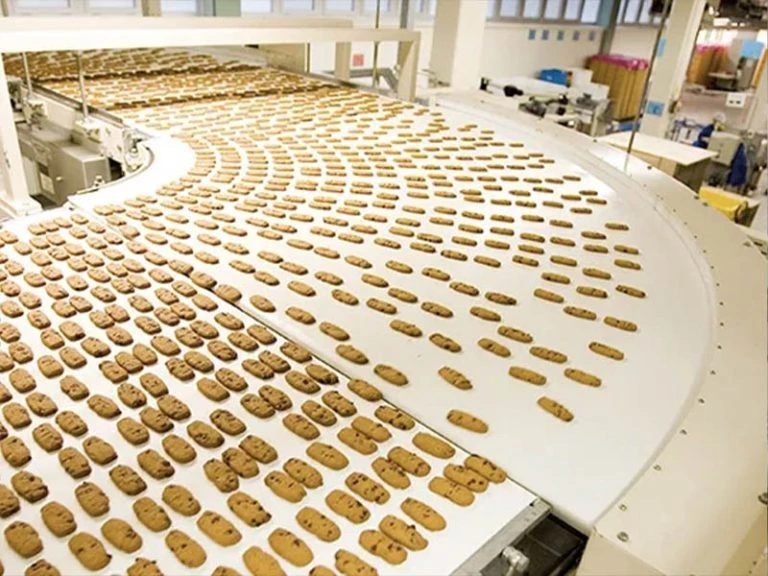
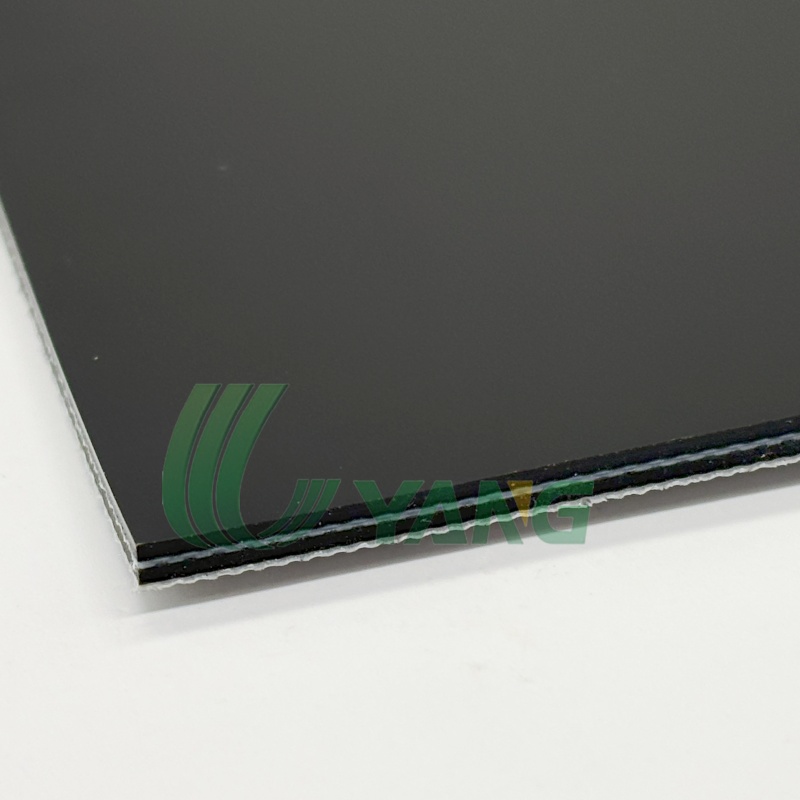
White PU belts are often used for bakery, confectionery, dry food, light packaging, and inspection conveyors. White gives a clean look and makes dark particles easy to spot. It also fits lines where customers or auditors pay close attention to visible cleanliness.
The limitation is clear: on flour, cream, white dough, or pale seafood, white residue may not stand out well. If your product is also white, a blue belt may make daily checking easier.
How Should You Choose Between Blue and White PU Belts?
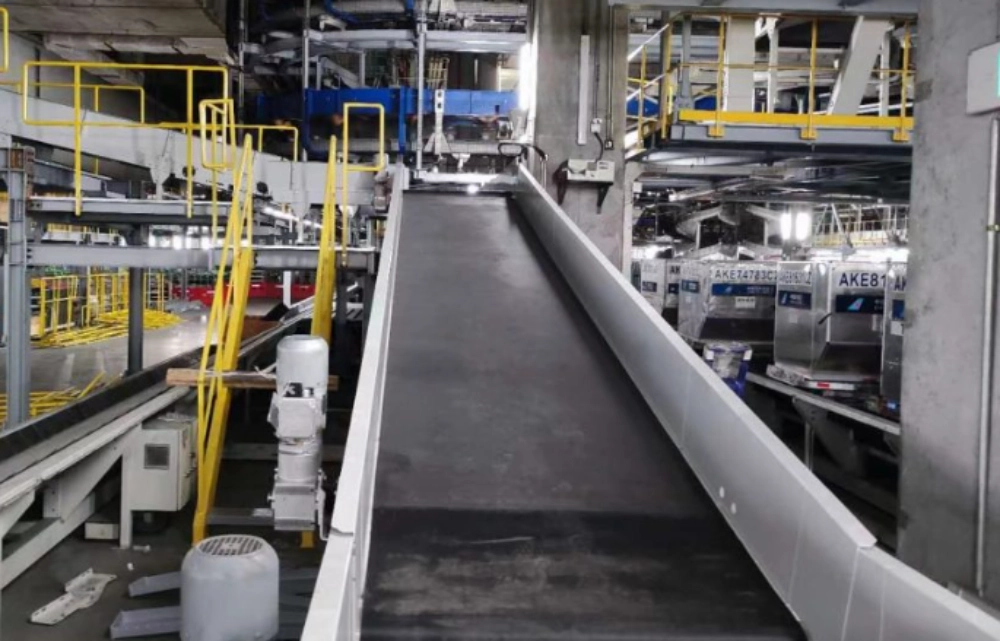
A good belt choice starts with the product, not the belt catalog. Check the food type, moisture level, oil level, pulley size, transfer point, cleaning method, and whether direct food contact is required. UYANG BELTING lists food processing, logistics, airport, tobacco, printing, electronics, fitness equipment, wood, and stone applications across its industry application pages, but food lines need stricter material checks.
Use Blue PU Belt for Raw Meat, Seafood, and Wet Lines
Choose blue PU belt when your line handles:
- Beef steak, poultry, pork, or fish
- Oily or fatty food
- Products that need foreign object checks
- Wet cleaning after each shift
- Small transfer points where slipping may happen
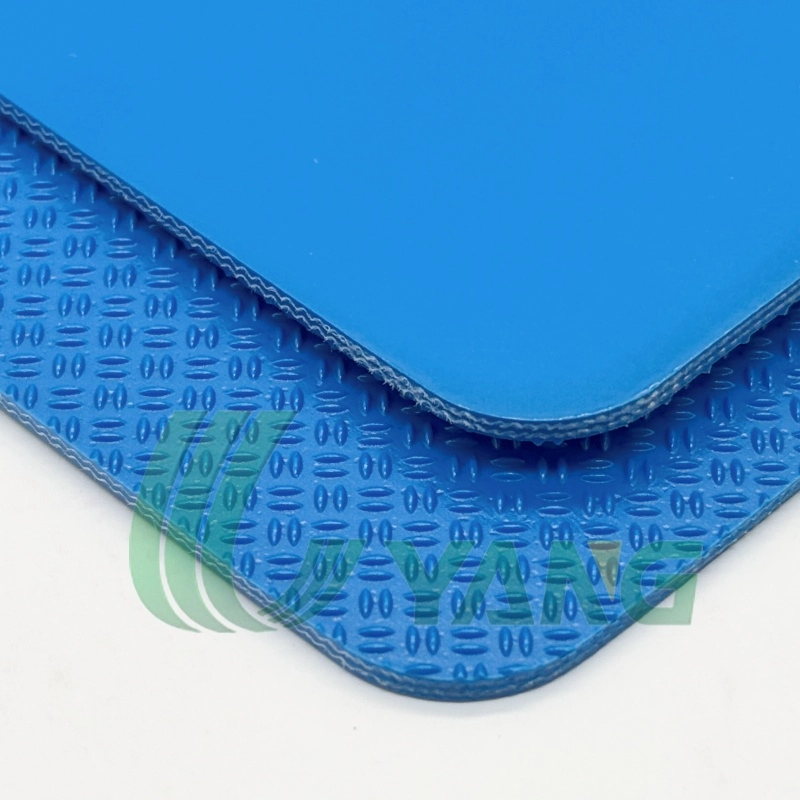
For beef steak production, the PU Conveyor Belt-Rice Pattern Top-For Beef Steak Production is a practical match. Its blue TPU surface uses a rice pattern top, giving suitable friction to reduce sliding during conveying. The product page lists a 2.5mm total thickness, 2 ply construction, 3.0 kg/m² belt weight, 92 Shore A hardness, 8 N/mm strength at 1% elongation, and a working temperature of minus 15°C to plus 80°C. These are useful numbers for buyers who need more than a general “food belt” answer.
Use White PU Belt for Bakery, Packaging, and Light Precision Lines
Choose white PU belt when your line needs a smooth, light, and flexible belt. White PU is common on bakery transport, confectionery, food packaging, inspection tables, compact conveyors, and low tension systems.
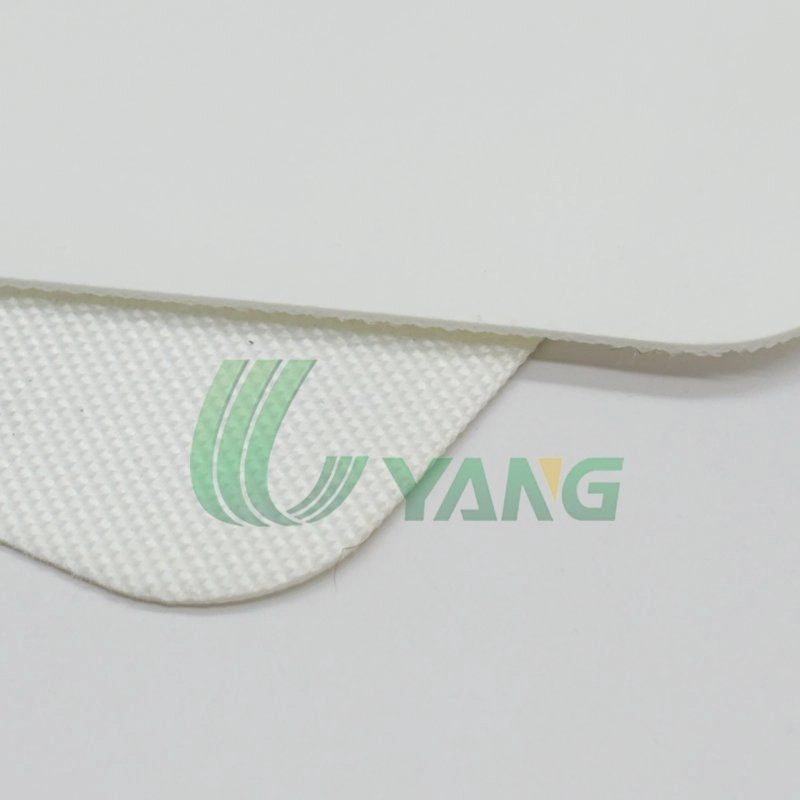
The UYANG 0.8mm White PU Smooth Conveyor Belt is designed for precision conveying and light duty use. It has a 0.8mm total thickness, white smooth PU top cover, single ply high strength polyester fabric, fabric backing, smooth matte finish, and working temperature from minus 20°C to plus 80°C. For small pulley diameters, this thin structure helps the belt bend smoothly and run with lower motor load.
What Belt Surface Fits Your Food Process?
Blue vs white is only one part of selection. Surface finish decides grip, cleaning speed, product release, and belt wear. In many food factories, the wrong surface causes more trouble than the wrong color. A smooth belt is easy to wipe, but a textured belt can hold product position better.
Rice Pattern Top for Grip and Product Release
A rice pattern top is useful when food pieces should stay stable during transfer. Beef steak, poultry, and seafood are good examples. The surface gives moderate friction without making the belt too hard to clean. In real purchasing work, this matters because a belt that grips too much may hold residue, while a belt that is too smooth may let product move out of position.
For meat applications, a 3mm to 4mm belt is often selected when higher strength and longer service life are needed. For lighter bakery use, around 2mm can be enough. Exact choice still depends on pulley diameter, load, cleaning, and line speed.
Smooth White PU for Low Tension and Small Pulleys
A smooth PU belt is easier to clean and suitable for light products. It also reduces drag on compact machines. For bakery and packaged food, a smooth surface can reduce sticking and make residue easier to remove after a shift.
If your conveyor has very small rollers, the 0.8mm structure is worth checking. A thick belt on a small pulley may crack, run poorly, or add bending stress. It is a small technical point, but buyers sometimes miss it during price comparison.
Which Technical Details Should Buyers Confirm?
Before you order a PU conveyor belt roll, ask for clear technical data. A cheap belt with vague material details may cost more after installation. You need to check compliance, thickness, ply, surface, color, splice type, edge treatment, and working temperature.
Food Contact Compliance and Cleaning Method
Food grade belts should support the standards your market needs, such as FDA, EU 10/2011, USDA, HACCP, or GMP related requirements. For high hygiene lines, easy cleaning is a core issue. Homogeneous easy clean belts go further because they use a fabric free, one piece thermoplastic structure that avoids capillary absorption, liquid penetration, and delamination risk.
Traditional PU belts with fabric layers can still work well in many food lines, but the buyer should check the splice and edge carefully. Sealed edges and heat welded joints help reduce liquid ingress. For daily work, food safe neutral detergent after each shift is common. Weekly deep cleaning with steam, CIP, or chlorine based cleaner may be used where the food safety plan requires it.
Thickness, Fabric Ply, and Roll Diameter
Do not choose belt thickness only by price. A thin belt bends better around small pulleys. A thicker belt can give better strength and longer wear life. For the rice pattern beef steak belt, the listed minimum roll diameter is 40mm for normal flexion and 80mm for counter flexion. That kind of detail helps prevent early cracking or tracking problems.
Here is a simple buyer check:
| Selection Point | Blue PU Belt | White PU Belt |
|---|---|---|
| Best Fit | Raw meat, seafood, poultry | Bakery, packaging, inspection |
| Visual Control | Strong for pale food and residue | Good for dark particles |
| Surface Choice | Textured or smooth | Mostly smooth |
| Cleaning Focus | Oil, fat, protein residue | Flour, sugar, dry particles |
| Typical Concern | Slip control and hygiene | Flexibility and neat appearance |
Why Work with a PU Conveyor Belt Manufacturer?
For B2B buyers, a belt roll is not a one time item. You may need samples, trial sizes, custom widths, belt guides, cleats, sidewalls, splicing support, and repeat orders. A supplier with a broader product center can help match the belt to the machine, not just sell a roll from stock.
Custom Size and Short Trial Order
UYANG BELTING supports custom colors, thicknesses, plies, patterns, fabrics, widths, and lengths for food belts. For distributors and machine builders, flexible MOQ and sample service can reduce risk before bulk purchase. For a new food line, trial order is often the smart route. Run the belt under real cleaning, real oil, and real transfer conditions before buying large volume.
After Sales Support That Actually Matters
UYANG BELTING supplies conveyor belt solutions for global buyers, with 20 years of manufacturing experience, 15 advanced production lines, and a wide product range covering PVC conveyor belts, PU conveyor belts, homogeneous belts, solid woven belts, modular belts, timing belts, accessories, and processing machines. For food buyers, the key point is not only buying a belt roll. You need the right material, surface, thickness, splice, and cleaning plan for your product.
Food plants cannot wait too long when a belt fails. Ask about warranty, delivery time, and technical support before purchase. UYANG BELTING provides 12 month quality guarantee from the bill of lading date, lifetime technical support, remote troubleshooting through photos and videos, and standard delivery programs for global orders. More company details are available on the about us page.
FAQ
Q1: Is Blue PU Conveyor Belt Better Than White PU Belt?
A: Blue PU belt is better for foreign object detection in raw meat, seafood, poultry, and wet food lines. White PU belt is better for clean visual appearance, light packaging, bakery, and inspection conveyors.
Q2: Can PU Conveyor Belts Touch Food Directly?
A: Yes, food grade PU belts can touch food directly when they meet required food contact standards such as FDA or EU compliance. Always ask for the certificate needed in your market.
Q3: Which Surface Is Easier to Clean, Smooth or Rice Pattern?
A: Smooth PU is easier to clean. Rice pattern PU gives better grip and product stability, so it suits beef steak, seafood, and poultry lines where sliding is a concern.
Q4: What Thickness Should You Choose for Food Grade PU Belt?
A: For meat and heavier food handling, 3mm to 4mm is often used. For bakery, packaging, and light duty conveyors, thinner belts such as 0.8mm to 2mm may work better, especially with small pulleys.
Q5: What Should You Check Before Buying a PU Conveyor Belt Roll?
A: Check material, color, surface, thickness, ply, pulley diameter, working temperature, food contact compliance, cleaning method, splice type, and whether the supplier can provide samples or custom sizes.