Tire manufacturing customers do not buy conveyor belts only by width, color, or price. Their lines handle sticky rubber sheets, hot compounds, tread strips, carcass materials, green tires, and finished tires. One wrong belt can cause slipping, edge wear, poor positioning, or unplanned downtime. For wholesalers, the better stocking plan is not to keep “one common belt for all tire plants.” A more useful plan is to stock belt types by production stage, load, surface grip, cleaning needs, and delivery urgency.
The tire industry also covers many product groups, from passenger car tires and truck tires to agricultural and engineering tires. Some factories make radial tires, some still handle bias tire processes. The product structure may include inner liner, carcass ply, bead, sidewall, steel belt, full-width cover layer, and tread. Each part moves differently on a conveyor. Soft rubber needs careful release. Tread strips need stable tracking. Green tires need gentle support before vulcanization.

Why Should Wholesalers Stock Belts by Tire Factory Workshop?
A tire plant usually has five key workshops: mixing, preparation, building, curing, and inspection. The belt demand changes from one area to another. A belt that works well for light transfer may fail fast near hot rubber discharge. A strong belt may still be wrong if the surface damages tire components. This is where your stock strategy becomes more practical.
Mixing Workshop Needs Strong Belts for Heavy and Uneven Loads
In the mixing workshop, raw rubber and additives move toward the internal mixer. The load is heavy, and the material may not spread evenly. Belt deviation and stretching are common complaints from maintenance teams.
For this area, you should keep high-strength fabric conveyor belts, PVK-style belts, and guided belts. Guide strips can help control tracking. A thicker, stable structure is more important than a nice-looking surface here. If the customer often feeds dense rubber blocks, ask about belt width, load per meter, pulley size, and whether the conveyor runs inclined.
Hot Rubber Discharge Needs Heat and Anti-Stick Performance
After mixing, rubber compound may reach roughly 120°C to 180°C in some discharge and sheet handling sections. It can be sticky, hot, and chemically active. A normal light-duty belt may soften, swell, or collect residue too quickly.
Wholesalers should stock heat-resistant, anti-stick belts for rubber discharge and sheet transfer. In daily communication, customers usually describe this area with words like “sticking,” “belt mark,” “hard to clean,” or “short belt life.” Do not answer only with thickness. Ask where the belt is installed. A 3 mm belt for forming is not the same as a belt for hot rubber discharge.
Which Belts Are Better for Preparation and Forming Lines?
The preparation workshop covers calendaring, cutting, extruding, cooling, and component transfer. This is the section where many tire factories need more belt variety. One line may need smooth release. Another line may need a textured surface. A third one may need stable positioning, especially when tread or carcass parts move toward forming equipment.
Cotton Canvas PU Belts Are Worth Stocking for Tread and Carcass Handling
For wholesalers serving tire factories, cotton canvas PU belts are one of the more useful stock items. They suit customers who want grip, flexibility, and softer contact with tire components.
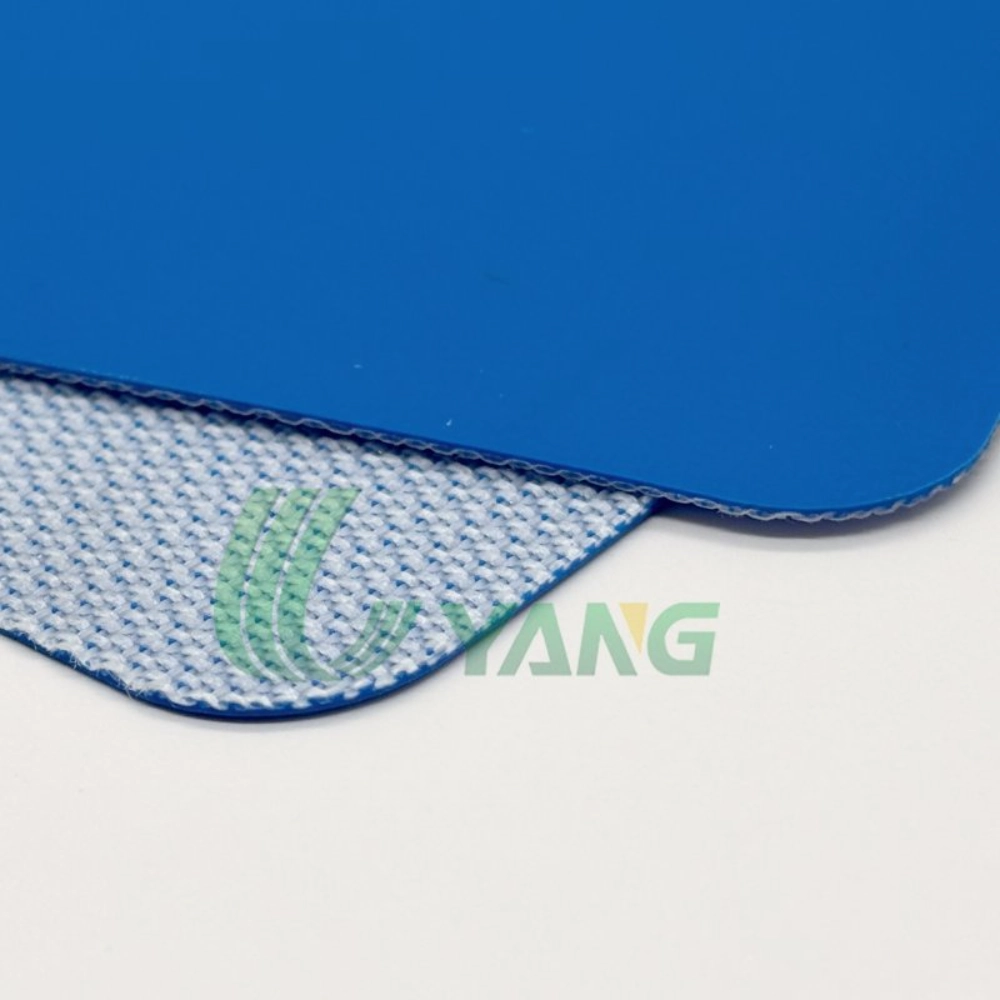
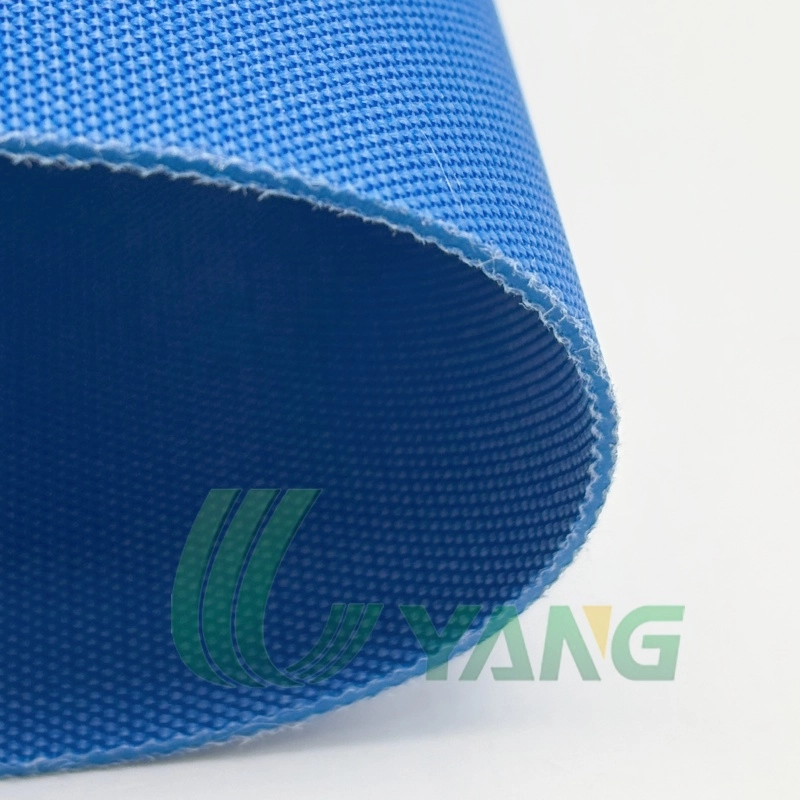
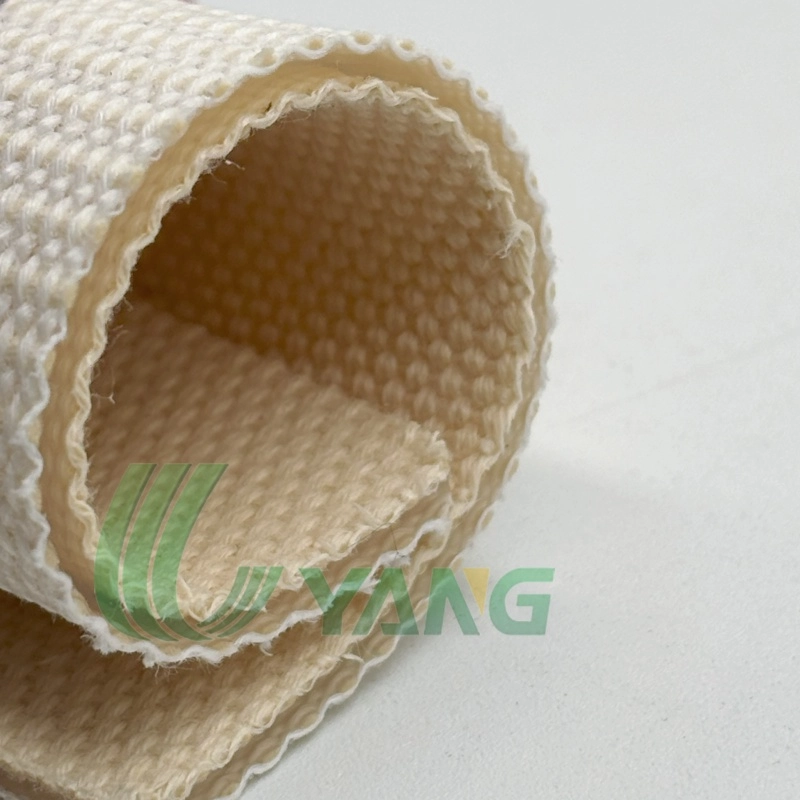
A strong example is Cotton Canvas PU Conveyor Belt -For Tire production. This belt is designed for tire manufacturing, especially tire carcass and tread forming lines, green tire conveying before vulcanization, and automated handling. Its structure uses extra latitudinal cotton canvas and TPU. The top surface is extra latitudinal cotton canvas, the middle layer is transparent TPU, and the bottom surface is also extra latitudinal cotton canvas. The total thickness is 3.0 mm, with a 2-ply fabric and 1 TPU layer structure.
That sounds technical, but the buying point is simple: the cotton surface protects tire components, while TPU gives wear resistance and flexibility. The textured surface helps reduce slipping during accurate placement. For wholesalers, this is a good belt to stock when customers ask for tire forming, tread conveying, carcass handling, or green tire transfer.
Smooth PU and PVC Belts Still Have a Place
Not every tire customer wants cotton canvas. Some sections need cleaner release, lighter transfer, or easier wipe-down. Smooth PU belts are useful in light conveying and some component transfer points. PVC belts may work for lower-temperature, less demanding transfer zones.
A practical stock mix can include:
- Smooth PU belts for light transfer and better release
- Cotton canvas PU belts for grip and cushioning
- Patterned PVC or PU belts for anti-slip movement
- High-strength fabric belts for heavier feed sections
- Modular mesh belts for cooling, soaking, spraying, and sorting
Small note: customers often call everything “PU belt” in messages. It is better to ask for a photo or sample before quoting. A wrong surface texture can cause more trouble than a wrong color.
Why Are Modular Belts Important for Tire Industry Stock?
Modular belts are not only for food or packaging lines. In tire and rubber plants, they are often used where drainage, airflow, cooling, or easy replacement matters. UYANG BELTING focuses on conveyor belts and related machinery, and its tire industry materials list modular conveyor belt applications such as film spray, film soak, tread rubber and tire rubber cooling lines, and sorting system ball module mesh belts.
Flush Grid Belts Fit Cooling and Soaking Sections
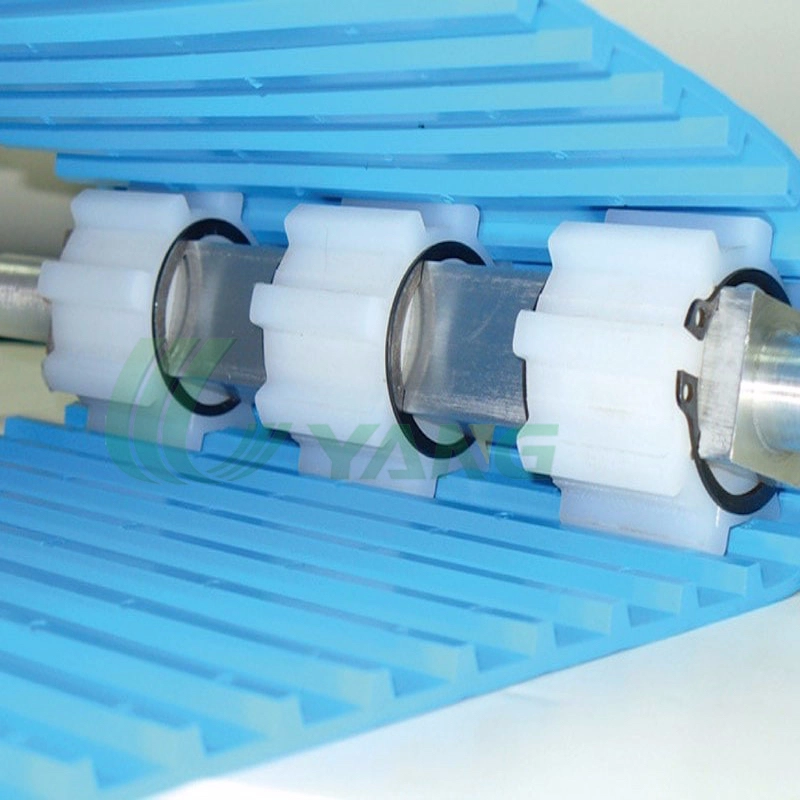
Cooling lines and soaking sections often need open area. A flush grid design allows air or liquid to pass through. It also helps reduce contact marks on some rubber products. For example, modular belts in the UY-900 series use a 27.2 mm pitch and around 8.7 mm belt thickness, with open area options such as 38% and 43% depending on the model. This kind of detail matters when customers compare airflow, washing, or cooling performance.
Stocking advice: keep modular flush grid samples ready. Many buyers do not decide from a catalog alone. They want to touch the material, test bend radius, check rod strength, and confirm sprocket matching.
Flat Top and Heavy Modular Belts Help With Tire Handling
Some tire plants need firm support for heavier products or finished tire transfer. Flat top modular belts give more contact area and stable carrying. Wider pitch belts, such as 35 mm or 40 mm class modular belts, may suit heavier handling sections better than small-pitch products.
The useful stocking logic is easy:
- Open flush grid for cooling, soaking, washing, and airflow
- Flat top for stable tire or component transfer
- Ball module mesh belts for sorting systems
- Higher-strength material choices for heavy loads or long lines
You can find more conveyor belt categories from the UYANG BELTING product center, including PU conveyor belts, PVC conveyor belts, transmission belts, modular belting, rubber belts, accessories, and processing machines.
How Should Wholesalers Build a Tire Conveyor Belt Stock List?
Wholesalers need enough range, but not too many dead-stock items. Tire factory buyers usually care about delivery speed, reliable specification, sample support, and repeat order stability. Holding ten random belt types is less useful than holding five clear product groups with known applications.
Keep Fast-Moving Specifications Ready
A basic tire-industry belt stock list can start with:
- 3.0 mm cotton canvas PU belts for tread, carcass, and green tire conveying
- 2.0 mm to 2.5 mm canvas or PU belts for lighter tire process areas
- High-strength fabric or PVK-style belts for mixing and feeding
- Modular flush grid belts for film soak, film spray, and cooling lines
- Flat top modular belts for stable tire handling
- Patterned PVC or PU belts for anti-slip conveying
- Belt accessories such as guides, cleats, sidewalls, rods, sprockets, and joining tools
This stock mix helps you reply faster when a factory sends urgent maintenance requests. Tire lines do not like waiting. A few days of delay can turn one belt inquiry into a lost customer.
Match Stock With the Customer’s Production Stage
A good question list helps you avoid wrong recommendations:
- Which workshop uses the belt?
- Is the material hot, sticky, oily, or dry?
- Is the belt for tread, carcass, green tire, finished tire, or rubber sheet?
- What is the line speed?
- Does the belt need grip or easy release?
- Is the conveyor flat, inclined, curved, or soaking in liquid?
- Does the customer need endless joint, mechanical joint, guide strip, cleat, or sealed edge?
For customized needs, UYANG BELTING’s industry application section can help buyers match belt types with real production use. The company’s available range also suits wholesalers who serve more than one market, not only tire customers.
Why Work With a Supplier That Can Support Tire Belt Customization?
Tire customers do not always reorder standard belts. They may ask for custom width, surface texture, guide strips, hole punching, special joints, or fast replacement after a line shutdown. This is why your supplier choice affects your own service level.
Product Range and Production Capacity Matter
UYANG BELTING has more than 20 years of conveyor belt experience, an 80,000 square meter operation, and 15 advanced production lines. Its main products include modular belts, PVC and PU conveyor belts, and belt processing machines. For wholesalers, this range is useful because tire buyers may start with one cotton canvas PU belt, then ask for modular belts, guides, cleats, or processing support later.
You can check more company background from UYANG BELTING’s about page. For B2B cooperation, the more practical value is not only the factory scale. It is the ability to handle different belt types, repeat specifications, provide samples, and support custom requests without making the buyer explain the same tire process again and again.
Delivery and After-Sales Support Help You Win Repeat Orders
The 3.0 mm cotton canvas PU belt page highlights flexible delivery time, wide product selection, cost-effectiveness, low MOQ support for custom belt business, online technical support, and fast delivery options. These points are directly linked to wholesaler needs. You need products that can move, not only products that look good in a catalog.
For tire manufacturing customers, the safest selling angle is clear and practical: right belt, right workshop, right surface, right joint. That is also easier for your sales team to explain.
FAQ
Q1: What Conveyor Belt Should Wholesalers Recommend First for Tire Forming Lines?
A: For tire forming lines, a cotton canvas PU belt is usually a strong first option. The Cotton Canvas PU Conveyor Belt -For Tire production offers a 3.0 mm structure, double-sided cotton canvas, and TPU support. It gives grip, cushioning, and wear resistance for tread, carcass, and green tire conveying.
Q2: Are Modular Belts Useful in Tire Manufacturing?
A: Yes. Modular belts are useful for film spray, film soak, tread rubber cooling, tire rubber cooling, sorting systems, and tire handling. Flush grid types help with airflow and drainage. Flat top types give better support for heavier conveying.
Q3: Should a Wholesaler Stock Both PU and PVC Belts for Tire Customers?
A: Yes, but stock them by use. PU belts are better for wear resistance, flexibility, and contact with tire components. PVC belts can work for lighter, lower-temperature transfer sections. For hot, sticky rubber, ask more questions before quoting.
Q4: What Details Should Be Confirmed Before Quoting a Tire Conveyor Belt?
A: Confirm workshop, material temperature, belt width, speed, load, pulley size, surface texture, joint type, guide strip needs, and whether the belt contacts tread, carcass, rubber sheet, green tire, or finished tire. These details reduce wrong orders.
Q5: Why Is UYANG BELTING Suitable for Wholesalers Serving Tire Factories?
A: UYANG BELTING offers modular belts, PVC and PU conveyor belts, transmission belts, rubber belts, accessories, processing machines, and custom support. For wholesalers, this helps cover more tire production stages with one supplier instead of sourcing each belt type separately.